
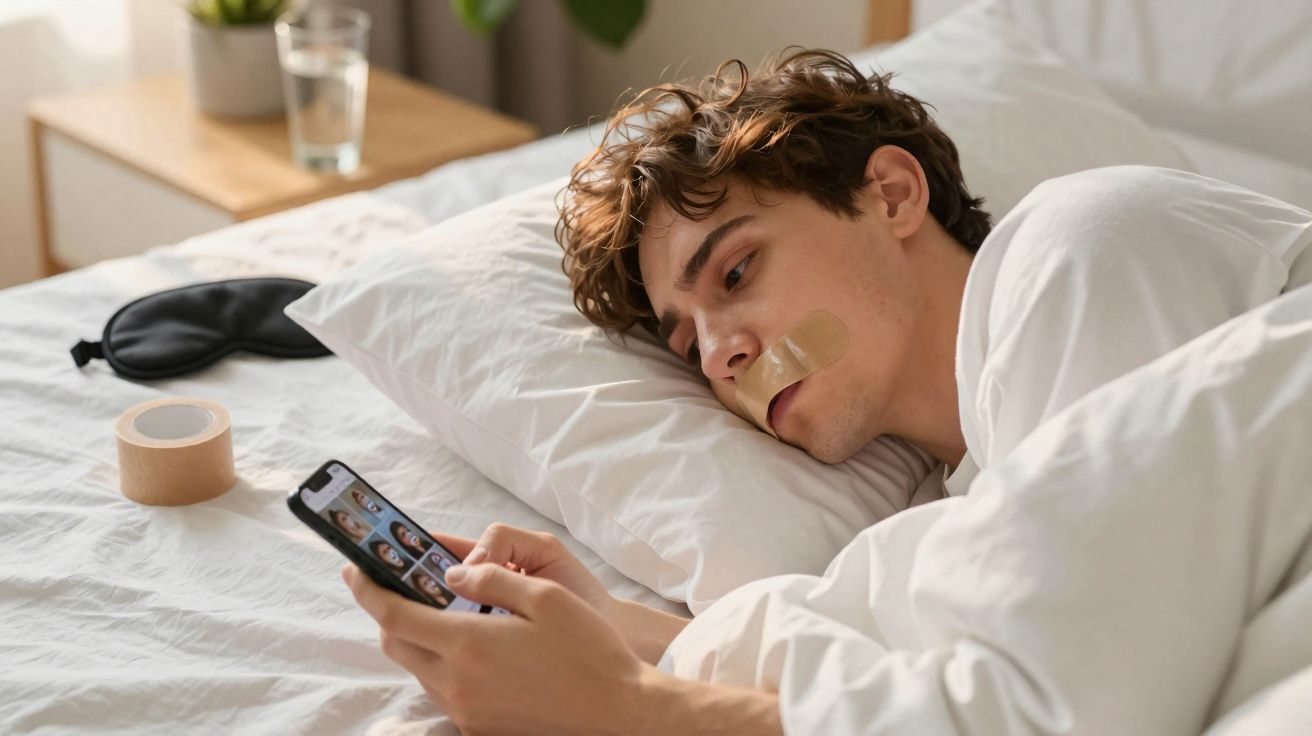
A sleep trend is currently going viral online that supposedly stops snoring, rejuvenates the skin and even protects your teeth. The “hack” looks harmless at first glance, almost too simple to matter. Sleep physicians and ENT specialists, however, are warning that copying it without thinking can seriously put your health at risk - particularly if you have underlying conditions that have not been identified.
What this trend is really about
The current hype centres on so-called “Mouth Taping” - taping your lips shut during the night. Influencers on TikTok and Instagram show themselves placing a strip of tape across their mouth before going to sleep. The idea is to force the body to breathe through the nose.
These promises are especially tempting for people with sleep issues or persistent fatigue. In short clips and reels, supposedly dramatic results appear out of nowhere - usually without medical supervision, without any diagnostic checks and without any meaningful warning about potential risks.
What supporters claim the trend can do
- fresher breath, because the mouth does not dry out overnight
- better sleep, because nasal breathing is considered more “natural”
- fewer gum problems and a lower risk of tooth decay
- an anti-ageing effect thanks to supposedly improved oxygen supply
In reality, robust studies are missing for many of these claims. Much of what circulates is based on individual anecdotes, before-and-after photos and subjective impressions - exactly the kind of material that fuels viral trends.
"Mouth Taping may look simple at first glance. But especially with sleep disorders, a seemingly harmless hack can do more harm than good."
Why sleep doctors warn against Mouth Taping
Sleep specialists are increasingly speaking out critically. Their concern is that people are tinkering with their airways on their own, without understanding what actually happens in the body during sleep. The situation is particularly delicate for those with obstructive sleep apnoea - a common condition that is often present without being recognised.
With obstructive sleep apnoea, the upper airway repeatedly narrows during sleep. The result can be pauses in breathing, a drop in blood oxygen and added strain on the heart and circulation. Many people notice little at the time, yet they wake feeling unrefreshed, develop headaches or struggle with pronounced daytime sleepiness.
"If you already have breathing problems during sleep, taping the mouth shut can create a dangerous bottleneck."
The key risks at a glance
- Worsened breathing in sleep apnoea: If the mouth remains closed, a “back-up route” disappears. Any narrowing of the airway can become more significant.
- Risk of suffocation if the nose is blocked: A cold, allergies or nasal polyps - if you already cannot breathe well through your nose, sealing your mouth can put you in a risky position.
- Skin irritation and allergies: Adhesives can irritate the sensitive skin around the lips and face or trigger allergic reactions.
- More stress, less recovery: A taped mouth may feel claustrophobic. Some people sleep worse, wake more often or tear the tape off in a panic while half-asleep.
For these reasons, doctors strongly advise against “just trying” Mouth Taping. Speaking to a professional first is particularly important if snoring, breathing pauses or severe daytime tiredness are part of the picture.
New study: it may help some - and harm others
A recent investigation published in a medical research database adds more data to the debate - while also underlining how complex the issue is. Researchers observed 66 people with diagnosed obstructive sleep apnoea and assessed how deliberate mouth closure affects airflow during sleep.
| Feature | Details |
|---|---|
| Participants | 66 patients with sleep apnoea (12 later excluded due to insufficient baseline data) |
| Method | Comparison of breaths with an open versus closed mouth during sleep |
| Measurement | Airflow and breathing resistance in the upper airway |
What the researchers found
- Improved airflow in “nasal breathers”: People whose nasal passages were relatively clear sometimes benefited from a closed mouth. Their airflow became more consistent.
- Worse breathing with certain narrowings: Those with so-called velopharyngeal narrowings - constrictions behind the soft palate - showed more resistance and poorer airflow when the mouth was closed.
- Highly variable outcomes: Effects differed markedly depending on anatomy and each person’s airway structure.
"The study shows: Mouth Taping is not a cure-all but an individual question. Without thorough medical analysis, using it remains a risky experiment."
The researchers emphasise that a blanket recommendation is not possible. Anyone with sleep apnoea or other breathing issues should first undergo proper diagnostic assessment - for example in a sleep laboratory - and then receive a tailored therapy plan.
Why nasal breathing is considered “healthier” in the first place
Many fans of the trend argue that humans are “meant” to breathe through the nose. There is some truth to this: the nose filters dust and germs, humidifies the air and warms it. That helps protect the bronchi and lungs and may reduce inflammation over time.
By contrast, habitual mouth breathing can lead to dry mucous membranes, more frequent sore throats and, in some cases, more tooth decay because saliva - a natural protective layer - is lacking. Influencers use precisely these points to frame taping the mouth shut as a quick route back to nasal breathing.
The catch is that long-term mouth breathing almost always has a reason behind it - a deviated nasal septum, enlarged turbinates, allergies, nasal polyps or simply entrenched habits. A strip of tape does not solve those causes; it merely covers them up.
Safer alternatives for better sleep
Rather than adopting untested social-media tricks, specialists recommend approaches that are established and lower-risk. Not everything can be fixed at home, but many levers sit in everyday routines.
What you can do yourself (without Mouth Taping)
- Get your nose checked and treated: If you struggle to breathe at night, an ENT appointment can clarify whether anatomy or allergies are to blame.
- Reduce excess weight: Being overweight can contribute to snoring and sleep apnoea because fatty tissue can build up around the neck and tongue.
- Avoid alcohol in the evening: Alcohol relaxes the throat muscles too much, making airway collapse more likely.
- Practise sleeping on your side: Many people snore more - or have more breathing pauses - when sleeping on their back. Special pillows or positioning aids can help.
- Keep regular sleep times: A consistent sleep routine often improves sleep quality noticeably - without any tape.
If snoring is severe, breathing pauses occur, or daytime sleepiness is extreme, seeing a doctor is essential. Modern treatments range from dental devices and CPAP masks to surgical corrections. They aim to address the cause of impaired breathing - rather than simply masking a symptom.
How to separate reliable advice from risky trends about Mouth Taping
The Mouth Taping hype shows how quickly health myths spread when they appear fast, cheap and “natural”. A few questions can help you judge trends more realistically:
- Who is recommending the tip - a doctor, a professional body, or an influencer with no medical training?
- Are there studies examining benefits and risks, or only personal testimonials?
- Would I use the same trick on my child, or does the idea feel unsettling?
- Does the trend ignore possible underlying conditions that should be checked first?
If these questions make you hesitate, it is safer to book an appointment before experimenting. Short videos do not replace diagnostic assessment, and a viral trend does not determine what is sensible for your body.
Ultimately, this sleep “hack” highlights one point: nasal breathing can be beneficial, but getting there often requires expertise. For many people, a strip of tape across the mouth is less a sustainable solution and more a risky shortcut.





Comments
No comments yet. Be the first to comment!
Leave a Comment