
Bathrooms are getting simpler.
From viral videos to modernised “gran’s tips”, the pairing of classic Nivea cream and olive oil has become a recurring beauty talking point. The appeal is straightforward: feed the skin, smooth it and calm it down without spending a fortune. Here’s what you can realistically expect, how to mix it properly at home, and the common mistakes to steer clear of.
Why this pairing is so popular
Classic Nivea cream works like a protective shield. It creates a gentle occlusive layer that slows down water evaporation and leaves a safeguarding film on the surface. Its mineral base and emollient ingredients help soften the stratum corneum.
Extra-virgin olive oil contributes fatty acids (mainly oleic acid) as well as naturally occurring antioxidants. It helps keep skin supple and can counter day-to-day oxidation linked to sun exposure and pollution.
Used together, the two products form a richer texture. The cream’s occlusive effect helps trap hydration, while the oil improves slip and boosts comfort. The intended outcome is skin that feels more flexible, less tight and more even to the touch.
"The mixture works through complementarity: the cream limits water loss, the oil nourishes and improves the sensory feel."
What science says about the skin barrier
The stratum corneum functions like a protective brick wall made up of corneocytes and lipids. When that barrier is weakened, water escapes more quickly. Skin can then look red and feel tight.
Occlusives sit on top as a film. Emollients fill in tiny cracks and roughness. Antioxidants help reduce oxidative stress. When the proportions are right, a blend can tick all three boxes. It suits everyday needs for normal-to-dry skin.
How to make a stable Nivea cream + olive oil blend at home
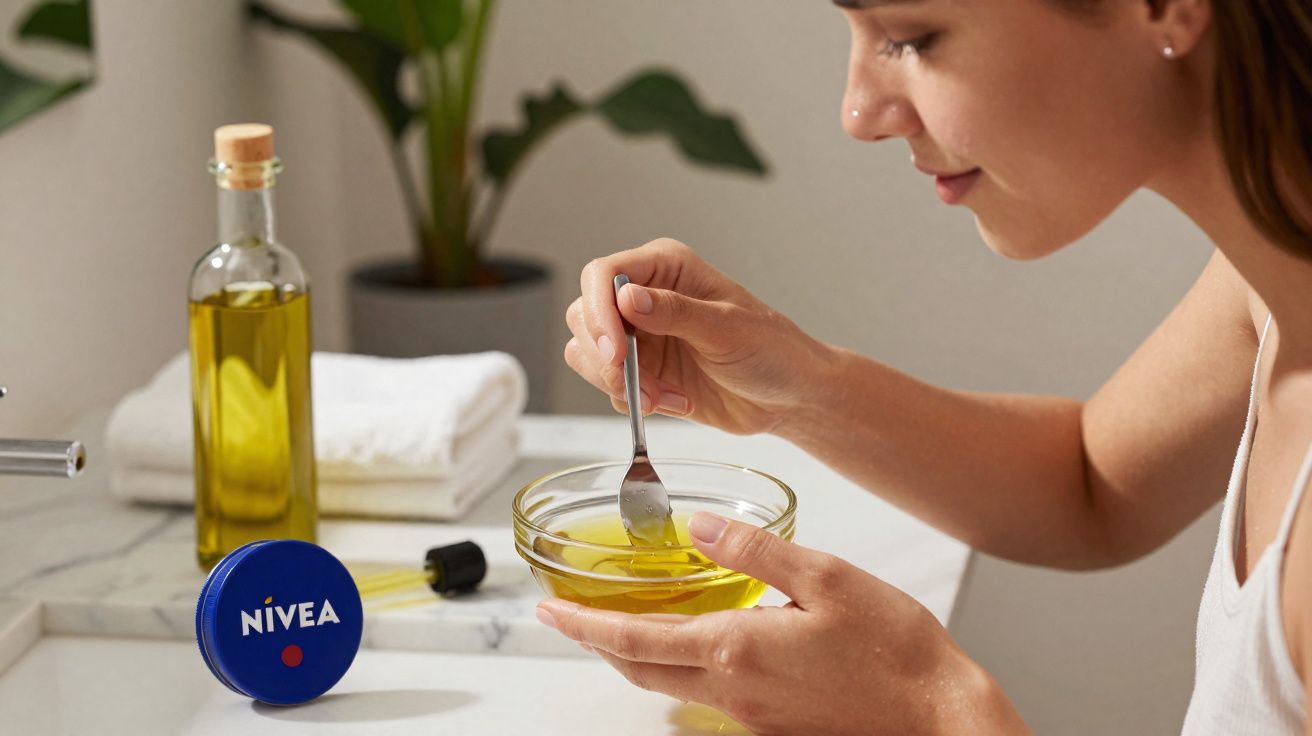
You only need clean, dry tools: a glass or ceramic bowl, a spatula, and a small lidded pot.
- Put 2 tablespoons of Nivea cream into the bowl.
- Add 1 teaspoon of extra-virgin olive oil.
- Stir slowly until the mixture looks smooth and uniform.
- Spoon into a sealed pot and keep it away from light.
It should stay creamy and never turn runny. If it splits, keep mixing and cut back on the oil. Don’t heat it: warmth can degrade the oil’s antioxidants and alter the texture.
"Make small batches to last two to three weeks. Close quickly, keep cool and handle with a clean spatula."
How to apply it by skin type
Apply to clean skin that’s still slightly damp to lock in water. A pea-sized amount is enough for the face. Avoid the immediate eye area.
- Very dry skin: use morning and night as the final step in your routine.
- Normal skin: once in the evening is usually enough, especially in winter.
- Combination skin: focus on dry areas (cheeks, edges of the face) and avoid the T-zone.
- Blemish-prone skin: keep it occasional-use as a 10-minute mask, then remove gently.
- Body: elbows, knees, hands and heels do well with a more generous layer.
| Role | Main contributors | Expected effect |
|---|---|---|
| Occlusive | Oily base of Nivea cream | Reduced transepidermal water loss |
| Emollient | Olive oil, waxes | More suppleness, smoother feel |
| Humectant | Glycerin in the cream | Increased water content in the stratum corneum |
| Antioxidant | Vitamin E, oil polyphenols | Less oxidative stress |
Common mistakes and warning signs
- Too much oil: skin looks shiny and make-up won’t sit well. Drop back to 1/2 teaspoon for 2 tablespoons of cream.
- Rubbing too hard: use slow movements with light pressure instead.
- Contaminating the pot: don’t use fingers-use a clean spatula.
- Spots or clogged pores: space out applications or restrict it to drier areas.
- Burning sensation or redness: rinse with lukewarm water, stop using it and try lighter alternatives.
Nivea cream contains fragrance and lanolin derivatives, which can bother reactive skin. A 48-hour patch test on the forearm can prevent unpleasant surprises.
"This blend does not replace sunscreen, a medical acne treatment or skincare prescribed by a dermatologist."
Who benefits most from it
Dry skin-especially when dehydrated by indoor heating or wind-often gets a clear comfort boost. Hands damaged by alcohol hand gel can recover faster. Cracked feet tend to soften after gentle exfoliation.
Oily skin may find the film too heavy during the day. In that case, targeted use in a thin layer works better, or swapping olive oil for a lighter squalane.
Useful variations and adjustments
- Jojoba oil: close to sebum, more stable, a good option for combination skin.
- Olive-derived squalane: drier feel, less occlusive, more make-up friendly.
- Sunflower oil (high in linoleic acid): quick comfort for tightness.
- One drop of vitamin E: can support oxidative stability-without overdoing it.
Avoid essential oils in this mix. They raise the risk of irritation and can be troublesome for sensitive skin. Don’t add water or floral hydrosols to the pot either, as this can destabilise preservation.
How much it costs and what it changes day to day
A 50 ml homemade pot often comes in under €2 to €3, depending on the brands you choose. Using it only where needed cuts waste. One jar can sometimes replace two to three winter products.
For environmental impact, opt for a reusable pot and locally sourced olive oil. Label the making date. Recycle or wash the container between batches.
A simple, effective routine
- Evening: gentle cleanse, hydrating serum if needed, then a small dab of the blend.
- Morning: mist or light lotion, sunscreen, then make-up on top.
- Weekly: a short 10-minute mask on dry patches, then remove.
"To boost the effect, apply to slightly damp skin or after a glycerin-based lotion."
Safety questions and special cases
If you’re prone to seborrhoeic dermatitis or very acne-prone skin, lighter lipids are usually a better bet. Olive oil, which is high in oleic acid, may not suit these profiles. Extra caution is also sensible for babies and toddlers; a fragrance-free product is preferable.
Avoid using it on open wounds, during an eczema flare, or on a recent sunburn. If your skin reacts frequently, wait for advice from a health professional.
Smart uses beyond the face
This blend also works as a cuticle conditioner, an overnight hand cream, or a post-shave balm on the body. It can soften rough patches before applying self-tan. It may also help protect skin around the nostrils during a cold.
For sport, a thin layer on friction-prone areas can reduce discomfort. For travel, a mini pot can stand in for hand cream, a dry-patch balm and a night treatment.
Going further
Check tolerance with a tiny amount on your forearm for two days. In the morning, note how your skin looks and feels: tightness, shine, redness. Adjust the oil proportion based on what you observe. Tracking it for two weeks gives a clearer picture of any changes in glow and softness.
Finally, fold this balm into a wider approach: staying hydrated, humidifying indoor air in winter, and choosing a non-stripping cleanser. Used that way, the Nivea + olive oil blend becomes a straightforward tool for supporting a stronger skin barrier-without inflating either your budget or your routine.





Comments
No comments yet. Be the first to comment!
Leave a Comment