
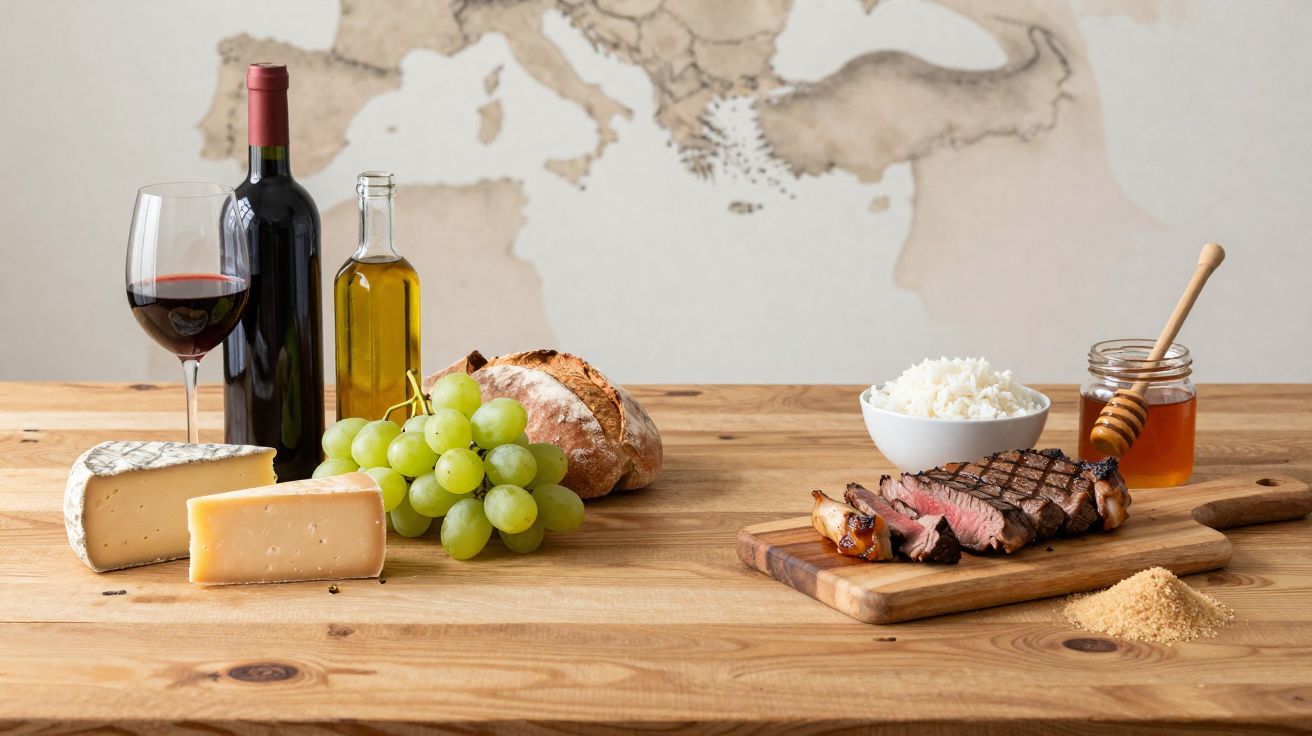
A trade treaty that has been in negotiation for decades is about to quietly reshape what ends up on Europeans’ plates - and where it comes from.
After years of political deadlock and heavy pressure from multiple sides, the free trade agreement between the European Union and Mercosur is moving forward. Beyond the diplomatic statements, it reaches straight into everyday shopping baskets, affecting beef, wine, dairy, sugar and other products that circulate through European and South American supermarkets.
What is at stake in the EU–Mercosur agreement
The EU has been in talks with Brazil, Argentina, Paraguay, Uruguay and Bolivia for roughly 25 years. Taken together, the two blocs account for around 780 million consumers and hold a prominent place in global GDP. This is not a minor deal: it is one of the largest trade packages ever stitched together by Brussels.
In January, most European countries voted in favour of the treaty, despite opposition from France, Austria, Ireland, Poland and Hungary. Formal signing is expected to be carried out by the President of the European Commission and Mercosur representatives at a meeting in Paraguay.
"More than 90% of import tariffs between the EU and Mercosur are expected to be reduced or removed gradually, making room for a much larger flow of food."
Although the tariff cuts extend across multiple industrial sectors, agriculture is where the effects are likely to feel closest to families’ routines - both in final prices and in where products are sourced.
Why farmers are protesting against the treaty
In France, rural unions have been blockading roads and appearing at agricultural fairs to denounce the agreement. Opinion polling suggests around 70% of French people say they oppose the trade package. The central worry is unfair competition from South American agricultural goods, seen as cheaper due to lower labour costs and different environmental rules.
For part of Europe’s farming sector, the fear is declining incomes in rural areas and even greater concentration among large exporting groups. Supporters of the agreement, however, argue that a larger market could encourage more integrated value chains, with opportunities for European producers too - particularly in wine, dairy and processed foods.
Which European foods stand to gain ground in Mercosur
The tariff reductions are not only about tropical goods heading to Europe. A range of European food products should find it easier to enter South American markets. Examples include:
- Wines and sparkling wines produced in France, Italy, Spain and Portugal
- Olive oils, especially from Spain and Italy
- Dairy products such as cheeses, butter and powdered milk
- European chocolate and confectionery goods
For these categories, the agreement could translate into new markets and higher export volumes, as import duties in Mercosur countries are expected to fall progressively.
Protecting origin-labelled products under the EU–Mercosur deal
Another sensitive area is the protection of foods and drinks with quality origin labels, such as PDO (Protected Designation of Origin) and PGI (Protected Geographical Indication). The treaty provides for these names to be safeguarded within Mercosur.
"Cheeses, wines, meats and other traditional European products will have their names officially protected in parts of South America, preventing imitations using the same designation."
The protected list includes, among others:
| Category | Protected examples |
|---|---|
| Cheeses | Comté, Gruyère, Roquefort |
| Wines and drinks | Champagne, Chablis, Guadeloupe rum |
| Seafood | Marennes-Oléron oysters |
| Fruit and grains | Pruneaux d’Agen (dried plums), Camargue rice |
| Meats and cured products | Boeuf de Charolles, Bayonne ham |
This system would prevent, for instance, a producer outside Europe from selling a sparkling wine as "Champagne" or a cheese as "Roquefort" without meeting the origin rules tied to those regions.
Beef, sugar, rice and honey: Mercosur products that receive quotas
On the South American side, the most contentious section concerns new authorised volumes of agricultural exports to the European market. The agreement sets specific annual quotas for certain goods, typically with reduced or zero tariffs up to a defined threshold.
The most frequently cited figures are:
- 99,000 tonnes of beef per year
- 180,000 tonnes of poultry meat
- 180,000 tonnes of sugar
- 60,000 tonnes of rice
- 45,000 tonnes of honey
"These quotas act as a ‘preferential corridor’ for part of Mercosur countries’ output, allowing it into the EU at lower cost compared with other external competitors."
For beef and poultry, the clash is direct with European producers, especially in France, Ireland and parts of Eastern Europe. For sugar, rice and honey, the impact is more likely to concentrate in specific niches and in industries that use these inputs - including beverages, confectionery and ready-to-eat foods.
Viticulture, olive oil and milk: potential gains and lingering uncertainty
Within Europe, three sectors are often singled out as potential winners: wine, olive oil and dairy derivatives. As tariffs fall, Spanish, Italian, Portuguese and French producers could become more competitive in Mercosur’s urban markets, where consumption of “European-style” items is rising alongside the middle class.
Rural unions, however, warn that some of the upside may end up concentrated among large exporting firms, while small holdings remain squeezed by environmental and labour costs that are higher than those faced by competitors outside the EU.
The possible impact on Brazilian consumers
Although the debate is centred on Europe, Brazil could also feel day-to-day effects. Depending on how the agreement is implemented, Brazilian supermarkets may see more European labels on shelves - particularly for wines, cheeses and chocolates.
That could lead to:
- Greater variety of imported products, especially mid-range brands that are currently less visible
- Competitive pressure on South American-produced wines, fine cheeses and olive oils
- Potential price reductions in some categories, if lower tariffs are passed on to shoppers
At the same time, Brazil’s beef, sugar and grain industries are likely to be among the leading candidates to use the EU export quotas, reinforcing the country’s role as a supplier of agricultural commodities.
Terms that help make sense of the debate
A few concepts repeatedly appear in discussions of the agreement and strongly shape the real-world reach of these changes.
What an import quota actually is
A quota is a volume limit that can enter a given market on special terms, such as a zero or reduced tariff. In the case of beef, for example, up to 99,000 tonnes per year would have this preferential access. Above that level, exports can still take place, but higher tariffs apply again.
In practical terms, whoever fills these quotas first gains a significant competitive advantage over other exporters.
How geographical indication protection works
Geographical indications are labels granted to products whose qualities depend heavily on their place of origin - such as climate, soil or traditional techniques. When a trade agreement recognises these labels, partner countries commit to respecting the name and restricting its use.
That matters to European producers, but it also serves as a reference point for Brazilian regions seeking to add value to special coffees, cachaças, artisanal cheeses and fruit tied to specific origins, which may pursue comparable recognition in future negotiations.
Possible scenarios for the coming years
If the agreement is implemented in full, one likely trend is greater regional specialisation: Mercosur areas focusing on meat, grains, sugar and some processed goods; and EU areas strengthening their image in higher value-added products such as wines, denomination cheeses and gourmet foods.
A further possibility is tougher environmental requirements linked to compliance with the treaty. European groups are already advocating that part of the tariff benefits should be conditional on combating deforestation and respecting labour standards. That could push South American governments towards stricter traceability for beef and soya, for instance.
For Brazilian consumers, the issue may seem distant, but it touches very practical questions: what will be produced to supply the domestic market, what will be channelled into exports, and which foreign products will begin competing for shelf space alongside national goods.





Comments
No comments yet. Be the first to comment!
Leave a Comment