
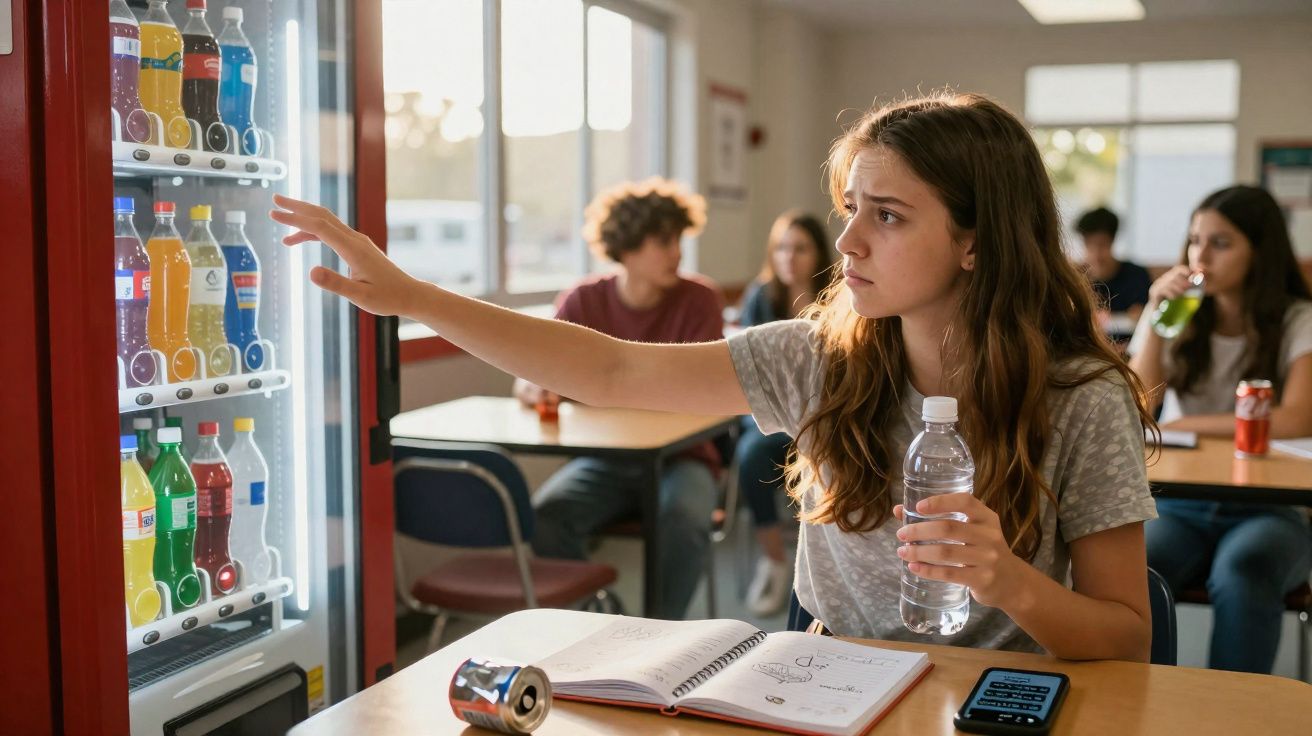
Teenagers who consumed larger amounts of sugary beverages had 34 per cent higher odds of anxiety in a paper centred on adolescents.
That result shifts fizzy drinks and energy drinks into the realm of mental health, not simply another caution about sugar intake and body weight.
Why minds matter
Globally, the World Health Organization (WHO) notes in its fact sheet that anxiety disorders are common during adolescence and become more frequent in older teenagers.
In England, a national survey reported that one in five young people aged eight to 25 had a probable mental disorder in 2023.
“Anxiety disorders in adolescence have risen sharply in recent years,” said Dr. Casey. In that context, a drink grabbed between lessons starts to look like more than a minor detail.
Sugary drinks linked to anxiety
Looking across nine studies involving young people, researchers repeatedly saw the same pattern: greater sugary drink consumption tended to coincide with more anxiety symptoms.
By synthesising the available evidence, researchers at Bournemouth University helped arrive at an overall estimate of a 34 per cent increase in odds.
At BU, nutrition lecturer Dr. Chloe Casey described a signal that persisted across survey-based studies, even when their locations and methods differed.
However, because none of the studies assigned participants to drink certain beverages or altered behaviour, the findings should be treated as a warning sign rather than proof that sugar directly caused distress.
How the number reads
The headline figure can sound bigger than it is at first glance, because it summarises odds across studies rather than describing what will happen to any single teenager.
Within the paper, a meta-analysis generated the 34 per cent estimate using datasets that could be compared. Seven of the nine studies reported a meaningful positive association, while two did not meet that threshold.
Across a year, the two studies that followed young people over time still detected small associations, indicating that the pattern did not quickly disappear.
Which drinks counted
The “sugary drinks” category covered fizzy drinks, energy drinks, sweetened juices, flavoured milks, and sweetened tea or coffee.
They were combined because added sugars-sugars introduced during production-can increase calorie intake while contributing little nutritional value.
Energy drinks made the picture more complex, as many include caffeine, which may trigger a racing heart and disrupt sleep.
Taken together, that combination broadened concern beyond fizzy drinks alone and focused attention on habits many teenagers see as routine.
Why cause stays unclear
Care is needed when interpreting the results, because the studies observed everyday life instead of testing what happens after researchers change what teenagers drink.
This observational approach-recording behaviours without assigning them-means it is also possible that anxious teenagers reach for sugary drinks more often.
Other pressures, such as family stress, inadequate sleep, or financial worries, might also steer the same teenager towards both distress and sweeter drinks.
These alternative explanations keep the findings noteworthy while preventing a straightforward cause-and-effect conclusion.
What bodies may do
Although the study was not designed to confirm any single biological mechanism, several plausible pathways exist.
A Harvard guide points out that a rapid sugar load can briefly lift energy and then leave some people feeling flat, irritable, or hungry.
With energy drinks, an extra factor comes into play because caffeine and other stimulants can increase heart rate and breathing.
Those physical effects are not the same as an anxiety disorder, but they may overlap with sensations that anxious teenagers already notice and worry about.
How stress may feed
The direction of influence may also run the other way, with anxiety encouraging teenagers to choose drinks that offer quick comfort or a burst of alertness.
Stress can reduce the appeal of slower, more filling meals, making a cold sweet drink feel convenient, affordable, and instantly rewarding.
Poor sleep can intensify the loop, as tired pupils often seek a lift at precisely the times when school pressures feel most intense.
Once this cycle is established, reducing intake can be framed less as a moral rule and more as a small pressure-release point.
What adults can do
For parents, schools, and clinicians, the paper suggests less reason for alarm than a practical prompt: ask about drink habits as part of understanding stress and wellbeing.
Instead of viewing sugary drinks only through the lens of weight, adults can explore whether they tend to appear alongside stress, skipped meals, or both.
“However, the mental health implications of diet have been underexplored by comparison,” Casey said, placing sugary beverages within a broader health discussion.
That approach shifts the focus away from blame and towards everyday choices that schools, families, and healthcare workers can realistically spot and talk about.
Anxiety, sugary drinks, future study
The next step, the authors argue, is more demanding research that tracks teenagers for longer and tests whether changing drink habits leads to changes in symptoms.
Only studies of that kind can distinguish a reliable warning marker from a genuine driver and clarify which groups are most exposed.
Even so, the current paper remains useful, because public health action often begins when a recurring pattern becomes too consistent to ignore.
Cutting down on sugary drinks already aligns with guidance for physical health, so any mental health benefit would be additional.
Taken together, the findings imply that what teenagers drink each day may sit closer to mood and stress than many adults have assumed.
That does not resolve causation, but it does make sugary drinks a clearer target for sharper questions, better-designed studies, and earlier support.


Comments
No comments yet. Be the first to comment!
Leave a Comment