
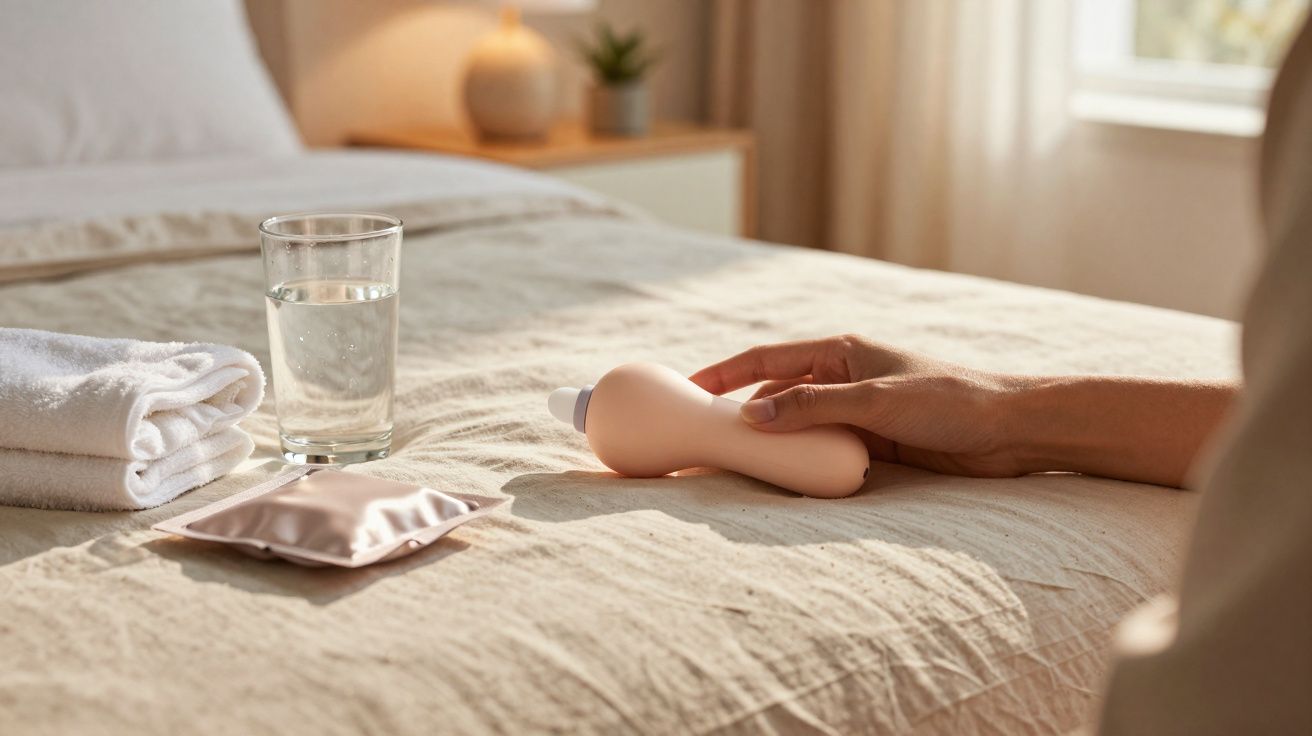
Rushing to the bathroom straight after sex, piling up toilet roll, wiping, and hoping nothing keeps leaking: for countless women, that routine is simply part of life, yet it’s rarely discussed openly. A French start-up is now launching an electric intimate device designed specifically for this moment-using gentle suction rather than mountains of tissues.
What the new Woumer intimate device actually does
The device is called Woumer. In terms of appearance, it looks more like a minimalist beauty gadget than a medical product. Its purpose is straightforward: after intercourse, it is intended to draw excess bodily fluids out of the vagina, helping to shorten that uncomfortable lingering damp sensation.
"The idea is to remove as much fluid as possible in a few seconds, without irritating the mucous membranes and without disrupting the delicate internal balance."
In practice, this means that instead of spending minutes on the toilet or building improvised “towel set-ups”, users briefly position the device, switch on the suction function, and are done in roughly ten seconds. The manufacturer says the action is gentle and superficial, without a noticeable “vacuum shock”.
Why this matters medically
This isn’t only about convenience. Specialists also view trapped fluids after sex as a potential risk factor for intimate discomfort. Semen has a much more alkaline pH profile than the vagina, which is naturally more acidic. That acidic environment usually helps protect against harmful germs and supports a stable bacterial flora.
If semen-containing fluid remains in the vaginal area for hours, that balance can shift. Some women then report:
- burning or itching
- increased discharge
- more frequent intimate infections
- a general feeling of “not really feeling clean”
This is the gap Woumer aims to fill: not a medicine and not a therapy-more of a technical comfort tool that is also meant to help keep intimate health steadier indirectly.
How the technology is meant to work in detail
The developers describe a “gentle” or “superficial” suction approach. In other words, it is intended to work only in the lower vaginal area-where fluid tends to collect. Deeper structures such as the uterus are not meant to be affected.
According to the company, the product was developed not only by small-device engineers but also with a medical advisory team that includes:
- gynaecologists
- midwives
- sexologists and sex therapists
This mix is intended to ensure the device performs as designed while still respecting anatomical limits.
Quiet, waterproof, easy to clean
Discretion is a key point. Nobody wants the bedroom to sound like a workshop hoover. That’s why the motor’s noise reduction was a major focus. The brand claims the device runs very quietly, making it far easier to use in everyday life.
On top of that, the intimate device is fully waterproof. Cleaning is done via a small, detachable container that can be rinsed out with soap and water. No additional disposable parts are required, which keeps ongoing costs low.
No protection against pregnancy or infections
Despite the engineering, one point is non-negotiable: this device is explicitly not contraception. The fastest sperm can reach the uterus within seconds. By that point, no suction device can realistically “pull them back out”.
"Woumer is purely a comfort product-no replacement for condoms, no emergency measure, no 'Plan B'."
The same limitation applies to protection against sexually transmitted infections. Only condoms or other medically validated protective methods reduce that risk. While the device may improve the feeling of cleanliness and potentially support bacterial balance, it does not block viruses or bacteria.
How it differs from vaginal douching
For years, many doctors have warned against vaginal douching with liquids or sprays. These can damage the natural flora, irritate the mucous membrane, and may even encourage infections. The new device positions itself as the opposite: it does not introduce foreign substances-it only removes fluid that is already there.
For sensitive mucous membranes, that can be an advantage. Even so, specialists generally advise discussing use with your own gynaecologist if you are unsure-particularly if you experience recurrent infections or pain during sex.
Price, target audience, and the sustainability angle
At launch, the introductory price is €89, and the manufacturer says it will later rise to €139. That places the product firmly in the premium segment of intimate care.
The company is mainly targeting women who:
- regularly struggle with lingering wetness after sex
- frequently “sacrifice” tissues, panty liners, or old towels
- pay close attention to waste reduction and sustainability
- want a discreet, tech-led solution
Because the device is reusable and does not rely on disposables, the developers highlight the environmental benefit: fewer panty liners, less toilet paper, and less hygiene waste after intercourse.
How safe is it, really?
At first glance, the design seems fairly simple, but many users have the same concern: can suction in an intimate area be dangerous? The developers state that only a weak, limited negative pressure is created-closer to a mild drawing sensation than a traditional hoover-like pull.
Correct use remains essential:
- Use only externally and in the lower vaginal area; do not “push it inside”.
- Clean thoroughly before and after use.
- Stop using it if you experience pain, bleeding, or significant discomfort.
- Seek medical advice if in doubt, especially if you have existing conditions.
For women with a coil (intrauterine device), the developers do not see a risk, because this form of contraception sits in the uterine cavity-significantly higher than where the device is used.
Intimate technology as a growing market
Woumer fits into a wider wave of products focused specifically on women’s health and sexuality-from cycle trackers and period wearables to smart pelvic-floor trainers. Unlike classic vibrators, the priority here is less about increasing pleasure and more about comfort, hygiene, and wellbeing after sex.
Many start-ups view this area as a long-term growth market: topics that used to be barely mentioned are now discussed more openly. That includes the idea that women don’t want to accept “aftercare stress” in the bathroom simply because technology has historically ignored this everyday problem.
What gynaecologists might say about Woumer
Gynaecologists typically emphasise that the vagina largely cleans itself. For healthy women without symptoms, a device like this is not a necessity. It becomes more relevant for those who repeatedly deal with unpleasant symptoms despite following standard advice.
For this group in particular, a controlled, brief removal of fluid after sex could bring relief-provided the suction remains moderate, the mucous membrane is not damaged, and use does not become excessive.
Practical tips and everyday limits
If you are considering trying a device like this, it helps to keep a few points in mind:
- It does not replace normal intimate hygiene; it is meant to complement it.
- If you have recurring thrush, pain, or unusual discharge, medical assessment should come first.
- In the early period after childbirth or surgery, extra caution is needed; tissue often requires rest.
- Psychological factors matter too: some couples may find technology in bed disruptive, while others experience it as liberating.
If you want to keep it discreet, you could store the device in the bathroom and use it only afterwards. It could also be folded into the usual post-sex toilet visit-just digitised and with far less paper use.
More autonomy in the bedroom
Ultimately, this mini suction device points to a broader question: how much comfort technology do women actually want in the bedroom and bathroom? For some, the notion of an “intimate hoover” feels odd at first, even slightly comic. For others, it’s simply a sensible next step in a market that has long overlooked women’s everyday realities.
Whatever your personal view, the device makes one thing clear: intimate topics do not have to stay hidden, and technology can do more than fitness tracking and smart-home controls. It can also make very specific, very human moments after sex more comfortable-and that is exactly where this new intimate gadget is aiming.



Comments
No comments yet. Be the first to comment!
Leave a Comment