
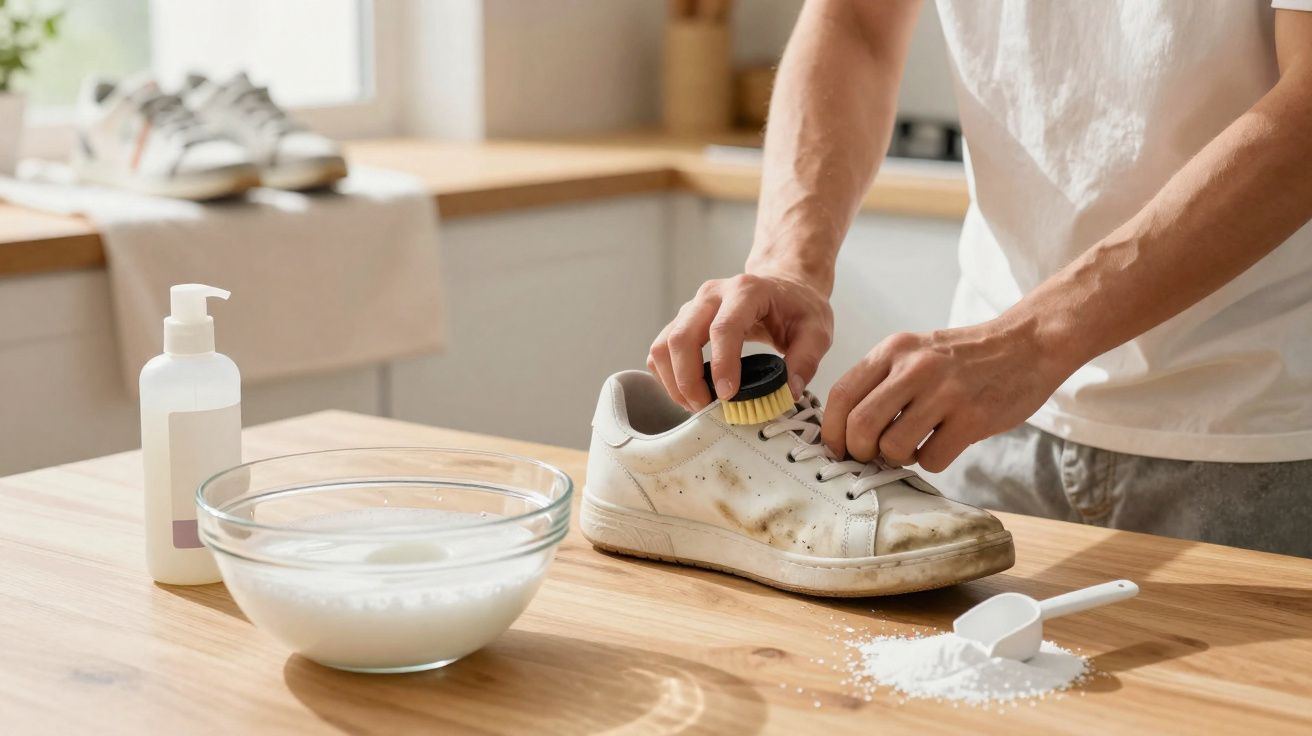
Your washing machine can distort shapes, weaken glue and dull colours, yet plenty of people still chuck trainers in on a quick cycle and cross their fingers. Meanwhile, a quieter DIY approach is catching on, aiming for clean, bright sneakers without bleach or a baking soda mess.
The trainer problem no one talks about
Trainers sit right at the centre of fashion and day-to-day wear. White canvas staples, chunky “dad” styles, vegan leather pairs for work: all of them collect dirt, urban dust and sweat faster than most of us manage to remove it.
The trouble is that machine washing can deform soles, undermine adhesives and even lift printed logos. Bleach may turn crisp white fabric an odd yellow and can also harm stitching. Baking soda on its own can leave a chalky residue and still fail to shift ground-in grime.
For many sneakers, the real damage comes less from mud than from harsh products and rushed cleaning routines.
On top of that, synthetic materials, vinyl panels and mixed textiles don’t respond uniformly to standard detergents. What cleans canvas nicely can pull colour from suede or create glossy patches on faux leather.
Why skip the washing machine?
Domestic machines spin faster than most trainers can tolerate. Over time, repeated washes can crack midsoles, loosen glued sections and twist the overall shape. Hot programmes may shrink certain fabrics and warp overlays.
A manual soak with carefully chosen products takes longer, but it gives you control. You can keep the water level lower, reduce exposure on delicate areas and stop as soon as the shoe looks clean enough.
The unexpected mix that actually works for trainers
More cleaning professionals are pointing people towards a straightforward two-step routine using everyday products: a mild ammonia and dish soap soak, then an oxygen-based boost with sodium percarbonate. No bleach, and no baking soda volcano on the worktop.
Step one: the ammonia and dish soap bath
Ammonia can sound alarming, but when properly diluted it’s excellent at breaking down oily stains and city grime. Combined with plain dish soap, it helps lift sweat, surface dirt and dark scuffs without wrecking most fabrics.
- Fill a plastic basin or bucket with about 3 litres of lukewarm water.
- Add one measure of mild dishwashing liquid.
- Add the same measure of clear household ammonia.
- Take out the laces and insoles.
- Put the shoes and laces into the solution and soak for at least one hour.
- Rinse very well with clean water, then leave to air dry away from direct heat.
The aim is gentle soaking, not violent scrubbing: let chemistry soften the dirt before your brush even touches the fabric.
This initial soak helps release dried-on mud and sweat salts that ordinary handwashing often misses. It also gets the fibres ready for the brightening stage that comes next.
Safety notes you should not skip
Ammonia must be handled carefully. Use it in a well-ventilated area, wear basic gloves, and never combine it with bleach or anything containing chlorine. That mixture produces toxic gas. Keep to the simple dish soap pairing and rinse thoroughly.
Step two: sodium percarbonate, the quiet brightener
After the first deep clean, the second stage is aimed at greyed fabric and pale stains: sodium percarbonate. It’s the active ingredient in many “oxygen” laundry boosters. In water hotter than about 40°C, it releases oxygen that penetrates fibres and lifts discolouration without stripping them.
Sodium percarbonate behaves like a controlled oxygen bomb inside the fabric, pushing out dullness while leaving the structure intact.
It’s particularly well suited to white or very light trainers, especially canvas pairs where every mark shows. It usually preserves the original shape and weave far better than harsher bleaching agents.
How to use sodium percarbonate on trainers
After the ammonia and dish soap wash:
- Fill a clean basin with hot water-not boiling, but comfortably above 40°C.
- Add two tablespoons of sodium percarbonate and mix until fully dissolved.
- Submerge the trainers face down so the uppers are completely soaked; add the laces as well.
- Leave for two to four hours, checking now and then.
- Rinse extremely thoroughly to remove every trace of residue.
- Pack the shoes with paper to help them hold their shape, then leave them to air dry.
The material typically comes out noticeably brighter, without the brittle finish chlorine bleach can leave behind. If stains won’t shift, use a soft brush dipped in the solution to work on toe caps or side panels before the longer soak.
What works for which material?
| Material | Ammonia + dish soap | Sodium percarbonate |
|---|---|---|
| White canvas | Very effective for dirt and sweat | Excellent for brightening and stain lift |
| Coloured fabric | Generally safe if colours are stable | Test first, may fade weak dyes |
| Synthetic leather / vinyl | Short soak or wipe only | Use with caution, prefer spot treatment |
| Real leather | Use a damp cloth, avoid full soaking | Not recommended |
| Suede / nubuck | Avoid soaking, brush dry instead | Avoid |
Before any deep clean, do a quick colourfastness test on a hidden section to avoid nasty surprises-especially on limited-edition pairs.
Odour control and drying: the missing steps
Bad smells often linger after a quick wash because bacteria sit deeper in the insole and lining. Cleaning insoles separately makes a difference. Some people add a small amount of sodium percarbonate or another oxygen-based powder only to the insole soak, then rinse it away thoroughly.
Drying is also what determines the final finish. Trainers dried on a hot radiator can crack or turn yellow. A shaded, airy spot is a safer option. Stuffing shoes with undyed paper or a clean cotton towel draws moisture from the inside, helping prevent musty odours and stopping the toe box from collapsing.
How often to clean, and when to stop
With daily city wear, a deep clean every one to three months is usually enough to keep trainers looking decent. Between these washes, light spot cleaning-a damp cloth, a soft brush, a quick wipe of the sole-can reduce the need for long soaks.
Some warning signs mean a pair is nearing the end of its life, regardless of how well the cleaning mix performs:
- Cracked midsoles that no longer support your foot.
- Layers separating that won’t glue back securely.
- Deep odours that return within days of washing.
- Inner lining torn enough to rub against your skin.
Beyond cleaning: making trainers last longer
A gentle routine like this does more than improve how a pair looks in photos. It can extend how long you can actually wear them, lowering waste and replacement costs. Most trainers are made largely from plastics and synthetic foams that can sit in landfill for decades; squeezing a few extra seasons out of one pair matters more than the latest limited drop.
Switching between two pairs, using removable insoles that can be washed separately, and storing shoes dry and uncrushed all help. Alongside the ammonia and sodium percarbonate method, these small habits can turn a delicate white trainer from a short-lived fashion buy into a longer-term staple.


Comments
No comments yet. Be the first to comment!
Leave a Comment