
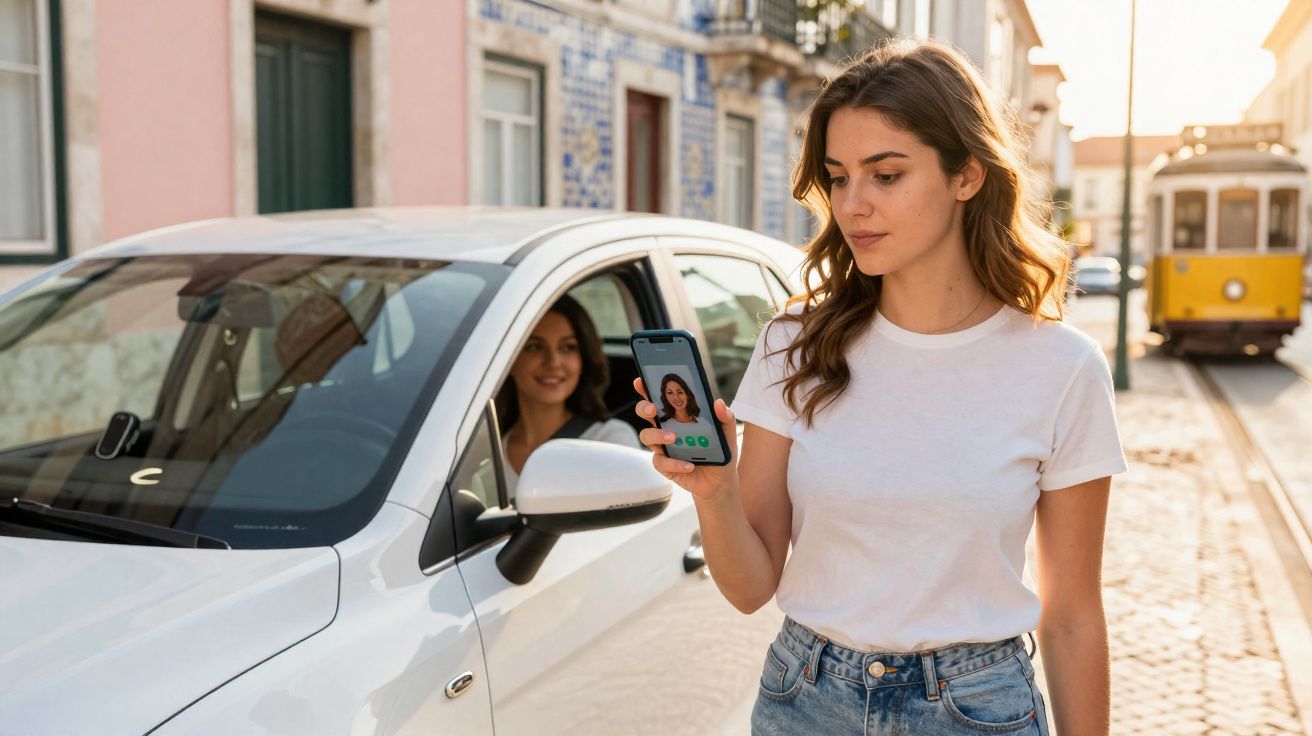
Uber has just introduced a new feature in Portugal called “Women Drivers”, which allows female riders to choose the driver’s gender. For now, the service is only available in Lisbon.
“By allowing them to choose who drives them or who they drive, we are making the sector more inclusive, more representative of the population and more attractive to women,” said Francisco Vilaça, General Manager of Uber Portugal.
The option will be available to both passengers and drivers, with no extra charge. Uber’s intention is to extend the feature to other cities across the country at a later stage.
“We want Uber to be the most convenient and personalised platform for all women. This new feature responds to a clear wish expressed by many drivers and users and also represents an opportunity for more women to feel motivated to drive with Uber, strengthening their autonomy and freedom of choice,” the General Manager added.
Availability will depend on how many female drivers are online at any given time. At present, in Portugal, only 9% of TVDE drivers are women.
According to Vilaça, the purpose of the system is to “create conditions that provide greater freedom of choice”. “Uber believes this feature could help attract more women into the activity, making driving a more appealing, flexible professional option, tailored to each woman’s different needs and preferences,” the statement says.
The service is already live in several markets, including France, Germany, Poland, Argentina, South Africa and Australia. It joins other existing options - “Uber Senior” and “Uber for Teens” - with the same goal: to personalise trips to match people’s needs.
What does the IMT say about Uber Women Drivers?
Last year, the IMT (Institute of Mobility and Transport) refused to authorise the launch of a new TVDE platform that would have been exclusively for women (both drivers and passengers) - Pinker - arguing it was discriminatory under Article 7 of Law No. 45/2018.
Regarding Uber’s new feature, the Institute said the platform “does not conflict with the law”, because it “does not exclude any user”. Even so, it acknowledges that it involves “segmented services”.
Vilaça argued that, in Uber’s case, the feature is simply “an additional product”.






Comments
No comments yet. Be the first to comment!
Leave a Comment