
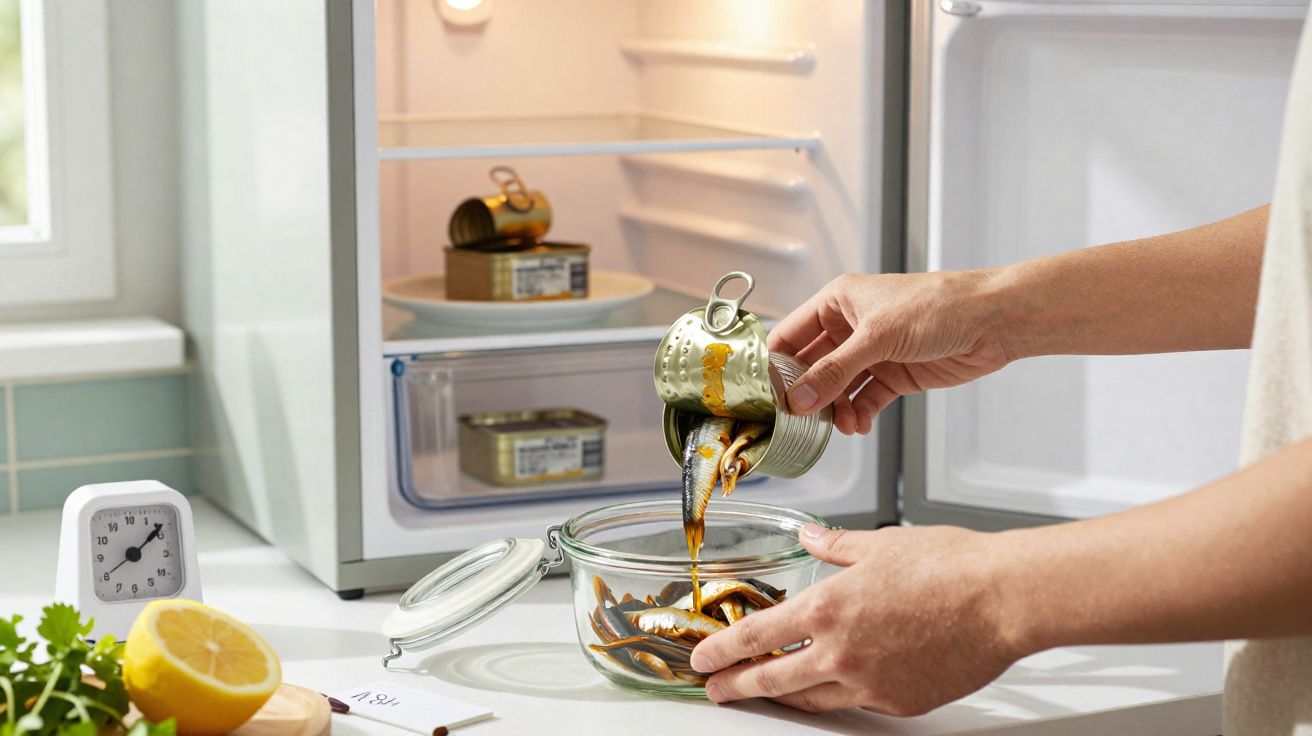
One ordinary fridge routine can, without you noticing, turn sardines into a potential hazard.
You boil some pasta, lift a couple of sardines from the tin, press the metal lid back down and slide what’s left into the fridge. Sorted, you assume: the fish is chilled, the tin is “closed enough”, and the date on the can is still years off. Food safety specialists say that reassuring chain of thought is exactly where people go wrong.
Why keeping sardines in an open metal tin in the fridge causes problems
Until you pull the ring, a tin of sardines functions like a small sealed, near-sterile container. The canning heat treatment removes most micro-organisms, and the airtight metal seal keeps the fish stable for years. As soon as you open it, the conditions are no longer the same.
Once the seal is broken, air, moisture and bacteria from your kitchen and refrigerator can get in. Refrigeration slows microbial growth, but it doesn’t halt it. In an opened tin you’ve now got oily fish, liquid, oxygen, and often a few contaminants from a fork - an environment that can suit microbes surprisingly well.
Once opened, a sardine tin turns from long-life food to fresh food with a very short clock ticking.
There’s a chemical angle too. With the metal exposed to air and to salty brine or acidic tomato sauce, the tin can begin to corrode. Sardines contain plenty of omega‑3 fats, which oxidise readily. As a result, they can turn rancid sooner, with flavour and odour changing well before the appearance becomes obviously “off”.
As corrosion continues, tiny amounts of metal or substances from the internal lining may leach into the food. Safety limits are tightly controlled, so one forgotten tin is unlikely to cause acute poisoning, but repeatedly storing leftovers carelessly can erode the safety cushion that the original canning process was designed to provide.
Food poisoning from leftover sardines: what can realistically happen?
In many cases, mishandled leftovers simply end up tasting unpleasant and causing an upset stomach rather than sending someone to hospital - but the risk isn’t imaginary. Bacteria such as Staphylococcus aureus and certain Clostridium strains can multiply when the conditions allow.
Botulism (from Clostridium botulinum) is frequently discussed in relation to canned foods. It’s worth being precise: botulism is rare, and the highest risk is linked to unopened tins that were poorly processed or have been damaged. After opening, if the sardines are kept properly cold, the risk is lower - but if the product was compromised to begin with, leaving leftovers warm or keeping them for too long makes the situation much worse.
Any sign of a swollen, leaking, or heavily rusted can is a red flag: do not even taste, just bin it.
More typical outcomes are less severe: nausea, stomach cramps and diarrhoea developing a few hours after eating questionable leftovers. And for children, pregnant women, older adults, or anyone with a weakened immune system, even a “mild” episode can still hit hard.
How long can tinned sardines be kept after opening?
An unopened tin of sardines often carries a best-before date that’s three to five years in the future. Open the lid, and that timescale changes from years to days.
Safe storage at a glance (sardines)
| Stage | Where to store | Maximum recommended time |
|---|---|---|
| Unopened tin | Cool, dry cupboard | 3–5 years (check date and can condition) |
| Opened, transferred to container | Fridge (0–4 °C) | 24–48 hours (up to 3–4 days at most) |
| Frozen leftovers | Freezer (≤ -18 °C) | Up to 3 months |
Food agencies and many nutritionists generally advise keeping opened sardines in the fridge for no longer than 48 hours - but only if you’ve moved them into a clean, airtight, non‑metal container. Some guidance allows 3 or 4 days, provided the fridge consistently stays cold and the container remains properly sealed.
For young children, pregnant people, and those living with chronic illness, it’s sensible to be stricter: finish the leftovers the next day or freeze them.
The correct way to store sardines once the tin is opened
The solution is straightforward, and it starts immediately after opening. Treat sardines as you would fresh fish that happens to come in metal packaging - not as unbreakable “emergency food”.
- Use a clean fork or spoon to remove the fish - avoid using your fingers and avoid double-dipping.
- Move the sardines and their oil or sauce straight into a thoroughly clean glass jar or food‑grade plastic container.
- Close it firmly, write the date and time on the label, and keep it in the coldest part of the fridge (not in the door).
- Aim to eat them within 24–48 hours, or freeze anything you know you won’t use soon.
Never leave sardines sitting in the opened metal tin, even “just for tonight”. The metal is part of the problem.
If you’re reheating sardines or adding them to a cooked dish, ensure they’re piping hot throughout; if you’re using them in a salad or spread, keep them properly chilled right up to serving.
Flavour matters: why sardines taste worse when left in the tin
Safety aside, taste is a strong reason not to leave sardines hanging about. They’re naturally bold in flavour. As oxidation progresses, that appealing richness can shift into something sharp, greasy and unpleasant.
Typical clues include a metallic note, a faint bitterness, and a softer, more mushy texture. The oil may turn cloudy, and the smell can resemble old paint or putty - classic signs that the fat has gone rancid.
Once those flavours develop, they don’t reverse. Lemon juice, chilli or extra seasoning might mask them briefly, but they won’t repair degraded fish. Discarding sardines at that point avoids both a miserable meal and possible stomach trouble.
Smart ways to use up an opened tin quickly
One of the easiest fixes is simply to avoid letting sardines linger at all. If you have a few quick options in mind, half a tin rarely survives beyond the next day.
Quick ideas for the next 48 hours
- Speedy sardine toast: mash sardines with a squeeze of lemon and a little mustard, spread on hot toast, top with sliced onion or pickles.
- Five-minute pasta: toss warm pasta with sardines, their oil, garlic, parsley and a spoonful of pasta water.
- Potato salad upgrade: fold sardines into boiled potatoes, capers and a yoghurt or mayo dressing.
- Sardine “rillettes”: mix with soft cheese or Greek yoghurt, herbs and pepper for a spreadable dip.
These straightforward meals help you finish leftovers promptly and stay comfortably within the recommended storage limits.
What “oxidation” and “migration” actually refer to
Two terms often appear in food safety advice about canned fish: oxidation and migration. They can sound technical, but they describe very practical changes that can occur once a tin is opened.
Oxidation is the reaction between oxygen and the fats in sardines. Omega‑3 fats are especially vulnerable. When they break down, they form compounds that taste and smell wrong. You may not see a change immediately, but the odour is often noticeable before anything looks different.
Migration means tiny quantities of substances shifting from packaging into the food. Modern tins use protective linings to keep this low, and when the can is sealed they work effectively. If you leave salty or acidic food sitting in an opened tin that’s beginning to corrode, the conditions change and those built-in protections don’t apply in quite the same way.
When to trust your senses - and when not to
Many people lean on the “sniff test” for leftovers, and with sardines it can help to a point. If the smell is strongly sour, metallic, or simply unpleasant, don’t taste them. Visible colour shifts, bubbles in the liquid, or a slimy surface are also warning signs.
The problem is that some harmful bacteria don’t immediately alter smell or appearance. So sardines that were stored poorly can look acceptable and still be risky - which is why the time limits and proper chilling matter just as much as your judgement.
If you are hesitating over a two‑day-old portion of sardines, the safest choice is usually the bin, not the plate.
Look at it this way: the tin gives you years of shelf life up front. After opening, sardines need basic care - clean containers, real cold, and a quick path from fridge to fork.





Comments
No comments yet. Be the first to comment!
Leave a Comment