
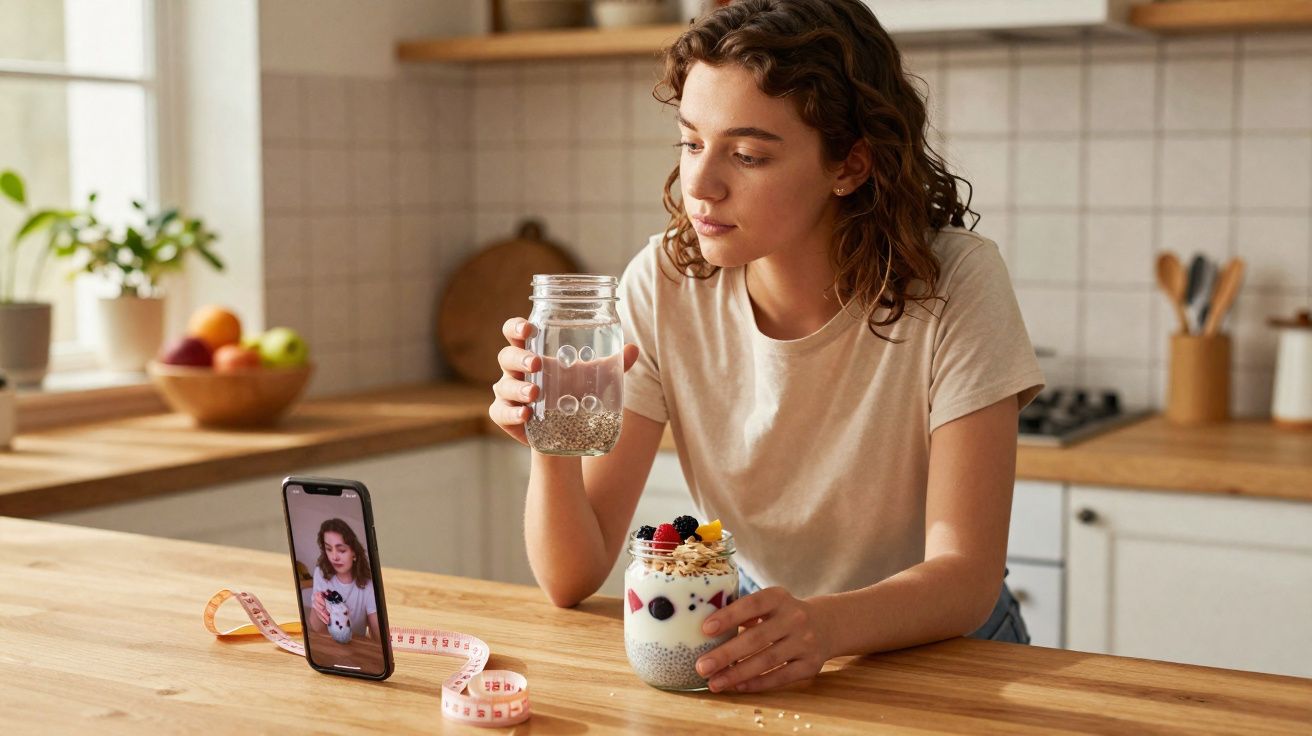
A peculiar concoction is doing the rounds on TikTok right now: warm water mixed with chia seeds and lemon juice, dubbed “Tadpole Water” by users. In the clips, people claim the drink makes the kilos drop quickly - within just a few days. What looks, at first glance, like harmless trend-chasing touches on far more sensitive ground: body image, the psychology of eating, and the influence social media can have on the health choices of an entire generation.
What is behind the “Tadpole Water” trend on TikTok
The recipe is made up of only three ingredients: chia seeds, warm water and freshly squeezed lemon juice. After a brief soak, the seeds swell and turn into a slippery, gel-like mixture. Visually, it resembles tadpoles in a pond - which is exactly where the name comes from.
Gen Z is embracing the drink as an easy “shortcut” to losing weight. On TikTok, users report dropping a few pounds in only a handful of days. One of the videos that helped push the trend viral featured a young woman claiming she lost three pounds in three days - even while openly admitting she nearly vomits when she drinks it.
The hype thrives on dramatic before-and-after promises, the disgust factor, and the hope that a single drink can kick-start weight loss.
Plenty of people upload clips showing themselves forcing the glass down, then celebrating that very “pushing through” as proof of their determination to reach their dream body. Humour, body pressure and group dynamics blur together into a risky cocktail.
Why chia seeds are so popular
Chia seeds have been viewed as a small “superfood” for some time, largely because they contain:
- a high amount of fibre
- plant-based protein
- omega-3 fatty acids
- antioxidants, vitamins and minerals
Nutrition specialists have long pointed out that, when used properly, chia seeds can:
- help stimulate digestion,
- slightly steady blood sugar levels,
- keep you fuller for longer and curb snacking,
- reduce the risk of high blood pressure and raised blood fats.
A key factor is what they do in water: chia seeds absorb liquid and form a gel. In the stomach, that gel can expand a little and create a stronger sense of fullness. The trend is built around that effect: the idea is that if you feel full sooner, you’ll eat less.
Can “Tadpole Water” actually help with weight loss?
Part of the supposed benefit is plausible. If you drink a glass of soaked chia seeds before a meal, you may feel more satisfied and naturally opt for smaller portions. Paired with a lower-calorie diet and regular movement, that can support weight loss.
However, it’s not as straightforward as TikTok makes it sound. Weight loss happens when, over time, you consume fewer calories than you burn. One drink - no matter how viral - doesn’t replace a well-planned way of eating.
| Trend promise | Realistic perspective |
|---|---|
| Rapid weight loss within a few days | Often just water loss or fluctuations in bowel contents |
| A “magical” fat-burner | No single substance burns fat deposits in a targeted way on its own |
| A secret tip from social media | A familiar effect of fibre and added volume in the stomach |
Chia seeds can help you feel full, but they don’t magically fix inactivity or unhealthy eating habits.
The widely repeated “three pounds in three days” claim also doesn’t say much. Quick shifts like that are often down to less salt, more urination and a less full bowel - not the loss of body fat.
The downside: risks and side effects
Alongside the enthusiastic posts, warnings have already started to surface. Some users report stomach pain, bloating or constipation. One creator makes a clear point: eating chia seeds dry - or not soaking them for long enough - can cause issues.
The reason is simple: the seeds continue to expand inside the body. If you don’t drink enough alongside them, the contents of the gut can become thicker and harder to move along. That can be uncomfortable - and in extreme cases may lead to constipation, or what medical professionals would describe as a kind of digestive “blockage”.
Other possible problems include:
- Bloating: fibre is fermented in the gut, especially if you suddenly increase your intake by a lot.
- Diarrhoea: in sensitive people, strongly stimulating digestion can mean frequent trips to the loo.
- Interactions: anyone taking blood thinners, blood pressure medication or diabetes medication should check with a clinician before consuming large amounts of chia.
There’s another catch, too: if you assume a trend drink can cancel out every fast-food binge, you’re setting yourself up for the next frustration loop. The belief that a “hack” can fix everything encourages unhealthy patterns.
Social media, body image and pressure on Gen Z
“Tadpole Water” is a clear example of how powerfully social media can shape eating choices. Before-and-after photos, jokes about the unpleasant taste, and constant comparison with others can reinforce the sense that you must always be “optimising” yourself.
Many young people aren’t trying the drink out of curiosity about nutrition, but out of fear of not being slim enough.
That blend of comedy and harshness towards one’s own body is typical: people laugh at the disgust while simultaneously signalling that achieving a certain look matters more than feeling well. That can fuel disordered eating behaviours - particularly among teenagers who already feel unsure of themselves.
How to use chia seeds sensibly (beyond the “Tadpole Water” hype)
Chia seeds can absolutely have a place in a healthy diet - as long as they’re not treated like a miracle cure. If you want to try them, more everyday options include:
- as a topping on yoghurt or skyr
- mixed into porridge oats or overnight oats
- blended into smoothies, pre-soaked
- made into a pudding with milk or a plant-based drink
Useful rules of thumb:
- Always drink enough fluid alongside them.
- Start small, for example 1–2 teaspoons a day.
- If you have pre-existing conditions, ask a clinician before making large amounts part of your routine.
If your real goal is weight loss, you need a broader foundation: more movement, plenty of minimally processed foods, enough protein, lots of vegetables, adequate sleep and stress management. A glass of “Tadpole Water” might fit into that approach, but it cannot replace it.
How to spot dubious weight-loss trends
“Tadpole Water” isn’t a one-off. TikTok, Instagram and similar platforms constantly churn out new “hacks” for rapid weight loss. Warning signs that a trend deserves scepticism include:
- promises of extremely fast weight loss (“3 kg in 3 days”)
- one single food or drink presented as the centrepiece
- a lack of clear explanations or credible sources
- clips that lean heavily on guilt, shame or body pressure
Noticing these cues can help you stay calm - and treat trends for what they often are: short-lived waves that come and go, while long-term habits are what shape health and weight.
One more detail that often gets missed: many “effects” are only apparent. If someone swaps a sugary soft drink for a glass of water with chia seeds, they’re simply taking in fewer calories overall. The real “trick”, then, isn’t the slimy gel - it’s replacing a high-calorie habit.
Anyone tempted to experiment with the trend should at least understand what’s happening in the body, what sensible limits look like, and why no viral drink can do the underlying work of improving diet, activity and self-image. Chia seeds can be one building block - the rest still takes effort.





Comments
No comments yet. Be the first to comment!
Leave a Comment