
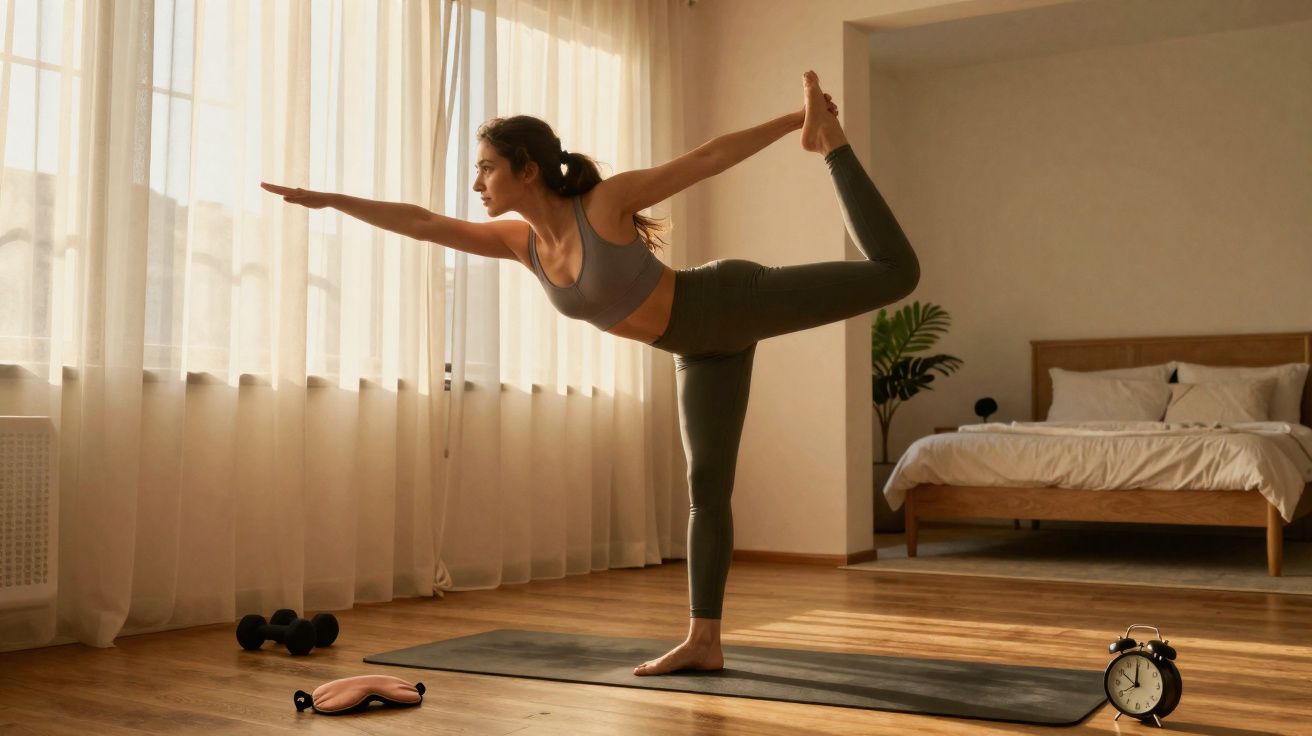
Rolling out a yoga mat and moving in time with your breath may be among the most effective long-term exercises for better sleep.
A meta-analysis drawing on 30 randomised controlled trials reported that regular, high-intensity yoga shows a stronger link with improved sleep than walking, resistance training, combination exercise, aerobic exercise, or traditional Chinese exercises such as qi gong and tai chi.
What the randomised controlled trials found about high-intensity yoga and sleep disturbances
The trials included in the analysis were conducted in more than a dozen countries and involved over 2,500 participants experiencing sleep disturbances, spanning all age groups.
A short video clip below provides a quick overview of the research.
After researchers at Harbin Sport University in China analysed the pooled results, they concluded that high-intensity yoga done for less than 30 minutes, twice a week, was the most effective exercise “antidote” for poor sleep.
Walking ranked as the next most helpful physical activity, with resistance exercise following behind. In some cases, beneficial changes were reported after as little as 8 to 10 weeks.
How the new meta-analysis compares with 2023 findings
These results do not entirely align with a 2023 meta-analysis, which suggested that aerobic exercise or mid-intensity exercise performed three times a week is the most effective approach for improving sleep quality in people with sleep disturbances.
Even so, one of the studies included in that earlier review did report that yoga produced more pronounced effects on sleep outcomes than other types of exercise.
One complication is that yoga does not sit neatly in either the aerobic or anaerobic category, and its intensity can shift considerably depending on the technique being practised.
It is possible that these variations in practice help to explain why results differ between trials.
Why yoga might help sleep (and what remains uncertain)
The latest meta-analysis does not pinpoint why yoga may be especially beneficial for sleep, although there are several plausible explanations.
Yoga can increase heart rate and challenge the muscles, and it also places strong emphasis on regulating breathing. Evidence suggests breath control may stimulate the parasympathetic nervous system, which supports “rest and digestion”.
Some studies also propose that yoga influences brainwave activity patterns, which may encourage deeper sleep.
However, while strong evidence indicates that exercise overall is good for sleep, there is still a shortage of studies that directly compare specific exercises and track their long-term effects.
"Caution should be exercised when interpreting findings from studies on sleep disturbances, given the limited number of studies included and the unique characteristics of the sleep disturbances population," warn researchers at Harbin Sport University.
"Further, high-quality research is needed to confirm these findings."
Because bodies and brains vary widely, there is no single solution that suits everyone with insomnia or other sleep disturbances.
Working up a sweat on a yoga mat is simply one option among many.
The study was published in Sleep and Biological Rhythms.
An earlier version of this article was published in August 2025.






Comments
No comments yet. Be the first to comment!
Leave a Comment