
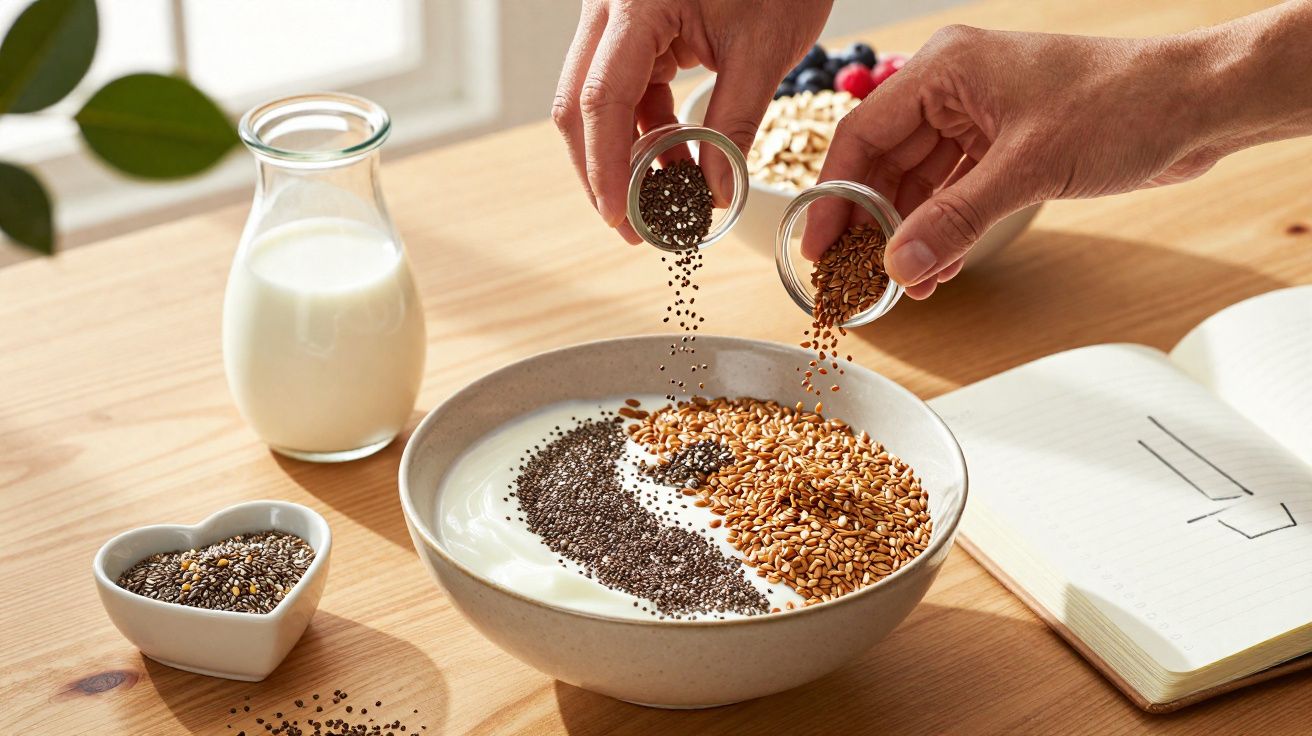
Chia seeds and linseeds have been celebrated for years as tiny nutrition powerhouses. Both are packed with fibre, plant-based protein and beneficial fatty acids. Even so, they are not the same - and many people only get half the benefit because they use them incorrectly or too infrequently.
Where chia seeds and linseeds come from
Chia seeds: a tradition rooted in Central America
Chia seeds come from Salvia hispanica, a plant native to Central America. The Aztecs and Maya already relied on the seeds as an energy source. These days, chia turns up most often in bowls, overnight oats and other trend-led recipes.
One standout feature is how much liquid chia can absorb: the seeds take up many times their own weight in water and develop a gel-like coating. That texture works brilliantly for puddings, thickening smoothies, or creating vegan desserts.
Linseeds: a classic from ancient cultures
Linseeds come from the common flax plant (Linum usitatissimum), a cultivated crop used by people for thousands of years - originally particularly in the Near East. As well as providing fibre for textiles, flax also produces nutrient-rich seeds.
Today, Europe is among the key growing regions, and linseeds are available in virtually every supermarket. They are especially known for their high levels of plant-based omega‑3 fatty acids and their effect on digestion.
"Chia scores with minerals such as calcium, linseeds provide particularly high levels of omega‑3 fatty acids - together they complement each other perfectly."
Nutrition check: what the seeds actually provide
Both seed types deliver a lot of energy and nutrients in a small serving. The key figures per 100 g make the differences clear:
| Nutrient (per 100 g) | Linseeds | Chia seeds |
|---|---|---|
| Calories | 534 kcal | 486 kcal |
| Protein | 18.3 g | 16.5 g |
| Fat | 42.2 g | 30.7 g |
| Carbohydrates | 28.9 g | 42.1 g |
| Fibre | 27.3 g | 34.4 g |
| Omega‑3 | 22.8 g | 17.8 g |
| Calcium | 255 mg | 631 mg |
| Iron | 5.7 mg | 7.7 mg |
What does that mean day to day for chia seeds and linseeds?
- Fibre: Both provide substantial amounts and help support digestion. Chia is slightly ahead on fibre content.
- Omega‑3 fatty acids: Linseeds have a clear advantage here and are considered one of the best plant sources.
- Minerals: Chia contains markedly more calcium and iron, which can support bones and the immune system.
If you eat a plant-based diet or rarely have fish, these nutrients can be particularly relevant. In small amounts, both seeds fit easily into everyday eating - around one to two tablespoons per day.
How chia seeds and linseeds can support health
Digestion: support for a sluggish gut
Their high fibre content can stimulate bowel activity. Linseeds contain plenty of insoluble fibre, which increases stool bulk and can speed transit. Chia provides more soluble fibre, which binds liquid in the gut and forms a gel-like substance.
This combination may ease bloating and constipation, provided you increase quantities gradually and drink enough. If your gut is very sensitive, start with one teaspoon and see how well you tolerate them.
Heart and blood vessels: plant-based omega‑3 strength
Linseeds are particularly rich in alpha-linolenic acid, a plant omega‑3 fatty acid. It may help improve unfavourable blood lipid values and slightly stabilise blood pressure, which can reduce strain on the heart and vessels over time.
Chia can also improve the overall fatty-acid balance, but it does not reach the same omega‑3 levels as flax. If you eat little fish, one tablespoon of linseeds a day can help close part of the gap.
Weight management: staying fuller for longer thanks to fibre
Fibre swells in the stomach and slows gastric emptying. That is why both chia and linseeds can contribute to a longer-lasting feeling of fullness. Many people find that adding a tablespoon of seeds to breakfast reduces the urge for between-meal snacking.
There is also the protein content: it can slightly blunt blood sugar spikes. This may reduce cravings, especially when combined with protein and a little fat - for example in yoghurt or porridge.
Plant-based protein for vegetarian eating
Both seeds contribute meaningful amounts of protein. On their own, they are not a complete protein source, but combined with pulses, grains or nuts they can create a high-quality amino-acid profile.
Particularly in vegetarian or vegan diets, chia seeds and linseeds work well as small “protein boosters” - in muesli, bread or smoothies.
How to add linseeds to meals properly
Why ground linseeds are the better choice
The body can only partially break down the tough outer shell of whole linseeds. As a result, many valuable fatty acids and minerals pass through the gut unused. When the seeds are ground, those nutrients are far more available.
If you have a coffee grinder or small blender, you can grind linseeds fresh at home. That helps protect sensitive fatty acids and also gives a fuller flavour.
- Smoothies and yoghurt: One tablespoon of ground linseeds adds creaminess, fibre and omega‑3 to your drink or bowl.
- Bread and baking: You can swap part of the flour in bread, muffins or pancakes for linseeds, making the result moister and more nutrient-dense.
- Egg substitute for baking: Stir one tablespoon of ground linseeds into three tablespoons of water, leave briefly to thicken - the mixture binds batters similarly to an egg.
"Whole linseeds work mainly mechanically in the gut, while ground seeds additionally provide the valuable fatty acids."
Using chia seeds cleverly in everyday life
Whole or soaked - both work
Unlike linseeds, chia can be eaten whole without issue. The seeds swell strongly in liquids. If you eat them dry, make sure you drink something alongside so they can absorb enough water in the digestive tract.
- Chia pudding: Mix two tablespoons of chia with milk or a plant drink and chill for a few hours. Add fruit and nuts for a complete breakfast or dessert.
- Salads and bowls: Sprinkle one teaspoon over vegetables, rice bowls or quinoa bowls for a crisp texture and extra nutrients.
- Drinks: A spoonful in water with lemon or fruit juice creates a lightly thickened, filling drink - useful as an afternoon snack alternative.
How much is sensible?
For most adults, around one to two tablespoons of chia seeds per day is a common amount. If you are not used to fibre, begin with one teaspoon and increase slowly to avoid overwhelming your gut.
Which seeds suit which type of person?
If your main goal is to support heart and blood vessels, linseeds are usually the better option - ideally freshly ground. If you have a mild calcium shortfall or follow a vegan diet, you may want to lean more on chia to boost minerals and plant protein.
- For heart and blood values: focus on linseeds
- For bones and iron status: add more chia to daily meals
- For good digestion: use both seeds in small, regular portions
What to bear in mind with chia seeds and linseeds
If you take blood-thinning medication or have chronic bowel conditions, it is sensible to discuss larger amounts of seeds with your doctor. Both chia and linseeds bind water - and without adequate drinking, the opposite of the intended effect can occur, making stools harder.
Storage matters too: because linseeds are high in fat, they can turn rancid more quickly when exposed to warmth and light. Store whole and ground seeds in tightly sealed containers, in a cool, dark place. Chia is slightly more robust, but still benefits from proper storage.
Used together, each plays to its strengths: a spoonful of ground linseeds for an omega‑3 boost, plus a spoonful of chia for minerals and fullness - and a simple yoghurt becomes a compact nutrient hit.






Comments
No comments yet. Be the first to comment!
Leave a Comment