
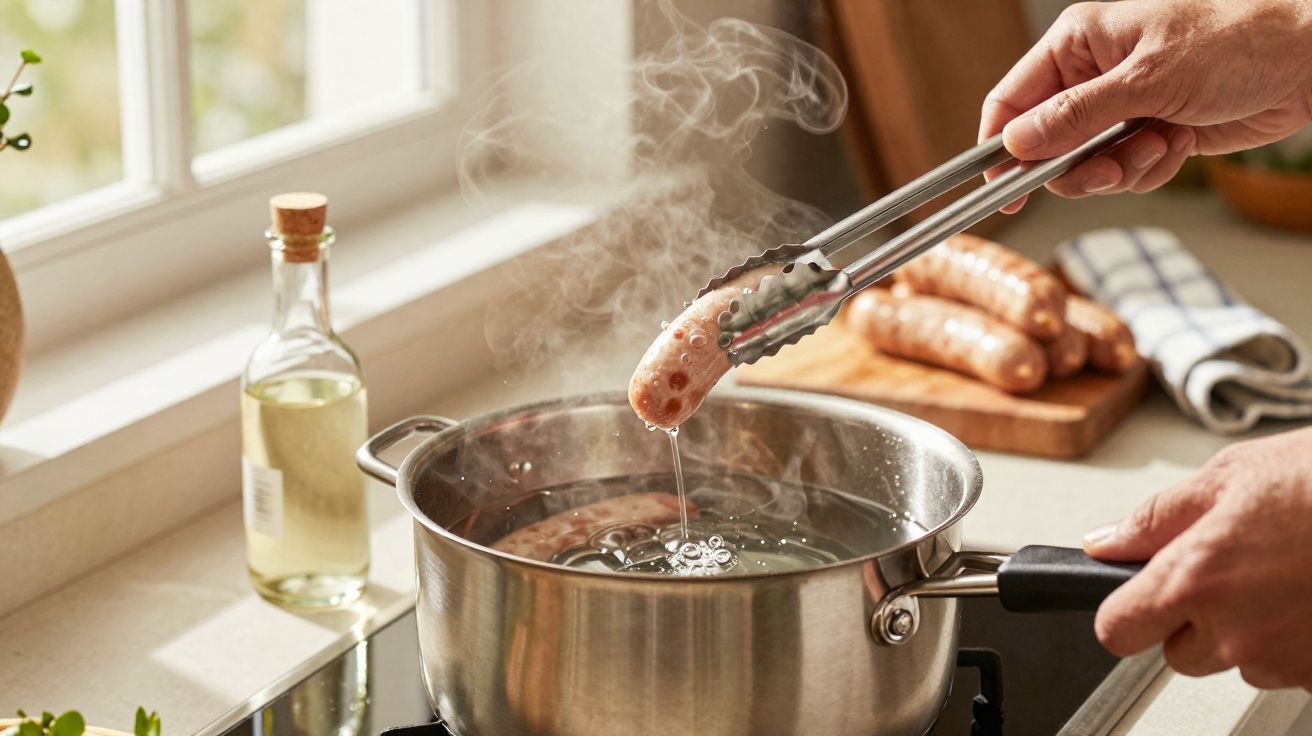
Plenty of home cooks will recognise the annoyance of sausages that split open, leave greasy scum on the surface, and fill the kitchen with a heavy smell. One small change to the cooking water - ordinary vinegar from the cupboard - can very often prevent all of that.
The vinegar trick for cooking sausages: why they split in hot water
Put sausages into very hot water and the contents expand quickly. As the fat and juices warm, steam forms and pushes outward on the skin.
When the heat is too fierce, the pressure builds faster than the casing can stretch. The usual outcome follows: the skin bursts and the tasty filling escapes into the water instead of staying inside the sausage.
The casing material matters a great deal. Most everyday sausages are wrapped in either:
- natural casings made from animal intestines, rich in collagen
- artificial casings often based on collagen or cellulose
Collagen copes well with moderate heat, but it weakens as the temperature rises towards boiling, particularly around 90–95°C (194–203°F). As soon as the casing starts to lose its structure, even a small jump in internal pressure can be enough to split it.
"Gentle heat keeps the casing supple and the filling stable, sharply reducing the risk of a blowout."
That is exactly why simmering tends to outperform a hard boil. Water kept just under boiling passes heat across more steadily, so the sausage warms without sudden pockets of steam, and the outer layer has time to adjust.
How different heating methods change the results
Minor technique differences are obvious once you serve them:
- Hard boiling: aggressive bubbling, fast expansion, high internal pressure, more split skins
- Gentle simmering: minimal bubbling, even warming, casings remain intact and look smoother
- Just-heated water for pre-cooked sausages: enough to warm through, without vigorous bubbling
- Controlled temperature: less strain on the casing, more juices retained inside
A lot of mass-produced sausages are already pre-cooked and simply need reheating to a safe serving temperature, not an aggressive boil. That mismatch is a common reason for bursting at home: they get overheated rather than merely warmed through.
What vinegar actually changes in the pan
Everyday kitchen vinegars - white wine vinegar or clear spirit vinegar - are typically about 5% acetic acid, with a pH near 2.5. Adding even a spoonful per litre noticeably alters the chemistry of the cooking water.
What it does to the sausage casing
Casing is largely protein, including collagen, and proteins respond to pH. In mildly acidic water, proteins at the surface tighten and shift into a slightly different arrangement.
"A touch of acidity gently firms the casing, helping it hold together instead of tearing under pressure."
This is not about bathing sausages in strong acid, which would make them tougher and affect the flavour. The aim is a small, measured change. At low levels, vinegar can help stabilise the casing’s outer layer, while gentler heat warms the inside gradually.
What it does to smell and the air in your kitchen
There is also an effect you can detect immediately: some of the more aggressive cooking aromas come from basic (alkaline) compounds known as amines. When concentrated, they can smell a bit like fish, ammonia, or “old fridge”.
Acid reacts with these compounds, converting them into less volatile salts, which stay in the liquid rather than drifting into the air.
"A splash of vinegar tames those sharper, lingering sausage smells and leaves the kitchen air milder."
The main benefits of adding vinegar to sausage water
- Reduced chance of bursting thanks to a slightly more stable casing surface
- A smoother, more even bite rather than a rubbery skin
- Improved flavour balance, as a hint of acidity cuts through salt and fat
- Fewer lingering odours because fewer volatile compounds escape
How to use vinegar in sausage water (the correct method)
Sequence matters more than most people expect: heat, acidity and timing all work together.
| Step | What to do | Why it helps |
|---|---|---|
| 1 | Fill a pan with cold water | Ensures even heating from the start |
| 2 | Add about 1 tbsp vinegar per litre | Gently acidifies the water without souring the sausage |
| 3 | Heat the water until hot but not boiling hard | Prepares a calm, stable cooking environment |
| 4 | Add the sausages only once the water is at that stage | Avoids shocking them with rapidly changing temperatures |
| 5 | Simmer gently for 5–8 minutes | Warms through without damaging the casing |
This method suits hot-dog sausages, fresh pork sausages, bratwurst, poultry sausages, and many mixed-meat options. It is particularly useful if you want a smooth, appetising casing rather than a split, uneven one.
The right temperature and time for juicy sausages
Most shop-bought sausages labelled as pre-cooked do not need full cooking again; they only need to be brought back up to a safe internal temperature. Food safety guidance commonly points to about 74°C (165°F) internally for this type of product.
Once the centre reaches that level, keeping them at boiling point does little for flavour and instead raises the likelihood of split skins and dry middles.
"A calm pan, moderate heat and a dash of acid often give you plumper sausages with more of their juices locked in."
Keeping the water just under a full boil delivers that gentle warming. If you are seeing large, rolling bubbles, the temperature is too high. Aim for occasional small bubbles and slight movement in the water, not a constant churn.
Common mistakes - and how the vinegar method helps
From fridge to fury: temperature shock
A common error is putting fridge-cold sausages straight into violently boiling water. The casing tightens quickly while the inside then expands abruptly, which makes splitting far more likely.
Beginning with cooler water and heating up with the sausages in the pan, or pre-heating only to a gentle simmer, gives them time to adjust. The vinegar adds a further safeguard by slightly firming the casing surface.
Getting the vinegar amount wrong
Taste is the main concern. If you add too much vinegar, it can take over and leave a pickled flavour. The usual rule - one tablespoon per litre of water - generally stays subtle.
If you are hesitant, use a smaller amount first. Next time, you can increase it slightly if you notice no change in texture or smell.
Extra tips for better sausages at home
Pair gentle simmering with a hotter finish
Many people prefer a sausage with browning and a little crispness, rather than one that looks pale. The vinegar approach works well as a first step before finishing in a pan or on the grill.
- Simmer with vinegar as above until heated through
- Pat the sausages dry to reduce fat splatter
- Finish in a hot pan, air fryer, or under a grill for colour and light charring
This “gentle then hot” approach helps keep the casing intact and the inside juicy, while the final sear builds flavour and texture on the outside.
Key terms: collagen and pH
Collagen is the main structural protein in many natural casings. With heat, it gradually turns into gelatine, giving a tender, pleasant texture. If it is overcooked or hit with very high heat, the structure can collapse and lose its resilience, leaving the casing tough or prone to tearing.
pH is the scale used to indicate how acidic or alkaline a liquid is. Vinegar moves the water towards the acidic end. That shift affects both how proteins behave on the sausage surface and how smelly compounds behave in the air above the pan.
When those two points click - collagen changing with heat and pH nudging protein behaviour - the vinegar trick stops seeming like superstition and starts to look like a simple, sensible kitchen habit.




Comments
No comments yet. Be the first to comment!
Leave a Comment