
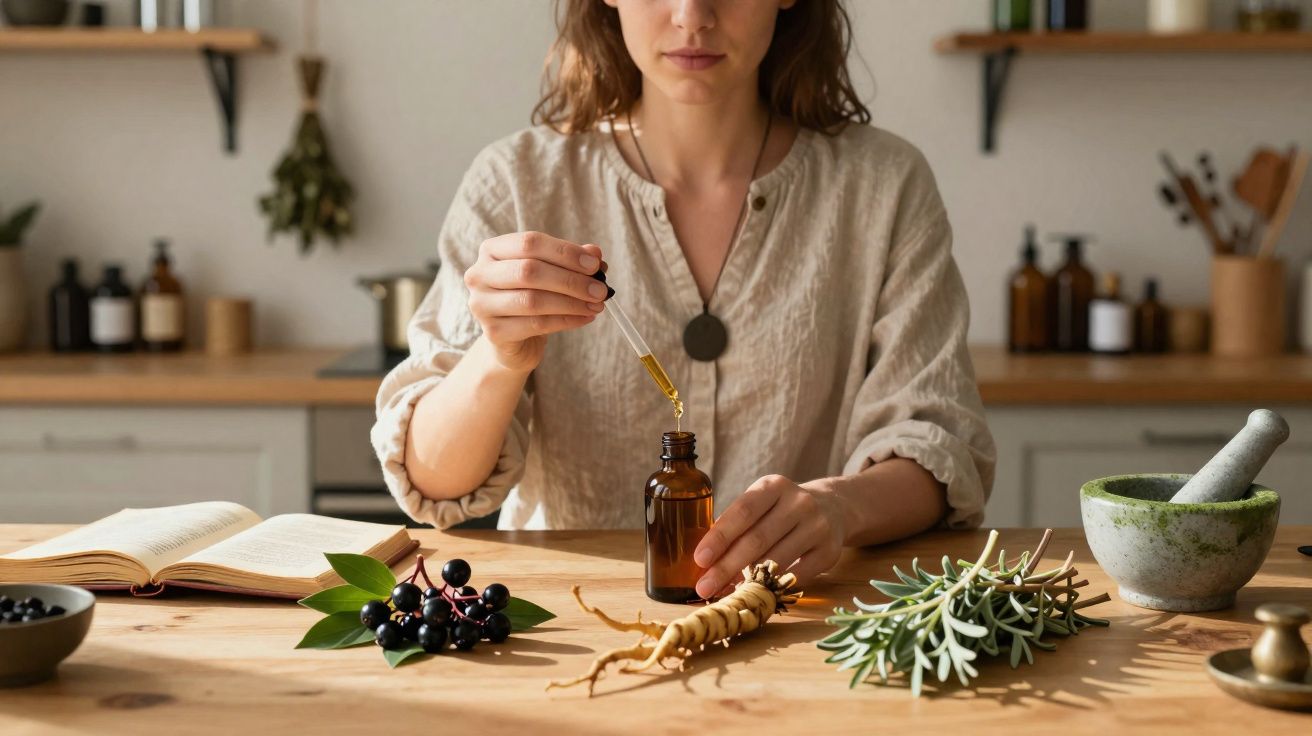
With Halloween drawing near, old tales about witches and their brews tend to return - and they often involve unsettling plants such as belladonna, mandrake and mugwort.
Wrapped in legend and folklore, these botanicals have been associated for centuries with spells, charms and sorcery.
Behind the chilling imagery, though, sits a rich story of pharmacology - and, for some of these plants, a continuing place in medicine today.
Belladonna: atropine, scopolamine and modern medical use
Belladonna (Atropa belladonna) - better known as deadly nightshade - has an unusually conflicted past, valued at different times as both a remedy and a poison. Its name (Italian for "beautiful woman") points to a Renaissance fashion: women reportedly applied juice from the berries to widen their pupils, believing it made them look more attractive.
That pursuit of beauty came at a cost. Belladonna is extremely poisonous: swallowing only a small number of leaves or berries can kill, and even handling the plant may inflame the skin. In various cultures it has also been taken for its hallucinogenic effects.
Its potency comes from tropane alkaloids, including atropine and scopolamine. These chemicals interfere with acetylcholine, the messenger that carries signals between nerve cells within the parasympathetic nervous system.
The parasympathetic system helps control muscle activity and vital functions such as heart rate, breathing, memory and learning, sweating, digestion and urination.
In contemporary healthcare, atropine is used to dilate the pupils during eye examinations, to treat bradycardia (a slow heart rate), and as an antidote to organophosphate poisoning linked to certain pesticides and chemical warfare agents. Scopolamine is prescribed to prevent motion sickness and to reduce post-operative nausea.
Ongoing research continues to underline belladonna’s medical relevance, but the risks have not gone away. Several health agencies have warned against homeopathic products containing belladonna - especially those marketed for infants for teething and colic - after reports of seizures and breathing difficulties.
Extra care is also advised for people using other medicines that can raise the likelihood of side effects, including antihistamines, antidepressants and antipsychotics.
Mandrake
Mandrake (Mandragora officinarum) is another member of the nightshade family. Its root, often said to resemble a small human figure, has fuelled myths for centuries - appearing in sources ranging from ancient Greek writings to the Bible.
Traditional stories claimed that uprooting a mandrake would release a fatal scream - a piece of folklore so persistent that it even turns up in the Harry Potter books.
Within witchcraft traditions, mandrake was thought to be central to flying ointments, worn as an amulet for fertility and protection, and included in love potions - ideas that may relate to its hallucinogenic effects. In historical practice it was also used as an anaesthetic, a sedative and a fertility aid.
As with belladonna, mandrake contains tropane alkaloids such as atropine and scopolamine, both of which can affect the mind. A 2022 study listed 88 traditional medicinal uses for mandrake, spanning pain relief and sedation through to skin complaints and digestive disorders.
That said, not every traditional claim is backed by scientific evidence. Scopolamine can function as an antispasmodic, easing spasms in the muscles of the gut and offering help with digestive problems.
By blocking M1 antimuscarinic receptors in the brain, it can also make people drowsy. However, research on mandrake leaf extracts is inconsistent, and some findings suggest they may trigger dermatitis rather than relieve it.
Mugwort
Mugwort (species of Artemisia) is another plant frequently connected with both magic and healing. Historically, it was used to encourage vivid dreams and to protect against evil spirits. In 2015, the Nobel Prize recognised the discovery of artemisinin - an anti-malarial compound sourced from Artemisia annua, also known as annual mugwort.
In traditional Chinese medicine, mugwort is used in moxibustion, a treatment where the herb is burned close to acupuncture points with the aim of stimulating recovery. Herbal practitioners also use it for menstrual irregularities and digestive complaints.
Common mugwort is included as a homeopathic ingredient in the European Pharmacopoeia, where it is used for irregular periods, menopausal symptoms, and nervous conditions such as sleepwalking, seizures, epilepsy and anxiety.
The aerial (above-ground) parts of mugwort are distilled into an essential oil containing compounds such as camphor, pinene and cineole. These are associated with antioxidant, antibacterial and antifungal activity.
Artemisinin in the plant may mildly stimulate the uterus and support menstrual cycle regulation. Studies in animals indicate that Artemisia leaf extract could help inflammatory skin problems by reducing the release of pro-inflammatory chemicals from immune cells.
Human clinical evidence is still limited, and stronger studies are required to establish both safety and effectiveness. Mugwort can also provoke allergic responses, including skin irritation and breathing problems, and it should not be used during pregnancy because it may trigger uterine contractions.
The stories around these plants may sound like pure invention, but the reality is no less compelling: not witchcraft, but chemistry - intricate compounds that have shaped both ancient healing and modern medicine.
As scientists continue to investigate what these herbs can do, they offer a reminder that many legends are grounded in real pharmacology. So while we stir our cauldrons this Halloween, it is worth remembering that the true magic of belladonna, mandrake and mugwort is rooted not in superstition, but in science.
Dipa Kamdar, Senior Lecturer in Pharmacy Practice, Kingston University
This article is republished from The Conversation under a Creative Commons licence. Read the original article.





Comments
No comments yet. Be the first to comment!
Leave a Comment