
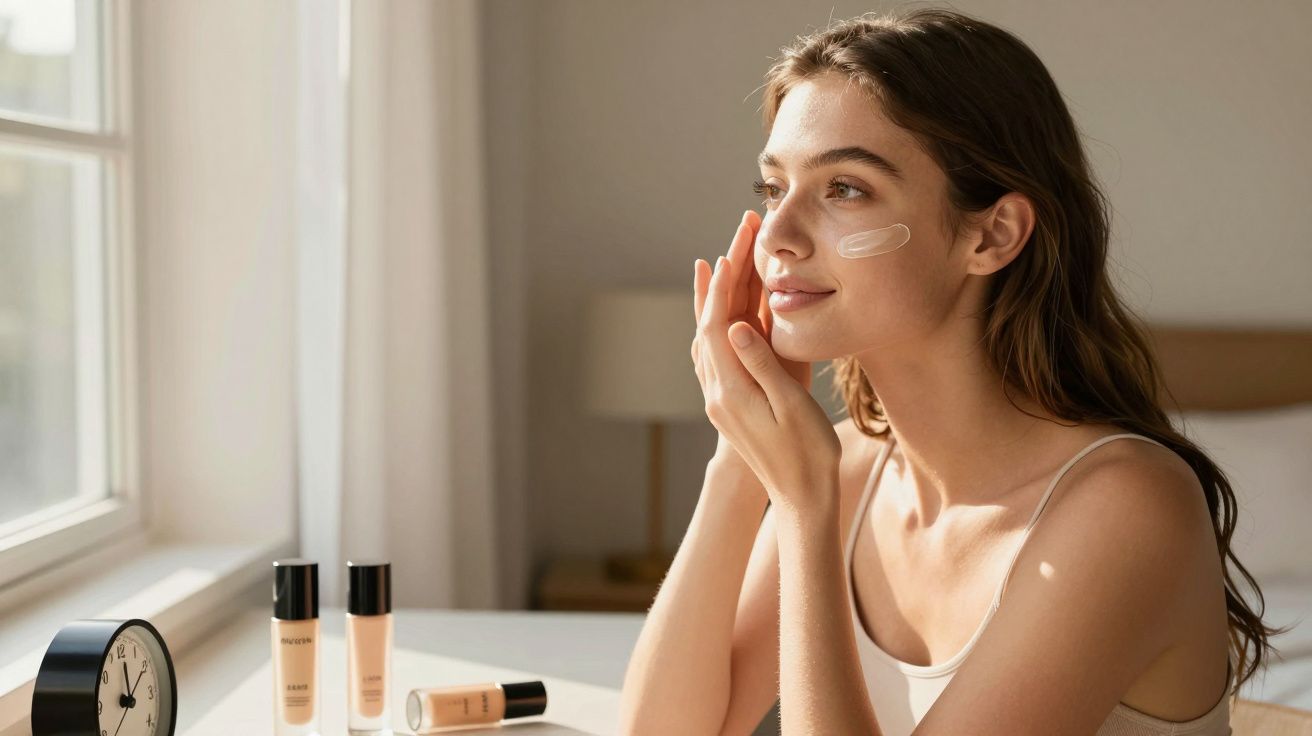
It’s 2 pm and you glimpse yourself in the loo mirror. The foundation you smoothed on earlier has shifted into something that looks more like icing on a slightly stale sponge: broken patches, obvious lines collecting around the nose and mouth, a shiny T‑zone that resembles a thin film of oil, and drier areas turning rough and flaky. You can’t quite work out how the finish that looked seamless at 7 am has become a textured situation by lunch. What stings most is that you paid good money for the foundation and followed every tutorial going-yet the result feels like it was spread on with a butter knife.
Something important is missing from your routine.
The Real Culprit Behind Your Cakey Foundation Drama
When cakey foundation happens, the formula usually isn’t the true villain. What’s underneath is what undermines the whole look. It’s easy to blame the product when it separates or settles, but the reality is more straightforward: without solid prep, even high-end foundation will let you down before midday. Your skin doesn’t stop doing its job once you’ve finished your make-up-it keeps producing sebum, shedding dead skin cells, and responding to heat, cold, and pollution.
Make-up artist Sarah Chen ran an informal test last month with 50 clients. On one side, she used each person’s normal routine; on the other, she used a specific primer approach while keeping the foundation the same. The difference was striking: 90% of those using the primer method kept smooth, even coverage for 12+ hours. The other side? By 3 pm, there was obvious separation, caking, and that familiar orange-peel texture.
There’s also a simple bit of science behind the frustration. If foundation lands on skin that hasn’t been properly prepared, it clings to whatever is available-surface oils, uneven hydration, and flaky areas. As the day goes on, your face continues changing: sebum levels rise, water evaporates, and skin subtly expands and contracts with temperature shifts. With no stable “buffer” in place, foundation can slide, gather in creases, and oxidise unevenly. It’s essentially the same mistake as painting directly onto a bare wall with no primer.
The Double-layer Primer Technique for Cakey Foundation (That No One Explains Properly)
The method that transforms wear time is this: the double-layer primer technique.
- Start with a thin layer of hydrating primer, then leave it to properly sink in-around 3–4 minutes (not the quick 30-second pause most of us do).
- Follow with a second primer chosen to address your specific issue: pore-filling, mattifying, or colour-correcting.
- Apply foundation only once the second layer has settled.
The point is not “more product”, but more control. Two targeted layers create multiple barriers between your skin and your foundation, which helps keep the finish stable as your skin’s oils and hydration levels change.
Most of us have rushed this at least once: primer still slightly damp, foundation going straight on top, and everything blending together into a thicker, less even layer. When primer hasn’t fully set, it can mix with foundation rather than support it-leading to that diluted, unstable texture that later turns into caking and separation.
Professional make-up artists rely on this kind of layering all the time, even if they rarely spell out the steps.
“I’ve used the double-primer technique for fifteen years, and it’s the difference between make-up that lasts 6 hours and make-up that lasts 14+ hours. The key is matching primer types to skin zones-mattifying where you’re oily, hydrating where you’re dry.”
Primer pairings that genuinely deliver
- Hydrating base + pore-filling top for normal to dry skin
- Mattifying base + colour-correcting top for oily, uneven skin
- Smoothing base + grip-enhancing top for textured or mature skin
- Barrier base + illuminating top for dull or tired-looking skin
Two small upgrades that make the technique work even better
A thin, even application matters as much as the products you choose. Press primers into the skin rather than rubbing aggressively, and keep layers light-if you can feel a thick film on your face, you’ve likely used too much. Also, consider what’s underneath your primer: gentle exfoliation a couple of times a week can reduce dry flaking that grabs foundation, while a compatible moisturiser (allowed to absorb properly) helps your hydrating primer do its job.
Finally, adjust for conditions. In humid weather, you may want a more mattifying approach through the T‑zone; in colder months, you may need extra hydration around the cheeks and mouth. The strength of a zone-specific method is that you’re not forced into one finish for your entire face.
Why This Changes Your Entire Makeup Game
Once you get this down, your foundation tends to act like a different product. Application becomes smoother, blending looks more skin-like, and-rather than deteriorating-your base often holds up better as the day progresses. You’ll likely find you need fewer touch-ups, feel more comfortable in afternoon lighting, and regain confidence that your make-up isn’t going to collapse halfway through the day. A bonus: foundations you’d written off as “too cakey” often become wearable again.
Instead of spending your day fixing problems, your routine shifts towards actual enhancement. Think of the times you’ve avoided close-up photos or felt self-conscious when your foundation broke up during a meeting, an event, or a night out. This small change in technique removes much of that worry, so your make-up can look as polished at dinner as it did at breakfast.
| Key point | Detail | Value for the reader |
|---|---|---|
| Double-layer primer method | Use two different primers, allowing full absorption time between layers | Foundation stays fresh for 14+ hours without caking |
| Skin preparation timing | Wait 3–4 minutes between primer layers and before applying foundation | Stops mixing and dilution that triggers a cakey texture |
| Zone-specific primer matching | Apply different primer types to different areas of the face | Tackles multiple concerns at once for a more flawless finish |
FAQ
Can I use the same primer twice rather than two different ones?
You can, but pairing complementary primers (for example, hydrating + mattifying) usually performs better because it addresses more than one skin need at the same time.How long should I actually wait between primer layers?
Leave 3–4 minutes for the first layer to fully absorb, then wait 2–3 minutes after the second layer before applying foundation.Does the double-layer primer technique work with high-street primers?
Yes. The method matters more than the price. Choose primer types that suit your skin rather than focusing on premium branding.If I have oily skin, won’t double primer make it worse?
Not if you choose wisely: use a mattifying primer as the base, then apply a pore-filling or smoothing primer on top. This often controls oil more effectively than a single layer.Can I use this with tinted moisturiser or BB cream?
Yes, although you may only need one primer layer because these base products are usually lighter and more forgiving than full-coverage foundation.





Comments
No comments yet. Be the first to comment!
Leave a Comment