
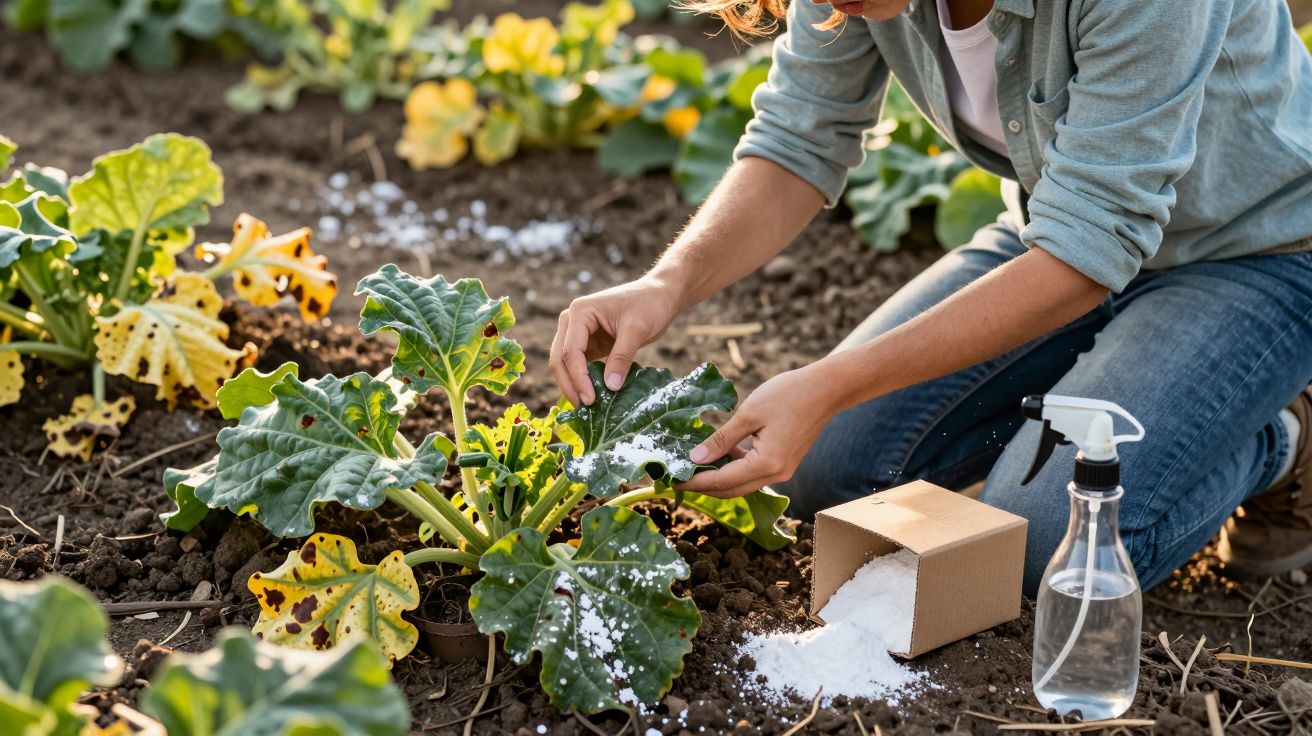
The promise sounded ideal: a cheap powder, supposedly “natural”, endlessly recommended in forums and videos, said to knock out fungi, pests and weeds in the garden all on its own. Many home gardeners now reach for bicarbonate of soda (sodium bicarbonate) where chemical products once sat. Yet what looks like a gentle alternative can badly damage plants - right up to a total crop loss.
The myth of the “natural” miracle cure
Bicarbonate of soda - chemically sodium bicarbonate - enjoys an almost legendary status in the home. It cleans, neutralises odours, polishes, and helps shift limescale. It’s hardly surprising that people assume: if it works in the kitchen and bathroom, it must be useful in the veg patch too.
In gardening groups you’ll find countless DIY mixes: bicarbonate of soda for powdery mildew, bicarbonate of soda for aphids, bicarbonate of soda as a “gentle” way to tackle weeds. The reassurance is usually the same: nature-based, safe, harmless for people and pets.
“Natural” does not automatically mean plant-safe - especially not at any dosage, and not on every crop.
And that’s where the trouble starts. A tomato plant isn’t a tiled floor. What makes surfaces sparkle can irritate or destroy living cells on leaves and roots. The hope for one universal fix tempts many people into spraying overly strong mixes onto sensitive plants.
When treating powdery mildew turns into a fiasco
A familiar summer scene: powdery mildew coats courgettes, cucumbers or roses with a white, floury film. Advice pages then roll out a near-identical recipe - water, bicarbonate of soda, a little soap, a little oil, sprayed generously over the foliage.
For a few days, it can look encouraging. The white coating seems to retreat and the leaves appear briefly “cleaner”. Then problems appear that many gardeners don’t immediately link to the bicarbonate treatment:
- brown, dried patches along leaf edges
- leaves that become stiff, papery and brittle
- flower buds that shrivel and drop off
- plants that look drought-stressed even though the soil is moist
What was meant as a cure has quietly started behaving like a herbicide. The plant is reacting to chemical overload - not heat or lack of water.
What bicarbonate of soda actually does to leaves and soil
The critical issue with bicarbonate of soda is the sodium. This salt doesn’t simply disappear: it builds up - on leaf surfaces and in the soil.
Salt shock on the leaves
Over-strong solutions can spike the salt concentration on the leaf surface in an instant. The plant’s natural protective layer (the cuticle) is disrupted. Water is pulled out of the cells and the leaf surface can, in effect, “burn”.
Phytotoxicity simply means a plant has been poisoned or chemically scorched by a substance - even if that same substance seems harmless in everyday household use.
The results include brown necrotic patches, curled and brittle leaves, and slowed growth. The more delicate the crop - lettuces, herbs, seedlings - the faster and more severe the damage tends to be.
A hidden salt trap in the soil
Some of any spray mix inevitably drips into the soil. Once the sodium is in the root zone, it doesn’t vanish - and it can trigger several knock-on effects:
- Osmotic stress: salt binds water. Even in damp soil, roots struggle to take up enough moisture. The plant wilts as though it were in dry sand.
- Shifted pH: the soil can become more alkaline. Nutrients such as iron, magnesium and phosphorus become harder for plants to access, often showing up as yellowing leaves with green veins (chlorosis).
- Disrupted soil biology: beneficial microbes that support humus formation and nutrient cycling can react badly to salt stress.
Repeated spraying over a short period increases the salt load. Sodium does not evaporate; it accumulates until plants noticeably decline.
Is there a safe dose - and when does it become risky?
A lightly dosed, one-off application can sometimes help with powdery mildew, because the fungus struggles in a more alkaline environment on the leaf surface. Two factors make the difference: concentration and frequency.
Controlled trials indicate that once a solution reaches around 1% bicarbonate of soda, the risk of plant damage rises sharply - especially with repeat applications. Many home recipes overshoot that level, particularly when “spoons by eye” replace accurate weighing.
A more cautious guideline for mildew-prone ornamental plants and sturdier vegetables is:
- 1 litre of water (rainwater if possible)
- 1–2 g bicarbonate of soda (roughly the tip of a level teaspoon)
- only a few drops of liquid soap - not a heavy squirt
Apply as a fine mist only to affected areas, early morning or evening, and in mild temperatures. After treatment, leave at least 7–10 days before spraying again. If you’re unsure, trial it on a single leaf or one plant first.
Gentler alternatives for powdery mildew and other common problems
Many gardeners who’ve had a bad experience with bicarbonate of soda return to milder approaches. Two tactics consistently work well together: prevention, and very gentle home-based options.
Prevention in the bed (reducing powdery mildew pressure)
Powdery mildew thrives where plants are crowded, airflow is poor, and leaves stay wet for long periods. These steps can noticeably reduce disease pressure:
- avoid planting too closely so air can move through
- water in the morning at soil level rather than over the foliage
- use mulch to keep soil evenly moist without wetting leaves
- choose robust, mildew-resistant varieties where available
- check plants regularly for early spots and remove infected leaves promptly
Milk, whey and plant teas
Diluted dairy products and certain plant extracts are widely used as gentle fungal suppressants. A classic approach is mixing cow’s milk or whey 1:9 with water, then spraying a thin film on leaves. Milk proteins and naturally occurring micro-organisms can create conditions in which powdery mildew struggles.
At the same time, extracts such as nettle or horsetail teas can support plant resilience. They provide silica and trace elements that help toughen plant tissue and reduce susceptibility. These methods work more with the plant rather than trying to smash the pathogen with a chemical sledgehammer.
How to spot early bicarbonate of soda damage
If you’ve already used bicarbonate of soda in the garden, keep a close eye on your plants. Early warning signs often show within a few days:
- new leaves look dull and lose their natural sheen
- leaf edges turn patchy brown or grey
- fresh growth stays shorter, with smaller-than-normal leaves
- individual flower buds dry out before opening
If symptoms appear after treatment, stop spraying. Water thoroughly with plain water and, where possible, flush the root zone through rainfall or careful irrigation. For container plants, repotting into fresh compost can remove part of the accumulated sodium.
A practical extra step is to rinse foliage with clean water a day or two after any treatment (where the plant can dry quickly). This can help reduce residue and lower the risk of further leaf burn - especially during warm, bright weather.
Why “household remedies” in the garden are rarely risk-free
Bicarbonate of soda is only one example. Vinegar, salt, washing-up liquid and alcohol-based mixes are also regularly promoted as “natural” plant protection. The same trap sits underneath them all: products from the kitchen or cleaning cupboard are designed for hard surfaces and household tasks, not for living plants and complex soil ecosystems.
Even small overdoses can cause longer-term harm that outweighs the original pest or fungal problem. A more sustainable route is usually a blend of resilient variety choice, solid basic care, targeted observation and a small number of carefully considered interventions.
It’s also worth remembering that “DIY” does not automatically mean environmentally benign. Salts can build up, soil structure can deteriorate, and run-off can affect surrounding areas. In most gardens, the best results come from understanding how plants respond to salt, pH and moisture - rather than chasing the next online “miracle recipe”. Bicarbonate of soda belongs primarily in the baking tin and cleaning caddy - and, if used in the garden at all, only with restraint and precise dosing.




Comments
No comments yet. Be the first to comment!
Leave a Comment