
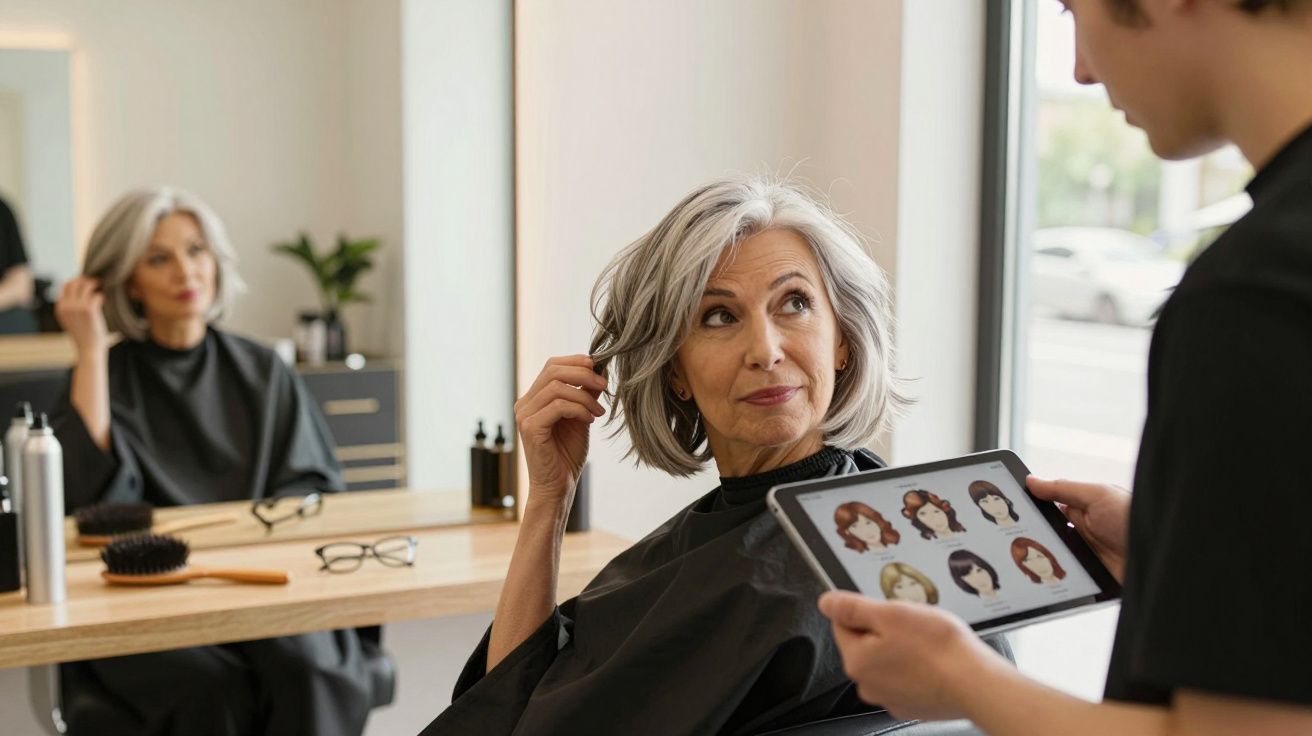
For plenty of women over 60, the real frustration isn’t going grey - it’s hair that has become fine, thin and determined to sit flat, quietly drawing attention to every birthday. One haircut, in particular, is causing a proper salon debate: it’s celebrated for creating lift and fullness in fine hair, yet some clients dislike it because they feel it makes them look “too young” for their own sense of self.
The cut everyone is arguing about
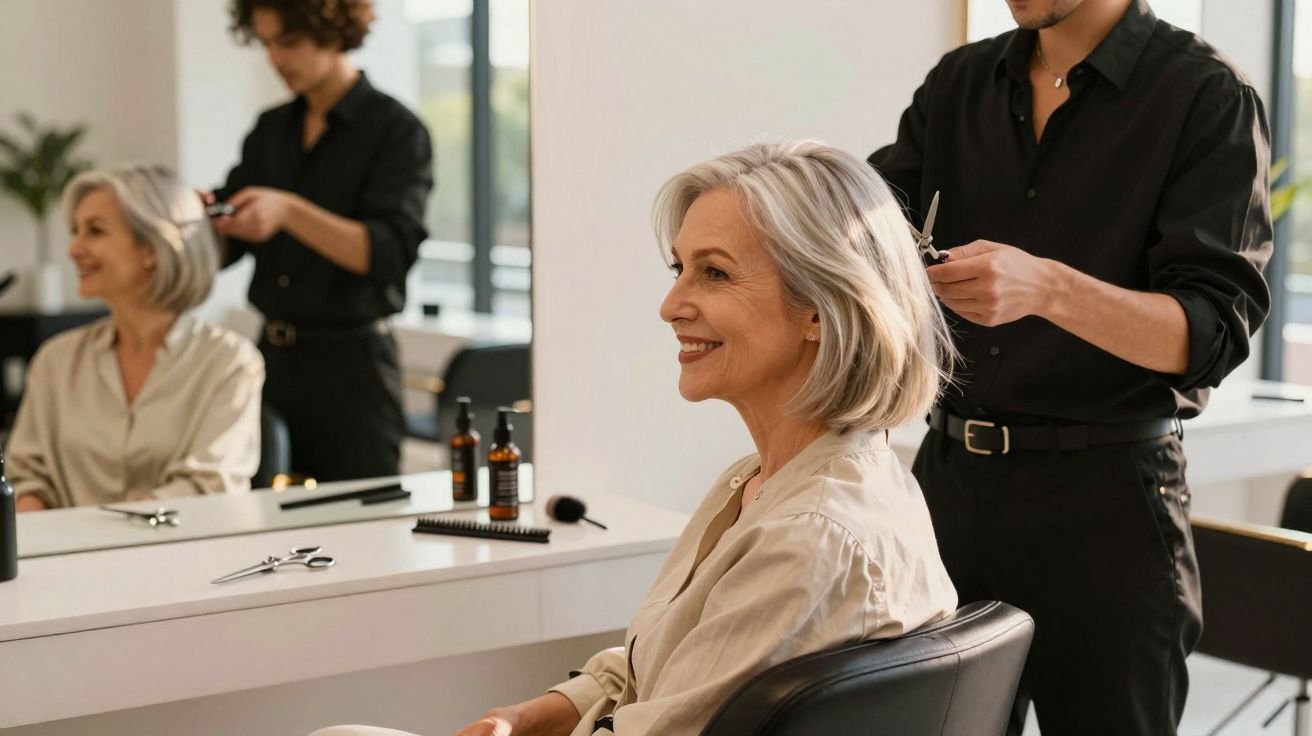
Hairdressers in the UK and the US say the same request keeps coming up among women over 60 with fine hair: a layered, slightly shaggy bob that falls somewhere between the jawline and the collarbone.
The shape combines airy, movement-building layers with a soft graduation around the face. The ends are usually texturised rather than blunt, and the overall finish tends to be deliberately a little undone - more tousled than sleek.
This soft shaggy bob can give fine hair lift at the roots, body through the crown, and extra texture from mid-lengths to ends.
Online, you’ll see it labelled in several ways, including “modern shag”, “volume bob”, “air cut”, or “French bob with layers”. The concept is consistent: remove weight from the ends so the roots can rise, while making the face outline look softer and more animated.
Why it works so well on fine hair after 60
With age, hair commonly becomes thinner. Follicles can shrink, growth cycles often shorten, and the hair fibre may lose internal protein structure. Put together, those changes can leave hair looking flat and fragile - sometimes going limp just a few hours after washing.
A shaggy bob tackles several of these issues at the same time:
- Strategic layers: Shorter sections on top help prop up the longer lengths, creating lift without relying on heavy styling.
- Broken-up ends: Texturised tips prevent fine strands from clumping together, which can make hair look sparse.
- Face framing: Softer pieces around the cheeks and jaw shift attention away from hollowness or sagging.
- Movement: Light, airy motion catches light differently, helping fine hair appear thicker.
Instead of depending on backcombing or clouds of hairspray, the cut’s architecture does the heavy lifting. Many stylists say clients walk out feeling as though they’ve suddenly got “twice the hair” they arrived with.
A useful extra consideration - especially with fine hair after 60 - is scalp and strand care. A cut can create the illusion of density, but build-up from heavy products (and even some dry shampoos) can weigh hair down at the root. A gentle clarifying wash now and then, plus lightweight styling products, often helps the volume-boosting cut perform as intended between appointments.
“Too young” or just right? Why the cut divides opinion
The disagreement isn’t really about the technique; it’s about the impression it gives. Some women in their 60s and 70s adore how the style lifts their features and adds a playful, modern energy. Others see the same result and feel it conflicts with how they imagine themselves at this stage of life.
A look that feels fresh and flattering to one woman can register as “too girlish” or “not age-appropriate” to another.
Stylists often describe careful, nuanced conversations at the chair. A client might ask for “more volume”, while also stressing, “I don’t want anything that makes me look like I’m trying to be 30 again.” Holding both requests in balance can take real skill.
Generational expectations, self-image and the shaggy bob
For many women now in their 60s, the beauty cues of their twenties linked long, flowing hair with femininity, while shorter, choppier cuts carried associations of rebellion or androgyny. Today’s soft shaggy bob borrows from both: it’s shorter and more piecey, yet usually styled to feel soft and feminine.
That combination can feel oddly unsettling. Some clients worry friends will comment that they look “different” or “so young now” - and they may not experience that as praise. Others fear that a fresher haircut will draw attention to wrinkles, or create too stark a contrast with an older neck or jawline.
How stylists adapt the soft shaggy bob for women over 60 with fine hair
Most professionals don’t treat this as a one-size template. They tweak the shaggy bob based on personality, routine, and facial structure.
| Goal | Stylist adjustment |
|---|---|
| Want more volume but low drama | A longer bob, gentler layers, minimal fringe, and a smoother finish |
| Open to a bolder change | Shorter length, stronger layers, a curtain or wispy fringe, and more texturised styling |
| Worried about looking “too young” | Avoid heavy fringes, skip extreme choppiness, and keep the outline classic |
| Need speedy morning styling | Cut to follow the natural fall; suggest air-drying with light mousse or cream |
The fringe is often the deciding factor. A full, dense fringe can tip the look into noticeably youthful territory. By contrast, a curtain fringe or a few feathered strands can keep everything softer and more understated.
Signs this volume-boosting cut might suit you
This style won’t be everyone’s favourite, even with fine hair - but certain signs suggest it could be a good fit:
- Your hair is straight or slightly wavy and tends to collapse at the roots.
- You’re happy to sacrifice some length for more lift and shape.
- You’d rather not spend more than 10 minutes styling each morning.
- You like an intentionally relaxed finish instead of a perfectly set blow-dry.
- You feel your current hairstyle pulls your face downward.
In contrast, very curly or coily hair may not show the same transformation, because curls already create volume and can respond differently to layers. Likewise, hair that is extremely fragile or heavily thinned due to illness or medication may require a more conservative, cautious approach.
Styling tricks that make the shaggy bob work day to day
A smart haircut sets the foundation, but everyday habits keep the fuller effect going.
Many stylists favour a lightweight volumising shampoo and only a small amount of conditioner, applied away from the roots. Rich masks and heavy oils can quickly squash the shape. On damp hair, a golf-ball-sized amount of mousse - or a root-lifting spray focused at the crown - is often enough support for fine strands.
For lots of women, the most reliable routine is a rough blow-dry with the head upside down, then a cool shot of air to help “set” the lift.
Heat styling isn’t essential. The shaggy bob is designed to look good slightly imperfect, which can be kinder to drier, older hair that doesn’t love high temperatures. When you do want a more polished result, a few bends with a wide-barrel curling iron around the face can add shape without making the style look overly done.
Grey, white and colour: how shade changes the volume effect
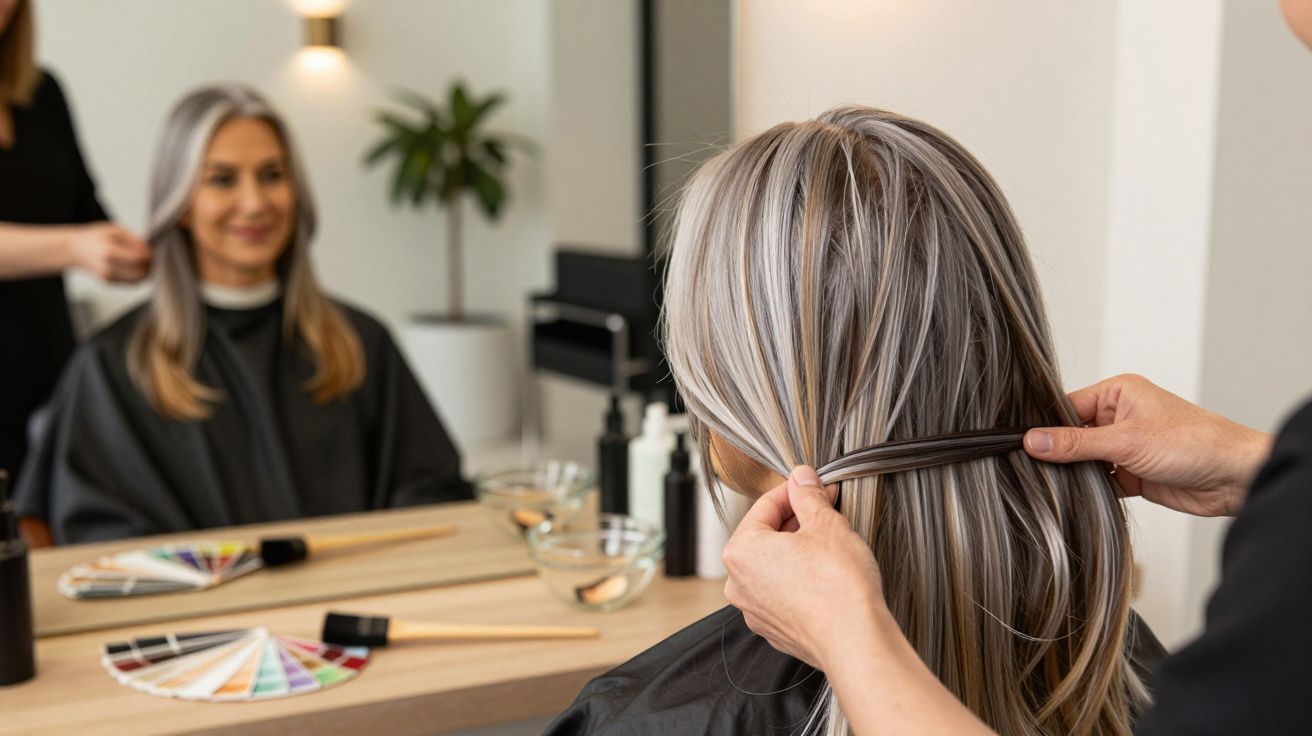
Colour quietly influences how thick hair appears. Lighter, blended tones often make fine hair look fuller, because they reduce harsh contrasts and reflect light more evenly. Subtle highlights around the face - frequently referred to as a “money piece” - can mimic extra density by brightening and lifting the front.
Grey and white hair can absolutely suit a soft shaggy bob. In fact, the pairing of a modern, airy cut with natural silver is exactly what some women find so striking. Those who feel it looks “too young” are often reacting to that contrast: the hair reads energetic while the skin shows age, and the combination can feel unexpectedly bold.
If you’re not ready to go fully grey, many stylists steer clients towards lower-maintenance options such as scattered highlights, lowlights, or gentle glosses that soften regrowth lines and reduce the need for monthly appointments.
Questions to ask your stylist before you commit
A consultation first - rather than arriving expecting a straight cut - can prevent unpleasant surprises. These questions help anchor the conversation:
- How much length will I genuinely lose with your version of this cut?
- Where will you place the shortest layers, and what’s the reason for that placement?
- How will the shape work with my particular face and neck?
- What will it look like if I simply wash, dry and go?
- How often will I need trims to keep it looking balanced?
Some stylists will also demonstrate the idea by pinning sections up, or using digital tools to show a rough outline, so you can judge whether it matches how you see yourself.
Ageing, identity and the politics of looking “too young”
This haircut argument sits on top of a bigger tension. Western culture still rewards youthfulness - particularly for women - and the beauty industry often sells the idea of erasing age rather than living confidently with it. At the same time, more older women now choose to wear grey hair, wrinkles and changing bodies with pride.
So when a haircut makes someone look brighter, less tired or more animated, the reaction can be complicated. Some enjoy hearing, “You look years younger.” Others hear it as an unspoken critique of how they looked before. In that context, “too young” often means: wanting to look lively and well-groomed without feeling as though you’re hiding your age.
That distinction matters. Many clients over 60 aren’t chasing youth; they’re aiming for hair that looks healthy, fuller and intentional. When tailored carefully, the shaggy bob can deliver that balance - extra lift and texture that still harmonises with mature features.
One more practical point that often helps: maintenance planning. Because layers and ends are deliberately texturised, the cut usually looks best with regular trims to keep it from losing its shape. Agreeing in advance how often you’ll come in - and what “grown out” should still look like - can make the style feel controlled rather than accidental.
Practical scenarios and combinations to consider
Picture three 65-year-old women with fine hair arriving at the same salon. One is still working full time in a corporate environment, another spends her time volunteering and attending community events, and the third is busy most days looking after grandchildren. The underlying cut can be adjusted for each: sleeker and more polished for the office, a touch choppier with a curtain fringe for the social organiser, and very low-maintenance with restrained layers for the time-poor grandparent.
Small, supportive changes can also elevate the result. Glasses frames that echo the softness of the layers, a refreshed lipstick shade, or slightly different necklines in tops and jumpers can all work with the new silhouette. The main risk is changing too many things at once, which can make someone feel unfamiliar to herself. Gradual tweaks tend to reduce that shock - and can make the fear of looking “too young” much less likely to surface.
If you’re still unsure, a staged approach can be reassuring: start with longer, soft layers while keeping more length, then move towards the shorter soft shaggy bob at a following appointment if the extra volume feels right. That way, the client stays in control and can let her self-image catch up as her hair changes.
Comments
No comments yet. Be the first to comment!
Leave a Comment