
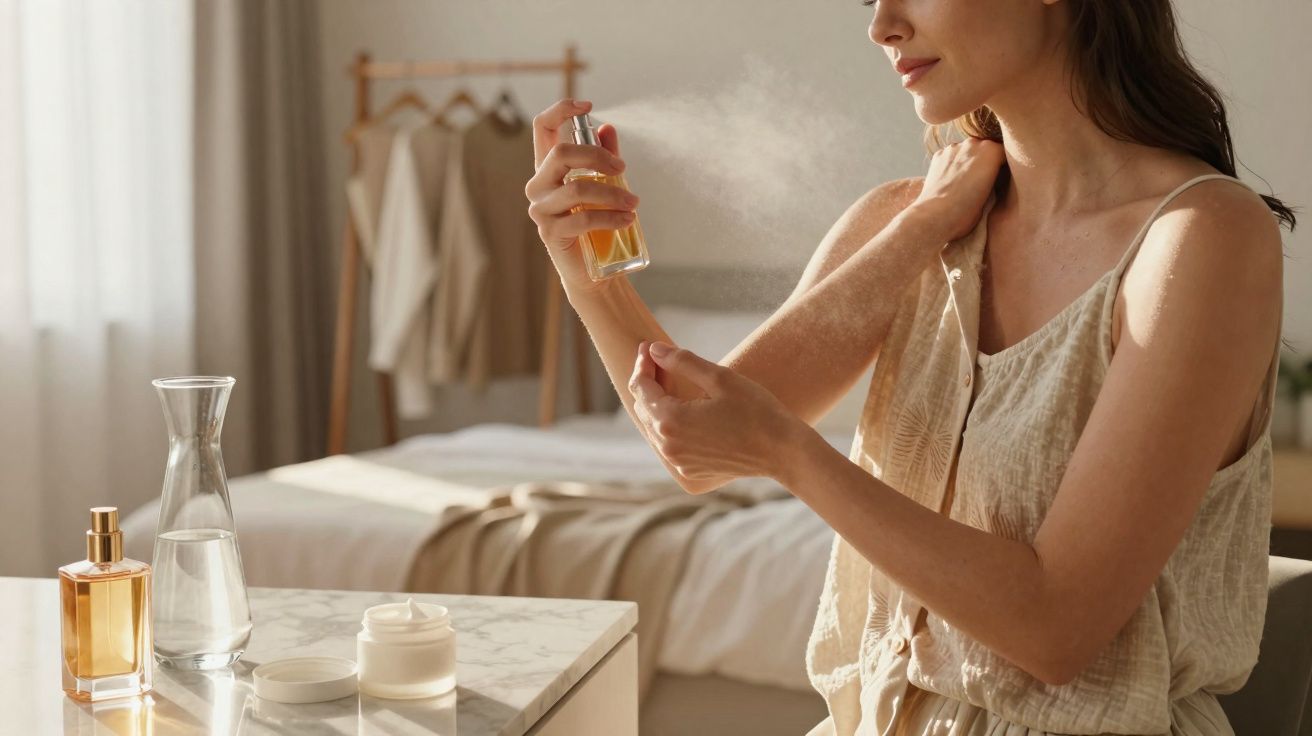
Perfume can feel like pure magic on your skin - but for plenty of people, that spell breaks well before the day ends.
It’s easy to point the finger at the bottle or keep swapping fragrance after fragrance. More often, though, the real culprits are your skin type, a few unhelpful spraying habits, and one small preparation trick that makes a dramatic difference.
Why the same perfume lasts all day on some people and vanishes on others
Two people can wear the identical perfume and experience opposite outcomes. One person carries a gentle scent trail for hours; the other can’t detect anything by lunchtime. The formula hasn’t changed - but the surface it’s applied to has. Your skin sets the stage.
The hidden role of skin type
Perfumers have long known that oily skin and dry skin “wear” fragrance in completely different ways. Oily skin tends to hold scent for longer because the lipids on the surface act like a subtle binder, helping volatile molecules cling on and release gradually. On dry skin, those same molecules escape more quickly, so the perfume can seem to vanish.
Perfume doesn’t always fade away - in many cases it simply lifts off dry skin so fast you miss the transitions.
That’s why one person can happily stick with a single fragrance for years, while another keeps searching for “something stronger”. Often, the perfume isn’t weak at all; the canvas is working against it.
Hydration: the quiet fix no one talks about
Before you abandon a perfume, it’s usually smarter to adjust how you prepare your skin. Hydration helps fragrance last, because moisturised skin holds on to perfume more effectively.
A simple method used by many professional perfumers and make‑up artists is:
- Use a neutral, unscented moisturiser (or a tiny dab of petroleum jelly).
- Apply it only where you intend to spray.
- Give it a minute, then mist your perfume onto those spots.
That wafer-thin layer creates a soft occlusive film. It slows evaporation and helps the scent stay more “together”, rather than breaking apart into faint, fleeting traces.
Think of moisturiser as double‑sided tape for perfume: invisible, uncomplicated, and surprisingly effective.
Why rubbing and over‑spraying actually damage your fragrance
A lot of popular advice encourages a familiar gesture: spray perfume on your wrists, then rub them together (or swipe them up towards your neck) to “activate” the scent. In reality, it tends to do the opposite - and over‑spraying can make the problem worse by overwhelming the top notes and turning the wear into a sharp cloud that disappears quickly.
Stop rubbing your wrists: what really happens on your skin
Most modern perfumes are designed around an olfactory pyramid: sparkling top notes, a fuller heart, and deeper base notes. Rubbing introduces friction, which means extra heat and mechanical stress - and that disrupts the structure.
When you rub your wrists, you:
- Create heat that makes the top notes evaporate faster.
- Physically disturb some of the more delicate aromatic molecules.
- Compress the natural development of the fragrance as it dries down.
The outcome is often disappointing: the opening you loved at the counter can feel harsher, briefer, and less nuanced at home.
Spray, then leave the skin alone. Often, doing nothing after application gives a richer, longer, more faithful scent.
Why your neck is not always your best target
The neck is recommended so often because it’s warm and close to your nose. But it’s also an area that sweats, gets rubbed by collars and scarves, and is exposed to sunlight and skincare products. All of that can interfere with a fragrance - and on sensitive skin, it can even increase irritation.
For that reason, many fragrance experts now advise skipping direct spraying on the neck. Instead, use other pulse points and allow the scent to rise naturally, rather than sitting in one concentrated patch under your chin.
Smarter perfume longevity: where to spray for all‑day wear
A more strategic approach to perfume relies on warmth, movement, and even fabrics - not simply dousing the upper body.
The classic “hot spots” that actually help
Warm points are areas where blood flow sits closer to the skin, creating gentle heat that helps a fragrance diffuse steadily. Useful zones include:
- Wrists - mist lightly and don’t rub.
- Inner elbows - naturally warm and more sheltered.
- Behind the ears - especially just under the earlobe (not along the hairline).
- Behind the knees - warm, mobile, and discreet under clothing.
A reliable routine is to layer hydration with fragrance: apply a neutral cream to these areas, let it settle, then spray from a short distance and allow it to dry untouched.
| Zone | Strengths | When to use |
|---|---|---|
| Wrists | Easy to reach; subtle wafts when you move your hands | Office, meetings, public spaces |
| Inner elbows | Protected; less affected by handwashing | Long workdays, travel |
| Behind knees | Excellent diffusion with movement; hidden | Evenings out, summer outfits |
| Torso under clothes | Creates a personal “scent bubble” | Daily wear, colder seasons |
Discreet zones for a softer, more intimate trail
Not everyone wants a loud, room‑filling aura. If you prefer a more private scent cocoon, lower application points can work beautifully.
Applied behind the knees, on the ankles, or along the inner arms, perfume warms slowly beneath clothing. Each step and gesture releases a small, gentle cloud - enveloping for you, but considerate for people nearby.
Hair can hold fragrance well because the cuticle catches aromatic molecules. The downside is that alcohol can dry the fibre over time, so spraying directly onto hair every day can leave it brittle.
A safer approach is to spray once into the air and walk through the mist so only a light veil settles on hair and shoulders. Alternatively, spray onto a brush, wait a few seconds, then lightly comb through the lengths.
When choosing where to spray, think about movement: areas that swing, bend, and turn release scent subtly across the day.
Using clothes to extend your fragrance without staining them
Skin isn’t your only option. Clothing - especially natural fibres - can keep perfume noticeable for longer than bare arms, which is particularly helpful on dry skin or in winter.
The right distance and fabrics
Cotton, wool, cashmere, and linen tend to retain scent very well. Many synthetic fabrics, by contrast, can distort a fragrance or seem to “drop” it faster.
The safest way to perfume fabrics is all about distance: hold the bottle about 30 centimetres away and spray into the air in front of the garment, allowing a fine mist to settle rather than soaking one spot.
To minimise marks, avoid delicate textiles such as silk, and be cautious with very dark suede. If you’re unsure, test on a hidden area first. Scarves, coat linings, and the inside of jackets are often excellent low‑risk choices.
Storage habits that quietly ruin your fragrance
Many people keep their favourite perfume in the bathroom beside skincare and toothpaste - and that’s rarely kind to the formula. Steam, rapid temperature changes, and direct light can speed up the breakdown of certain molecules. Over time, notes may become flat, sour, or simply “off”.
To keep a fragrance closer to its original character, store bottles:
- Somewhere cool and dry, away from humidity.
- Out of direct sunlight - ideally in a drawer or cupboard.
- Properly closed, without leaving the cap off between uses.
Extra tips: matching your perfume and lifestyle
How you apply fragrance should suit the type of perfume you’re wearing. Lighter formulas - such as colognes and hair mists - naturally fade sooner and often need a mid‑day refresh, especially in hot weather or on active days. Richer eau de parfum and extrait formulas tend to last longer, but can feel too intense if you spray heavily on upper body points.
For office life or public transport, pairing lighter scents with low, hidden zones is often the most polished approach. For outdoor evenings or open spaces, bolder formulas on pulse points and fabrics can work beautifully without feeling oppressive.
It can also help to remember that you might not be the best judge of your own scent after a few hours. Olfactory fatigue (becoming “nose‑blind”) can make you think your perfume has disappeared when other people can still smell it. If you’re unsure, check with a trusted friend rather than automatically reapplying.
Finally, your body chemistry isn’t fixed. Sweat, medication, diet, and even hormones can subtly shift how a fragrance behaves over time. Testing any new perfume across a full day in your normal routine will tell you far more than a quick spray on a paper blotter.
Small habits - moisturising, not rubbing, choosing the right zones, using clothes strategically, and storing bottles properly - often decide whether a scent disappears by noon or quietly stays with you from early coffee to late‑night trains.

Comments
No comments yet. Be the first to comment!
Leave a Comment