
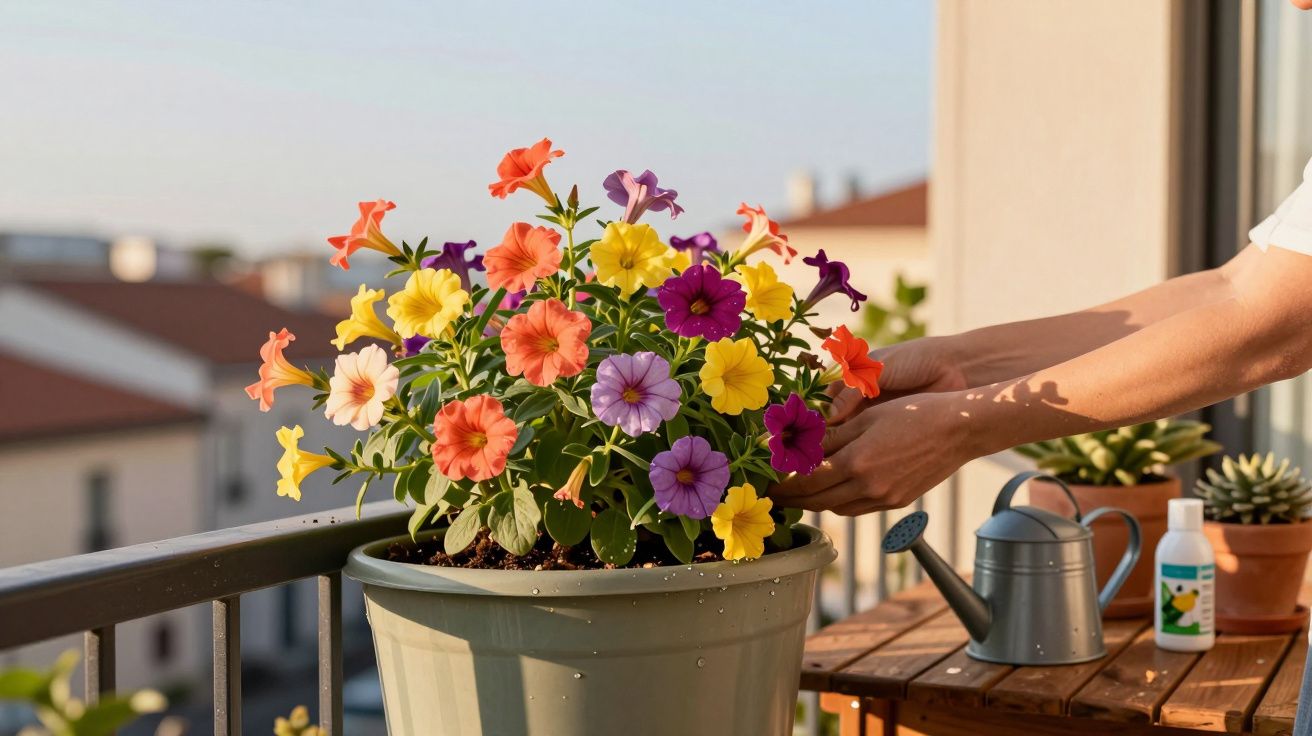
Many people look enviously at the neighbour’s balcony, where bright blooms spill over the edge in thick cascades. It rarely has anything to do with magic; it’s usually down to one particular plant and getting the spring timing right. Plan ahead now and, by high summer, you can enjoy a genuine downpour of flowers-without spending every weekend deadheading with scissors in hand.
The understated star: Calibrachoa behind the flower cascades
At the heart of these summer “waterfalls” of colour is a plant that garden centres have been quietly recommending for years: Calibrachoa. You may know it as Million Bells or mini-petunia. Botanically, it’s closely related to the classic petunia, but it typically grows more compactly, forms a denser mound and produces far more blooms.
Calibrachoa naturally develops into a semi-domed cushion around 15–30 cm tall and 30–60 cm across. In window boxes and hanging baskets, the shoots then trail downwards until the whole container looks like a ball of flowers.
From spring through to the first frosts, Calibrachoa can produce hundreds of small bell-shaped blooms-provided the position, watering and feeding are right.
One everyday advantage is that the plant largely “cleans up” after itself. Spent blooms drop off on their own, so you don’t need to pinch them out to keep the display tidy-even if you barely glance at the box for a fortnight.
Modern varieties are especially popular for their blended colours. Breeders also offer double-flowered types whose shades can shift with temperature, for example from yellow towards pink. These cultivars can turn a simple balcony box into something that looks straight out of a styling catalogue.
Spring timing is everything: when Calibrachoa should go into the window box
Although Calibrachoa looks tough once summer is underway, it is sensitive to cold. It comes from warmer regions and, in the UK, is usually grown as a tender summer annual. In practical terms, that means it does not tolerate frost, and it also struggles with prolonged nights that stay very chilly.
A reliable rule of thumb for planting out is:
- Plant only when there is no longer any risk of frost
- Keep nights consistently above 8–10 °C
- Depending on your area, this is usually mid-April to late May
If you plant too early into cold, wet compost, growth can stall. The roots effectively sit “on pause” in soggy substrate, and the plant may only start properly in May-slowly.
The best moment is shortly after the last frosty nights. Calibrachoa then has several weeks to root through the compost before the first heatwave arrives. During this establishment phase, the stems lengthen steadily. By July they are already hanging well over the rim-this is when the signature look appears: the container disappears behind a curtain of flowers.
For a well-filled hanging basket or a standard balcony box, three to four young plants per container is a proven sweet spot. Fewer often leave gaps; too many compete and can stay smaller overall.
A truly full summer display: pot, compost, water and feed for Calibrachoa
Calibrachoa likes it warm, bright and airy-but it cannot stand waterlogging. Simply packing a container with standard multi-purpose compost and hoping for the best is a common route to root problems.
Choose the right container
- Use a window box or basket with large drainage holes
- Create a base layer with expanded clay pellets or coarse gravel
- Don’t choose a pot that’s too small-more compost means steadier moisture and nutrients
On top, use a loose, well-structured compost mix suited to containers. Compost formulated for baskets and window boxes typically contains extra structure material, which helps excess water drain away rather than stagnate around the roots.
Watering: steady beats soaking
The aim is simple: don’t let the plant dry out completely, but don’t let it sit wet either. In practice:
- Allow the compost surface to dry slightly between waterings
- Water morning or evening, not in the midday heat
- In very hot weather, give two smaller waterings rather than one large drench
Hanging baskets dry particularly fast because sun and wind reach all sides. If you can’t water during the day, a larger container helps, as do water-retaining mats in window boxes.
Feeding: keeping flowers coming into autumn
Calibrachoa is one of the hungrier balcony plants. Without regular feeding it may still flower, but it often fades quickly and can become sparse in the middle.
Mix in a controlled-release fertiliser (or a little compost) at planting time, then give a liquid feed for flowering plants every two weeks.
Skip feeding and you’ll often see the first signs by July: fewer blooms, paler leaves and long, thin growth. With a balanced nutrient supply, the plant stays compact, well-branched and packed with buds.
High-summer care: a tiny trim that makes a big difference
Even though Calibrachoa sheds its spent flowers by itself, it can benefit from a quick “mini haircut” as summer progresses. If the cascade looks tired towards the end of July, a light trim can refresh it.
- Shorten a few of the longest shoots by about 1 cm
- Don’t cut everything at once-trim in stages
- Afterwards, water well and continue feeding as usual
The plant typically responds with fresh branching and a new wave of blooms that can last until the first chilly nights.
Best position, variety choice and box combinations for Calibrachoa
Calibrachoa thrives in light. A full-sun or very bright spot is ideal, as long as watering keeps pace. In bright partial shade it still grows well, but usually produces slightly fewer flowers.
If your balcony is exposed-especially on upper floors-secure window boxes firmly. The trailing growth copes well with moving air, but only if the root ball isn’t repeatedly allowed to dry out.
In window boxes, Calibrachoa pairs well with other summer performers such as:
- Upright geraniums as a structural backdrop
- Trailing verbena for extra colour accents
- dusty miller or cotton lavender for silvery foliage contrast
- Scented herbs such as lemon thyme for an aromatic edge
The key is to combine plants with similar water and feed needs. Very thirsty bedding plants such as busy lizzies (Impatiens) are often a poorer match because they prefer consistently wetter compost.
Extra tips UK growers should know
Calibrachoa can be sensitive to very hard tap water. In areas with high limescale, some varieties are more likely to develop yellowing leaves. If that sounds familiar, collect rainwater where possible, or occasionally use a feed that includes iron to help prevent leaf discolouration.
It’s also worth thinking about weather protection beyond simple watering. Prolonged summer downpours can saturate compost and wash nutrients out of containers, while sudden hot spells can dry baskets in hours. In unsettled periods, moving pots under a slight overhang (where they still get plenty of light) and keeping up with feeding can make a noticeable difference to flowering.
If you enjoy experimenting, Calibrachoa works beautifully in larger patio pots alongside small shrubs. The shrub provides height and shape, while the Calibrachoa trails over the rim like a floral collar-creating a movable “mini border” for a terrace or front door.
For anyone short on time-or who doesn’t want to fuss over every detail-Calibrachoa is a rewarding choice. Plant it at the right moment in spring, use free-draining compost, feed regularly and water sensibly, and it will provide months of colour. Get the basics right and, come summer, you’ll have exactly what you want from a balcony: containers completely wrapped in flowers from the rim right down to the bottom edge.




Comments
No comments yet. Be the first to comment!
Leave a Comment