
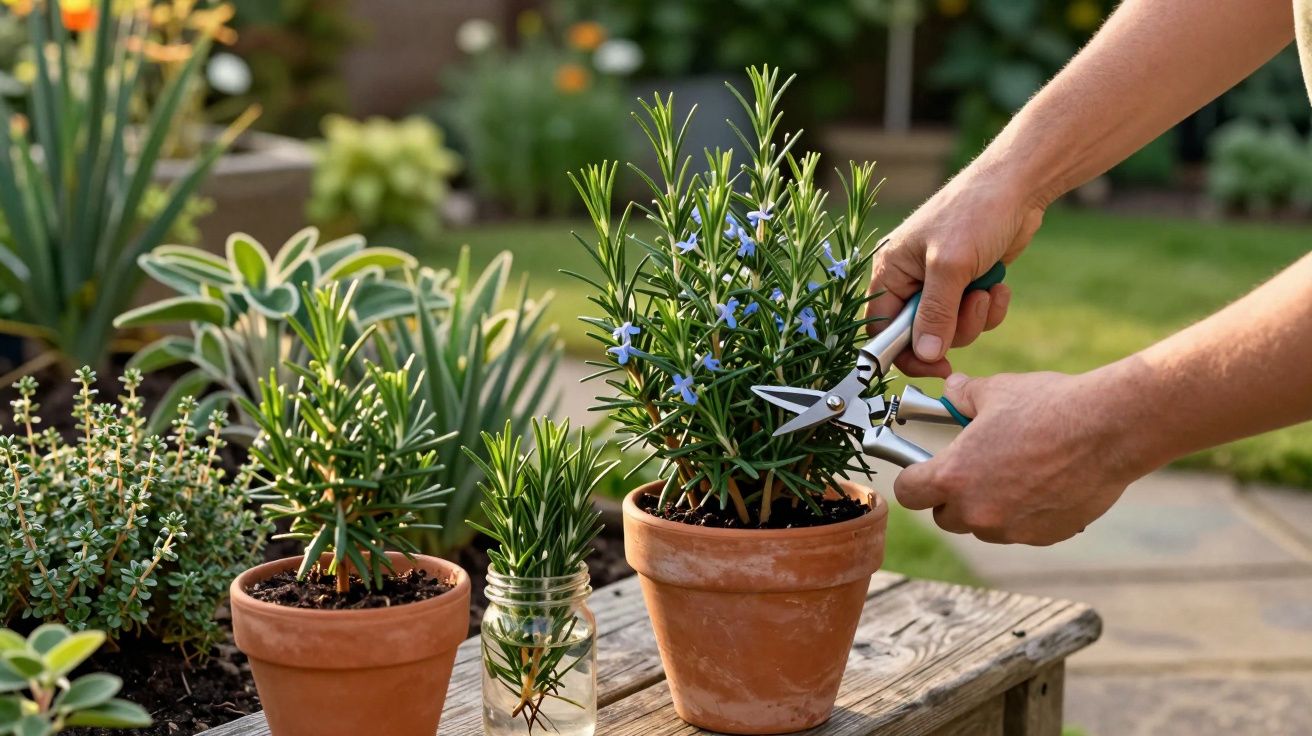
Rosemary may be a tough Mediterranean herb, but it has one clear dislike: random, aimless cutting. If you want a dense, fragrant shrub for years-whether in a pot on a sunny balcony or in a bright, gravelly border-you need a few straightforward rules. They cover timing, technique, and even where the plant sits in your garden.
Why rosemary needs pruning at all
In its first year, rosemary often looks immaculate: compact, richly green, and intensely scented. Leave it unpruned for a few seasons, though, and the balance shifts. The plant becomes woody, produces fresh growth mainly around the outside, and develops bare brown patches within.
Moderate, regular pruning keeps rosemary youthful, bushy and aromatic-and noticeably extends its lifespan.
Pruning brings several benefits:
- encourages soft new shoots with the strongest aroma
- thickens the shrub so it stays upright and doesn’t splay open
- reduces ageing and dieback in old, woody stems
- provides a steady supply of fresh sprigs for cooking and drying
Even a vigorous rosemary will eventually look scruffy and become less productive without a routine trim.
Rosemary pruning: the right time to cut-and when to leave it alone
The main cut after the spring flowering
Rosemary typically puts on strong new growth once flowering has finished. That post-flowering surge is exactly what you want to harness. In much of the UK, the best window is usually March to April, once the flowers have faded and hard frosts are no longer likely.
At this point:
- reduce green stems by roughly one third
- keep every cut in fresh green growth
- avoid any sections that are hard, grey-brown and fully woody
The plant responds quickly: each cut point tends to branch, making the shrub denser and more even. In cooler or more exposed areas, this timing often shifts towards April.
Young plants only need a “tidy-up”: pinch back just a few centimetres from the tips, and stop there.
A gentle autumn trim before winter
A second, very light cut can be useful in October. This is not about shaping; it’s more of a health check:
- remove dead or snapped sprigs
- thin lightly so air can move through the centre
- avoid anything drastic as the plant is slowing down
If you garden where winters are severe, err on the side of caution. Tender new shoots pushed out just before frost are easily damaged. A mineral mulch (gravel or grit) around the base helps protect roots while avoiding waterlogging.
The no-go periods for rosemary pruning
Frost, heat extremes and prolonged wet weather are the three times your secateurs are better left in the shed.
Avoid pruning during:
- deep winter: wounds heal poorly and frost can permanently damage cut stems
- summer heatwaves: drought stress combined with pruning can severely weaken the plant
- very wet spells: damp cut surfaces are more vulnerable to fungal problems
A classic beginner’s mistake is cutting during peak bloom because “it’s growing so well”. That drains energy and reduces both flowering and its value to pollinators.
How to prune rosemary according to the shrub’s age
Young rosemary: shape matters more than volume
For plants under about two years old, the goal is structure rather than heavy pruning.
- shorten only the tips of green shoots by 5–8 cm
- remove no more than about a quarter of the total foliage in one go
- cut just above a leaf pair or node to prompt side shoots
Handled gently, the plant develops into a compact, bushy shrub that tolerates future pruning far better.
Older rosemary: easing it out of the woody phase
After several years, rosemary can start to resemble a small, leggy shrub with bare sections. The best remedy is a gradual rejuvenation prune spread over two to three years.
With rosemary, rejuvenation means slowly reducing dead and overly aged sections without sacrificing the green, productive areas.
A practical approach:
- in year one, remove only clearly dead, dry stems
- shorten green, still-living parts by no more than half
- in following years, reduce additional old stems step by step
This staged method lets the root system support the reduced top growth while the plant rebuilds from younger, greener sections.
Radical pruning as an emergency option
If rosemary has been neglected until it’s almost entirely grey, woody stems, a drastic intervention may be the only chance. This can mean cutting back a few main stems-often by up to half-but only if you can still see signs of life such as dormant buds or small leaf remnants.
After such a cut, the plant benefits from:
- loose, well-drained soil around the root zone
- careful, modest watering rather than soaking
- plenty of light, but avoid harsh midday sun immediately after pruning
Recovery may take months; patience is part of the job.
Rosemary in a pot vs in the ground: what changes when you prune?
Potted rosemary: less is more
In a container, rosemary has limited root space, which reduces its ability to bounce back. Adjust by keeping cuts lighter.
- prune about one third less than you would for a plant in the ground
- cut almost exclusively in soft, green growth
- prevent waterlogging after pruning; empty saucers and ensure drainage holes are clear
A potted rosemary grows more slowly, but it can live for years if pruning, watering and nutrients stay balanced.
Rosemary in the ground: you can be more generous
Planted out, rosemary forms deeper, stronger roots and generally tolerates firmer pruning.
Rosemary in the ground can be maintained or deliberately shaped-from informal shrubs to crisp spheres.
In borders and beds you can:
- shorten shoots on established plants by up to two thirds (as long as green growth remains)
- remove stems that cross and rub inside the plant
- train hedge lines or rounded forms and clip annually
Special cases: creeping types and ball-shaped plants
Creeping cultivars such as ‘Prostratus’ are grown to cover ground rather than gain height. Remove any strongly upright shoots so the plant keeps its low “carpet” habit.
For a rounded, ball-like rosemary shrub, prune much like you would when clipping box:
- shorten all shoots evenly by about one third
- walk around the plant as you cut to avoid creating “holes”
- repeat shaping twice a year (after flowering, then lightly in late summer)
The biggest rosemary pruning mistakes
Cutting into old wood
Rosemary rarely reshoots from truly old, bare wood-cut too deep and you can create empty patches for years.
Old wood is easy to spot: hard stems with grey-brown bark. If you gently scrape with a fingernail, you’ll see either fresh green tissue (safe to cut nearby) or dry, pale tissue (best left, or removed entirely if it’s dead).
Aim to place cuts in the green, flexible part of the stem so the shrub can regrow without gaps.
Taking too much off at once
Removing more than about one third of the foliage in one session risks stress, drying out, and a prolonged recovery. If a plant needs serious correction, spread it over two or three years with several modest cuts.
Blunt tools-and the wrong weather
Clean, sharp tools are essential for tidy cuts and faster healing.
| Tool | Best use |
|---|---|
| Sharp, disinfected secateurs | precise cuts on individual shoots; shaping smaller shrubs |
| Hedge shears (manual or electric) | large, dense shrubs; hedges; spheres |
| Fine pruning saw | removing a few thick, dead stems |
Ideal conditions are dry, mild weather with a bit of sunshine. Wet days and lingering fog encourage fungal issues on fresh wounds, while strong midday heat can cause the plant to dry out quickly after pruning.
Aftercare in the UK: what to do once you’ve pruned
After pruning, rosemary is more sensitive to excess moisture-especially in heavier UK soils and during cool, damp spells. If your soil holds water, improve drainage with grit and sand, or plant on a slight mound so winter rain can run off.
Feed sparingly. Rosemary prefers lean conditions; too much fertiliser can push soft growth that’s less aromatic and more vulnerable to cold. A light top-dressing of compost in spring, or a modest dose of a balanced fertiliser for container plants, is usually enough.
Propagating rosemary wisely: using cuttings from pruning
Step-by-step: raising new rosemary plants from cuttings
The best green trimmings are perfect for cuttings-so every pruning session can double as propagation.
- choose healthy, non-woody shoots about 15 cm long
- strip leaves from the lower third to half
- insert into an airy mix of sand and high-quality compost
- place somewhere bright but out of intense direct sun
Keep the compost slightly moist rather than wet. After four to six weeks, new growth usually indicates roots have formed.
Rooting in water or straight into compost?
Both methods work:
- In water: stand fresh green shoots in a glass of clean water; change it often and watch roots develop.
- In compost: insert cuttings directly into substrate; roots often end up sturdier, but you can’t see progress.
Older, more woody cuttings generally do better in compost, while tender spring shoots often cope well with water rooting.
Practical scenarios: what a good pruning year looks like
If you’ve just planted rosemary, a simple annual routine helps:
- Year 1: only pinch tips lightly after flowering; avoid hard cuts.
- Years 2–3: prune back by about one third after flowering; add a light shaping cut in late summer.
- From year 4 onwards: carry out a yearly health check, remove dead wood, and begin gentle rejuvenation at the first signs of heavy woodiness.
If you grow several plants, staggering pruning times can also stagger harvesting-keeping fresh, young shoots available for the kitchen and herbal teas more consistently.
Risks, benefits, and smart pairings in a herb garden
Rosemary dislikes prolonged wet conditions, and that sensitivity increases after pruning because damaged tissue can rot more easily. In compacted or clay-heavy ground, raising the planting area and working in grit makes a noticeable difference.
The payoff from well-managed rosemary pruning goes well beyond appearance. Young foliage often contains more essential oils, fragrance intensifies, and you’ll have reliable material for infused oils, herb salt, and marinades.
Rosemary also shines when grouped with other Mediterranean herbs such as thyme, sage and oregano. They share the same preferences-full sun, lean well-drained soil, and restrained feeding-so you can streamline maintenance: one main prune in spring, followed by a light shaping cut after late summer, for an herb bed that stays tidy, aromatic and productive.






Comments
No comments yet. Be the first to comment!
Leave a Comment