
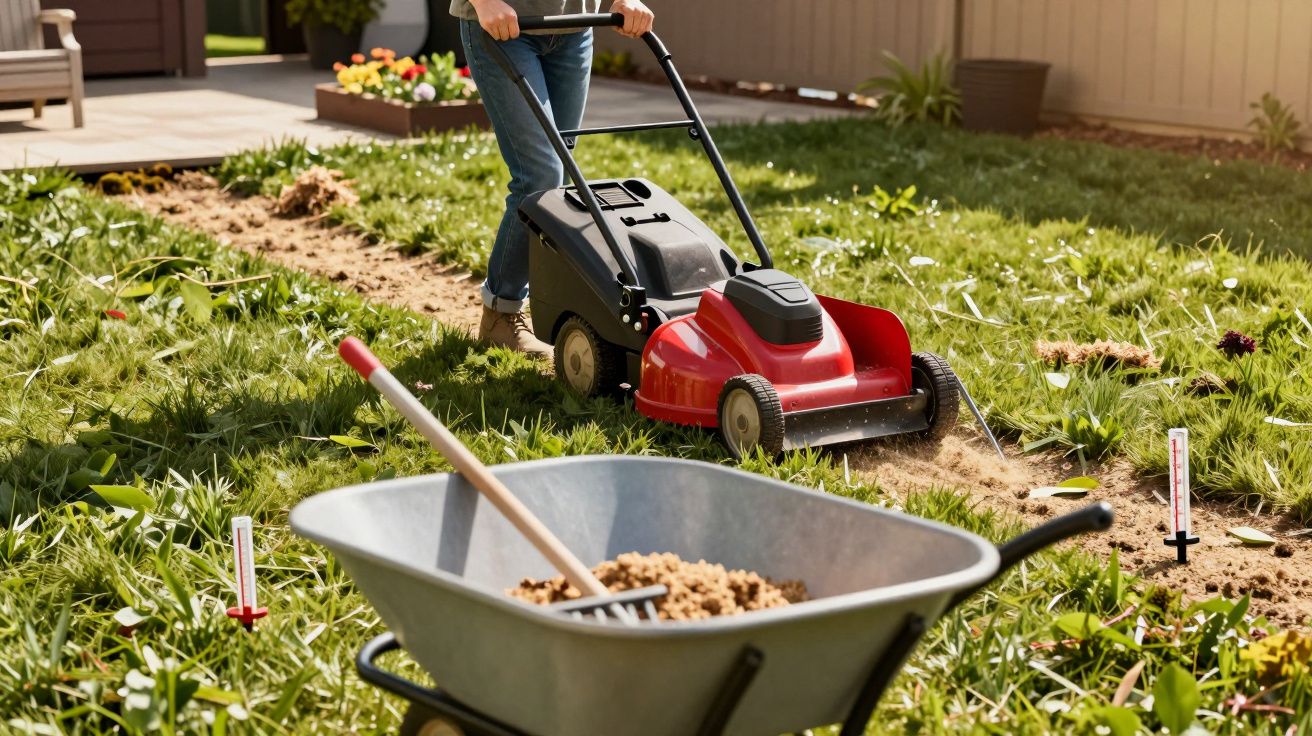
If you find yourself eyeing up the neighbour’s deep green lawn in July, it’s easy to miss that the real contest is usually decided back in March. Beneath a lawn that looks merely a bit pale and tired after winter, there’s often a hidden barrier that stops rain and nutrients getting down to the roots - and that’s exactly why grass can collapse when hot weather arrives. The encouraging news is that a targeted job done by the end of March (or early April in cooler areas) can give your garden a head start that lasts right through summer.
Why your lawn suddenly turns brown in summer
As winter ends, something happens in the turf that many garden owners don’t notice - but they feel the consequences later. Between the grass blades, a layer builds up made of moss, dead roots and fine plant debris.
This thatch layer, around 1–2 cm thick, acts like a lid: water, air and nutrients stay near the surface, roots remain too shallow, and they dry out first.
The result is predictable. Grass roots hover near the top because that’s where they can still find a little moisture. Unfortunately, that same top layer is the first to dry out once the first warm days arrive. It only takes a brief burst of heat for the lawn to fade to yellow, and in places it can even take on a straw-like look.
That’s why the key task is simple: remove the “lid” before real warmth arrives. For most gardens, the window up to 31 March is ideal - though in some regions early April is still a good fit.
The right timing: what the thermometer has to do with your lawn
The calendar matters less than what’s happening in the soil. Your grass copes best with intervention once the ground temperature is consistently around 10–12 °C. That’s when growth properly restarts and the turf can recover faster.
Use these checks as your guide:
- Soil temperature steady at 10–12 °C
- No night frosts forecast
- Soil slightly moist, not sticky or waterlogged
- Ideally overcast conditions or gentle sunshine
Depending on your location, this window can open as early as the first half of March. In colder areas it may not arrive until late March or early April. If you leave it too late, young roots can be put under strain by the first genuinely warm spells in May.
Step by step: preparing the lawn properly
1) Mow short - but don’t scalp it
Before you do anything more aggressive, mow first. Set your mower to roughly 2–3 cm. It can look harsh at first, but there’s a clear reason: it exposes moss and thatch so the next stage works far more effectively.
A crucial detail: the soil should be only lightly damp. If you’ve had prolonged rain, wait for around a day of drier weather - otherwise you’re more likely to tear at the turf and disturb roots too much.
2) The decisive job: lawn scarifying (scarifying)
The term sounds technical, but the action is straightforward. When scarifying, narrow blades cut into the surface of the turf and pull out moss and thatch.
Adjust the scarifier so the blades work only 2–4 mm into the soil - they should scratch, not churn.
Work methodically:
- Cover the entire area in one direction (for example, lengthways).
- Then go over it a second time at right angles.
- Choose a slower pace so the blades can do a clean job.
Afterwards the lawn can look alarmingly battered - that’s normal. Recovery starts after the debris has been removed and the surface can breathe again.
3) Clear everything away: remove thatch and moss completely
The most common mistake after scarifying is leaving the pulled-up material sitting on the surface. It quickly smothers the freshly opened ground all over again.
So remove everything the scarifier brings up, thoroughly - using a leaf rake, garden rake, or the mower’s collection box. Put the material on the compost heap (as long as it isn’t mostly moss) or dispose of it via your garden waste/green waste collection.
Get the ground back in shape: soil, compost, sand
Once you’ve scarified, the surface is open like a sponge. This is the moment when targeted care makes the biggest difference later - improving water storage and giving roots room to grow downwards.
Apply a fine layer: “topdressing”
Spread about 1 cm of a loose material over the lawn:
- well-rotted compost, or
- a specialist lawn topdressing/soil, or
- a blend of garden soil and sand
This thin layer improves structure, adds nutrients and helps rain soak in deeper. You can work it in evenly using the back of a rake or a stiff yard brush.
Clay-heavy soil? Sand helps reduce compaction and waterlogging
If your garden has heavier, clay or loamy soil, adding coarse sand can be especially useful. After scarifying, sand settles into the tiny slits and helps stop the ground from becoming dense and hard again so quickly.
Typical signs your soil is too heavy:
- Water sits in puddles for a long time after rain
- The ground feels greasy and clings to shoes
- Moss spreads aggressively
Extra boost (worth adding): overseeding and feeding after scarifying
Scarifying and topdressing often expose thin patches. To rebuild density, it’s sensible to overseed immediately afterwards, especially where the turf looks sparse. Use an appropriate grass seed for your garden conditions (including shade mixes where needed) and keep the surface lightly moist until germination.
Once growth is clearly underway and frost risk has passed, a spring lawn feed can support recovery and help the grass outcompete moss. Avoid heavy feeding if a dry spell is imminent; grass benefits most when nutrients coincide with steady moisture.
Why the effort pays off in midsummer
The point of all this work is clear: encourage deeper roots. Only deeper rooting grass can still reach moisture from lower layers when the surface has dried out.
A lawn with deeper roots copes with heat for longer, makes better use of rainfall, and needs far less watering.
Without scarifying, even summer downpours can effectively bounce off the lawn: water runs across the surface, and the top few centimetres dry out even faster afterwards. Remove thatch in March and the soil can take in spring rainfall like a sponge, storing it for the hotter weeks ahead.
Aerating the lawn properly: keeping the benefits going
To stop your hard work fading after a few months, regular aeration from spring to autumn is worthwhile. You can do this in several ways:
- punch small holes using a garden fork
- use a spiked or nail roller
- for larger gardens, use powered aerators
A light pass every 4–6 weeks is usually enough. The holes help oxygen and water reach the roots, ease compaction, and keep the turf stronger over the long term.
In summer, another factor becomes important: mowing height. Cutting too short in hot weather adds stress. Slightly longer grass blades shade the soil and slow down drying.
Left it too late? How to rescue the lawn anyway
Many people only realise in April that something’s off. There’s no need to panic - but the approach should be a bit gentler.
If the soil is still around 10–12 °C and no heatwave is on the way, a light scarifying session is often still possible. In that case:
- set the machine shallower (closer to 2 mm than 4 mm)
- skip very sensitive areas or treat them cautiously
- overseed bare patches immediately afterwards
Don’t plan these steps right before a prolonged dry period. A freshly opened turf surface needs a few weeks to knit back together.
Problem areas: shaded lawns and damp corners
Sections that sit in shade for much of the day or stay consistently damp are especially challenging. Moss thrives there. The soil is often too acidic, too compacted, or simply lacks enough air and light.
Helpful measures in these spots include:
- thinning tree canopies so more sun reaches the ground
- lighter scarifying passes rather than aggressive treatment
- regular aeration with a garden fork
- overseeding with a shade-tolerant lawn mix designed for lower light
If you tackle heavily mossy areas, water afterwards with a fine spray rather than flooding. New seedlings cope far better with gentle misting than with heavy soaking.
What many people overlook: pH value, care mistakes and watering habits
One factor that’s easy to ignore is the soil pH value. Grass is usually happiest with a pH of roughly 6 to 7. If the soil is significantly more acidic, moss tends to take over faster. A simple test kit from a garden centre will tell you where you stand. If the soil is strongly acidic, a targeted application of lime can help raise the pH again - ideally in late autumn or early spring.
Watering habits in summer also matter. Frequent, brief sprinkling trains roots to stay in the top few centimetres. Much better is watering less often but more deeply, encouraging roots to grow down where the moisture lasts longer.
If you prepare a scarified area properly in March, you set all of this in motion. The lawn becomes more resilient to weather extremes, heavy rain ends up where it’s actually useful, and your grass often stays greener for longer - while unprepared lawns can look scorched weeks earlier.






Comments
No comments yet. Be the first to comment!
Leave a Comment