
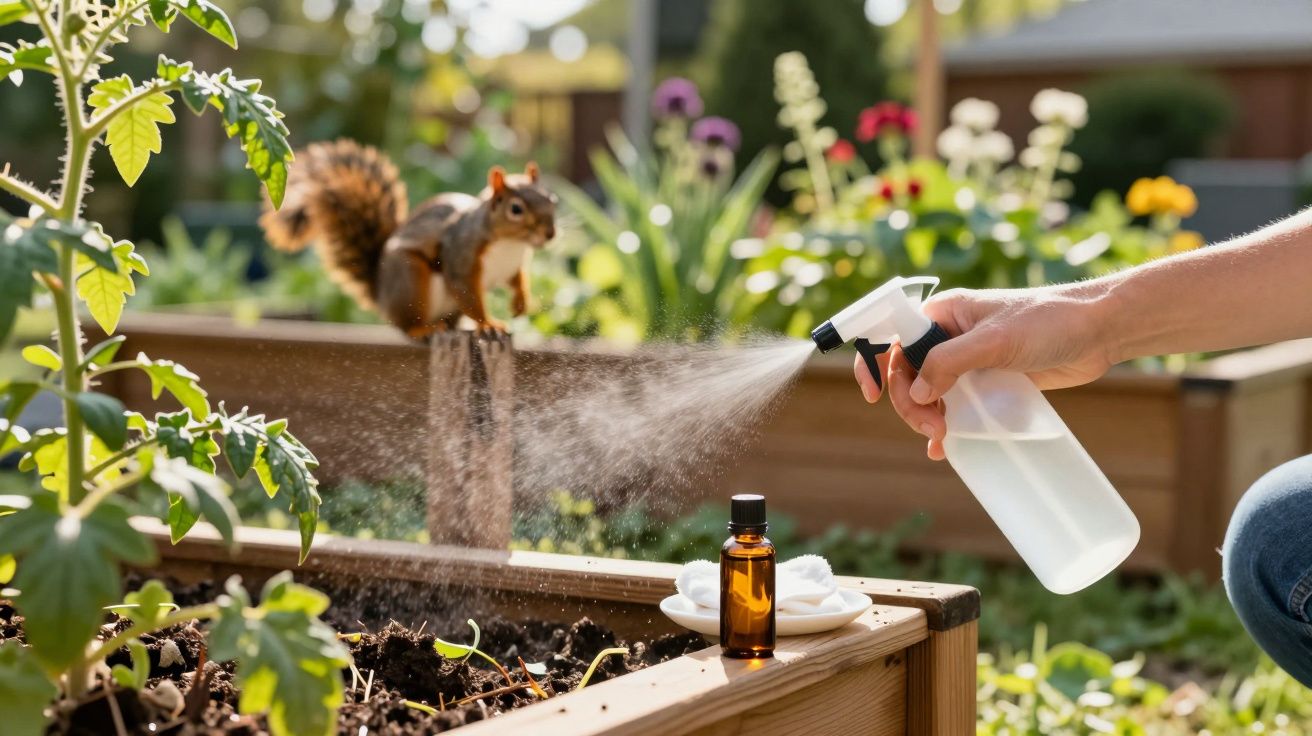
Squirrels can look charming-right up until they dig up tulip bulbs, empty bird feeders and chew on timber cladding. At that point, the cute visitors quickly turn into a genuine garden nuisance. More and more garden owners are reaching for peppermint oil as a supposedly simple, animal-friendly fix. The thinking is straightforward: the strong scent should discourage the animals without harming them. But how dependable is it in real gardens-and where does it fall short?
How peppermint oil affects squirrels
Peppermint oil is an essential oil distilled from the peppermint plant. Its main active components are menthol and menthone. Together they create that familiar cooling sensation and sharp minty smell many people associate with chewing gum or chest rubs for colds.
Squirrels have an extremely sensitive sense of smell. They rely on it to locate food, detect danger and mark territory. When that delicate system meets a highly concentrated mint fragrance, it can be unpleasant and disorientating-exactly the effect people are aiming for when they use peppermint oil outdoors.
Peppermint oil doesn’t create an invisible barrier-it simply changes how attractive an area feels to squirrels.
Studies looking at odours and rodent behaviour suggest that strongly scented substances can disrupt behaviour in the short term. Animals may avoid an area initially or behave more cautiously. In practice, that means peppermint oil can make places temporarily less appealing-particularly spots where squirrels like to dig or feed.
What the results depend on (in practice)
Whether peppermint oil actually helps in a garden is influenced by several variables:
- Concentration: If the oil is diluted too much, it quickly loses impact outdoors.
- Weather: Rain, wind and sunshine break down and remove scent compounds fast.
- Location: Sheltered corners hold the smell far longer.
- Habituation: Some squirrels adapt to the odour after a while.
- Food availability: Where food is abundant, squirrels tolerate more annoyance to get it.
| Influencing factor | Effect on performance | Typical duration |
|---|---|---|
| Rain | Washes the oil off soil and surfaces quickly | 1–2 days |
| Direct sun | Causes scent compounds to evaporate rapidly | 2–4 days |
| High temperatures | Speed up evaporation even further | 3–5 days |
| Sheltered areas | Smell lingers longer; less wash-off | 7–10 days |
This matches what many garden owners report: at first, squirrels seem to keep away, but after a few weeks the effect noticeably fades. The animals learn that the harsh smell is irritating rather than truly dangerous-and that the sunflower seeds at the feeder are worth the bother.
Using peppermint oil against squirrels in the garden (the right way)
If you want to try peppermint oil, it’s better to be deliberate than to spray randomly. Start by identifying the pressure points: Where are squirrels digging? Which routes do they take repeatedly? Where are feeding stations placed?
The most common method: mixing a spray solution
Day to day, many people use a homemade spray mix. A typical approach looks like this:
- Fill a spray bottle with water.
- Add about 10–15 drops of pure peppermint oil per cup of water.
- Add a few drops of washing-up liquid so the oil disperses more evenly in the water.
- Shake thoroughly and use immediately.
This mixture is commonly applied to:
- Soil around freshly planted flower bulbs
- Entry points into the garden, such as along fences or walls
- The area around bird tables and seed dispensers
- The bases of wooden decking, sheds or raised beds
In spring and autumn-when squirrels are particularly active-many people spray twice a week. After heavy rain, an extra application is often needed.
Alternatives to spraying: creating longer-lasting scent points
As well as spray applications, you can set up targeted “scent points” designed to hold the smell for longer:
- Soak cotton wool balls in undiluted oil and place them in small, perforated tins.
- Fill small fabric sachets with dried mint and add a few drops of oil.
- Mix a little oil into bark mulch or soil and work it in around especially vulnerable plants.
These “islands of smell” are easy to tuck under eaves, into wall recesses or beneath covers-places where rain and sun reach less readily.
If you position a scent point higher up-such as on the edge of a bird feeder-you influence the exact area squirrels find most tempting.
Handling and placement: what to do to avoid problems
Peppermint oil is potent. Keep it away from eyes and sensitive skin, and wash hands after mixing or placing scent materials. Store the bottle sealed, upright and out of direct sunlight so it stays effective for longer. If you use cotton wool or sachets, secure them so they can’t be carried off-and place them where children and pets cannot access them.
Why peppermint oil is not a cure-all
As appealing as a simple home remedy sounds, peppermint oil is ultimately a behavioural deterrent, not a physical barrier. A hungry squirrel with an established territory may tolerate the smell rather than give up its favourite nuts.
It becomes particularly challenging in gardens where squirrels have used feeding spots, hiding places and nest sites for years. These regular visitors can be impressively persistent. In that situation, the mint scent may-at best-force detours or delay damage, but it rarely stops it entirely.
Cost is another limitation. High-quality essential oil is not cheap, and if you’re spraying generously all summer you’ll feel it in your budget. Synthetic fragrance products may cost less, but their effect is often weaker and less consistent.
When a combined approach makes sense
Many specialists recommend combining several measures rather than relying on scent alone. Common add-ons include:
- Fine wire baskets or mesh over bulb plantings to stop digging
- Tree guards around young trunks
- Positioning feeders so squirrels cannot make easy jumps from roofs, beams or railings
- Motion-activated sprinklers or light triggers as an extra startle response
In densely wooded neighbourhoods, new squirrels often appear even if a few stay away. If you rely only on smell, long-term success is uncommon. A layered strategy-barriers, scent, smarter placement and a more limited food supply-tends to hold up far better.
Seasons and squirrel behaviour
Peppermint oil’s effectiveness can vary significantly across the year. In spring, squirrels gather nesting material and seek energy-rich food for their young. In autumn, they stash supplies frantically, burying nuts and seeds in the ground. During these periods, pressure on beds and bulbs rises sharply.
Precisely when the damage risk is highest, peppermint oil on its own is usually not enough. Squirrels are at their busiest, travel further and test more options. In quieter stretches-such as mid-summer, when natural food is plentiful-the same scent can feel noticeably more discouraging.
What garden owners should also know
Many people wonder whether peppermint oil can cause issues for other animals or plants. In normal dilution, most ornamental plants cope well with occasional spraying. Leaf scorch is more likely when the oil is used at high concentration and applied in strong, direct sunlight.
For pets, the guidance is similar: cats and dogs often dislike intense essential-oil odours. Outdoors and at low doses, the exposure is typically minimal-provided pets cannot lick cotton pads or chew sachets. If you’re unsure, speak to your vet or position scent sources well out of reach.
Another frequent question is whether peppermint oil can be combined with other natural smells. In practice, some gardeners rotate mint, garlic or clove to reduce habituation. There is no definitive evidence showing which blend works best, but changing scents regularly may help prevent squirrels from becoming too accustomed to any single odour.
Finally, it helps to look at the wider picture if you want less ongoing conflict: open compost heaps, constantly topped-up feeders, easily accessed bins, or dense planting that creates climbing “routes” along walls and fences. In that context, peppermint oil can be one useful component of a broader plan-helpful in targeted spots, but rarely the only answer to the question: How do I keep squirrels out of my garden?



Comments
No comments yet. Be the first to comment!
Leave a Comment