
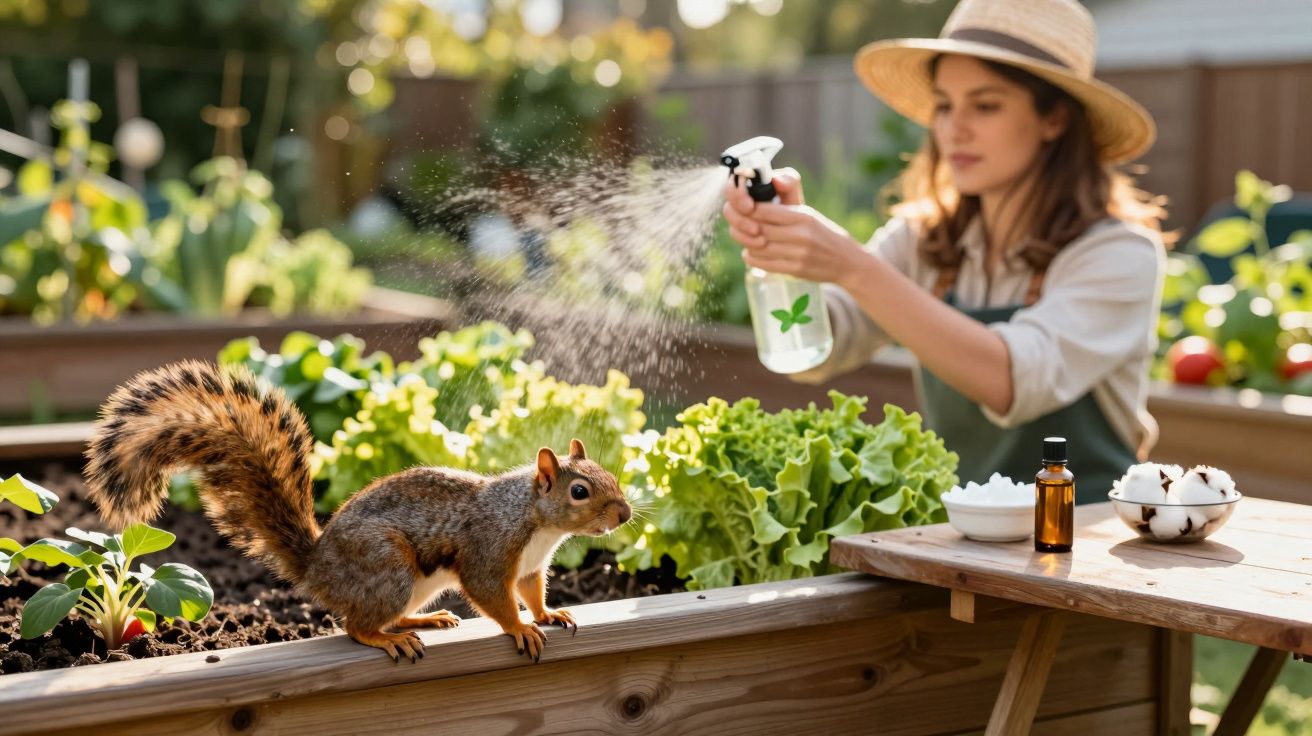
Squirrels can seem charming-until they dig up tulip bulbs, empty bird feeders and gnaw at timber cladding. At that point, the cute visitors quickly become genuine nuisance animals. Increasingly, garden owners are turning to peppermint oil as an apparently simple, animal-friendly fix. The idea behind the hype is straightforward: the strong smell should drive squirrels away without harming them. The real question is how reliably that works in day-to-day garden conditions-and where the limits are.
How peppermint oil affects squirrels
Peppermint oil is an essential oil distilled from the peppermint plant. Its main components include menthol and menthone, which create the familiar cooling sensation and sharp minty scent many people recognise from chewing gum and cold rubs.
Squirrels have an exceptionally sensitive sense of smell. They rely on it to locate food, detect threats and mark territory. When that finely tuned system is hit with a highly concentrated mint aroma, it can be unpleasant and disorientating-exactly the response people are trying to trigger when using peppermint oil.
Peppermint oil doesn’t create an invisible barrier-it simply changes how appealing an area feels to squirrels.
Research into scent-based deterrents for rodents suggests that strongly smelling substances can disrupt behaviour in the short term. Animals may avoid the area at first or approach more cautiously. In practical terms, peppermint oil can make places temporarily less attractive-particularly spots where squirrels normally like to dig or feed.
What peppermint oil’s effect depends on (in practice)
Whether peppermint oil makes a noticeable difference in your garden depends on several variables:
- Concentration: If the oil is diluted too much, it loses effectiveness quickly outdoors.
- Weather: Rain, wind and strong sunshine break down scent compounds fast.
- Positioning: Sheltered corners hold the scent far longer than exposed areas.
- Habituation: Some squirrels tolerate the smell after a while.
- Food availability: Where food is plentiful, squirrels will put up with more discomfort to reach it.
| Influence factor | What it does to effectiveness | Typical duration |
|---|---|---|
| Rain | Washes oil out of soil and off surfaces quickly | 1–2 days |
| Direct sunshine | Speeds up evaporation of scent compounds | 2–4 days |
| High temperatures | Accelerate evaporation even further | 3–5 days |
| Sheltered areas | Scent lingers longer; less wash-off | 7–10 days |
Many garden owners report the same pattern: squirrels keep away initially, but after a few weeks the deterrent effect fades. The animals learn that the harsh smell is annoying rather than dangerous-and that the sunflower hearts at the feeder are still worth the effort.
Squirrels, seasons and why timing matters
The success of peppermint oil can vary dramatically throughout the year. In spring, squirrels gather nesting material and seek high-energy food for their young. In autumn, they cache food intensively, burying nuts and seeds in soil. During both periods, pressure on beds and bulbs rises sharply.
At precisely these peak times, peppermint oil on its own is often not enough. Squirrels are more active, travel further and take more chances. In quieter spells-such as mid-summer when natural food is abundant-the same mint scent can appear far more discouraging.
How garden owners use peppermint oil correctly
If you want to trial peppermint oil, it pays to be targeted rather than spraying at random. Start by identifying the problem points: Where are squirrels digging? Which routes do they use regularly? Where are feeding stations positioned?
The most common method: mixing a peppermint oil spray
A homemade spray solution is what many people use day to day. A typical approach is:
- Fill a spray bottle with water.
- Add 10–15 drops of pure peppermint oil per about 250 ml of water (roughly one cup).
- Add a few drops of washing-up liquid so the oil mixes more evenly with the water.
- Shake vigorously and use immediately.
This mixture is commonly applied to:
- Soil around newly planted flower bulbs
- Garden entry points, such as along fences or walls
- The area around bird tables and feeders
- The bases of wooden decking, sheds or raised beds
In spring and autumn-when squirrels are especially active-many people spray twice a week. After heavy rain, an additional application is often needed.
Alternatives to spraying: creating longer-lasting scent points
Alongside spray, “scent points” can help the smell persist for longer:
- Soak cotton wool balls in undiluted peppermint oil and place them in small, perforated tins.
- Use fabric sachets filled with dried mint and add a few drops of peppermint oil.
- Mix a small amount of oil into bark mulch or soil and work it in around particularly vulnerable plants.
These “scent islands” are easiest to tuck under eaves, in wall recesses or beneath covers-anywhere rain and sun are less likely to reach.
If you place the scent point slightly higher-such as on the edge of a bird feeder-you influence the exact area the squirrels find most tempting.
Why peppermint oil isn’t a cure-all
As appealing as a simple home remedy sounds, peppermint oil remains a behavioural trigger, not a physical barrier. A hungry squirrel with a well-established territory is more likely to tolerate the smell than abandon its favourite nuts without a fight.
It becomes particularly challenging in gardens where squirrels have used feeding spots, hiding places and nesting sites for years. These regular visitors can be remarkably persistent. In such cases, the mint scent may force small detours or slow down damage-but it rarely prevents it completely.
Cost is another constraint. High-quality essential oil is not cheap, and anyone spraying generously all summer will notice the expense. Cheaper synthetic fragrances can reduce the outlay, but their effect is often weaker and less consistent.
When combining measures makes sense (peppermint oil for squirrels included)
Many specialists recommend combining different methods rather than relying on scent alone. Common additions include:
- Fine wire baskets or mesh over bulb plantings to stop digging
- Protective tubes around young tree trunks
- Positioning feeders so squirrels can’t make easy jumps from roofs, fences or beams
- Motion-activated sprinklers or light deterrents to add a startle effect
In leafy, woodland-edge neighbourhoods, new squirrels often appear even if a few stay away. If you depend solely on smell-based deterrents, results are rarely permanent. A layered approach-barriers, scent, smart placement and limited food access-tends to last longer.
What else garden owners should know
Many people wonder whether peppermint oil causes problems for other animals or plants. At normal dilution, most ornamental plants cope well with occasional spraying. Leaf scorch is more likely if the oil is applied too concentrated, especially in strong, bright sunshine.
For pets, the principle is similar: cats and dogs usually dislike intense essential-oil smells. Outdoors and at low doses, exposure is typically minimal-provided animals can’t lick cotton pads or sachets directly. If you’re unsure, speak to your vet or position scent sources well out of reach of pets.
Another frequent question is whether peppermint oil can be combined with other natural smells. In practice, some gardeners rotate scents such as mint, garlic or clove to reduce habituation. There isn’t firm data showing which blend works best, but switching regularly may make it harder for squirrels to become comfortable with any single odour.
Two extra ways to reduce squirrel pressure long-term
A deterrent works best when it’s part of a wider plan. If you want fewer repeat visits, it helps to reduce what makes your garden attractive in the first place. For example, tidying spillage beneath bird feeders, using feeder baffles, and bringing food in overnight can remove the “reward” that convinces squirrels to ignore peppermint oil.
Plant choice can also play a supporting role. While no plant is completely squirrel-proof, using more robust bulb protection (mesh cages) and favouring species that are less frequently dug up can reduce conflict. The goal isn’t to eliminate wildlife, but to make the highest-value areas-freshly planted bulbs, feeders and vulnerable timber-less easy and less rewarding to target.
Ultimately, peppermint oil can be a useful tool: it may provide targeted, short-term relief in the right places and conditions. It is rarely the only answer to the bigger question: How do I keep squirrels out of my garden?






Comments
No comments yet. Be the first to comment!
Leave a Comment