
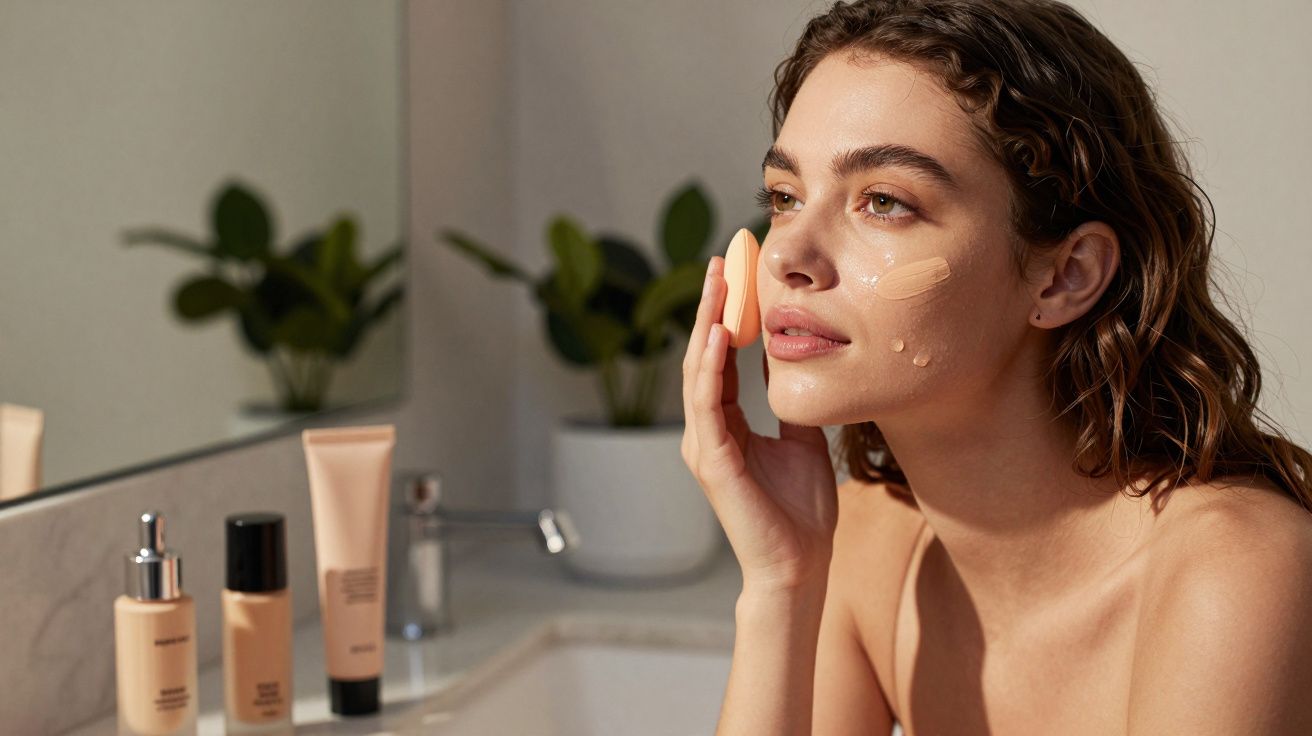
It’s often not the product itself that’s the problem, but choosing the wrong kind of foundation.
A truly flawless-looking complexion reads as “naturally good skin”, not “lots of make-up”. That’s exactly where foundation can fall down in day-to-day life: patchiness, clinging to dry areas, a shiny T-zone or a heavy, mask-like finish. If you pick a formula that suits your skin type and apply it with intention, you can look noticeably fresher and more youthful using surprisingly little product.
The foundation type that genuinely makes skin look better
The key principle is simple: the best foundation is almost invisible. It fuses with the skin, smooths out unevenness and still lets texture, freckles and natural vitality show through.
The foundation that truly flatters the complexion is usually lightweight, flexible, easy to blend and matched to your skin type.
A modern “second-skin” effect typically comes from these features:
- Light to medium coverage: Redness and blemishes are softened, but the skin never looks “sealed”.
- Liquid or creamy texture: It sits as a fine veil and moves naturally with facial expressions.
- Skincare-led ingredients: Hydrators, soothing agents or anti-ageing elements improve comfort and wear.
- A flexible finish: Not ultra-matte and not greasy-shiny-rather a natural, lively look.
Formulas that combine make-up and skincare tend to work particularly well for everyday wear: they even out tone without creating new issues such as tightness, excess shine or emphasised fine lines.
Foundations to avoid if you want a beautiful complexion
Choosing well also means knowing what to leave on the shelf. Many make-up artists agree that stiff, high-coverage and overly powdery textures can be tricky.
Any foundation that highlights fine lines, enlarges the look of pores or makes skin appear dull instantly removes freshness and can make the face look older.
Be cautious with:
- Very heavy, full-coverage formulas: They can create a “mask effect” and are prone to settling into lines or pores.
- Thick mousse textures: They may feel cushiony, yet can make facial movement look less natural and accentuate dry patches.
- Dry, strongly mattifying powder foundations: Especially on mature, dry or sensitive skin, they can look flat, make lines more visible and drain the face of life.
When people reach for these to “cover everything”, the result is often the opposite: imperfections stand out more as the foundation shifts, cakes or breaks up through the day.
Matching texture to your skin type (foundation guidance)
Normal to combination skin: the widest range of options
If your skin is fairly straightforward, you can get away with most textures. That freedom is useful-but it can also tempt you into overdoing it.
- Liquid foundation: Ideal for subtle evening-out; it layers well without turning thick.
- Compact or powder foundation: Handy for touch-ups and mild shine, as long as it isn’t formulated too dry.
- Finish based on need: A gentle glow for skin that looks a bit flat; semi-matte for everyday office wear.
The trick is to reduce shine only where it’s distracting-usually the forehead, nose and chin-rather than mattifying the entire face until it looks two-dimensional.
Dry skin: prioritise hydration over coverage
If dryness is your main issue, foundation should behave more like tinted skincare. Harsh powders or intensely mattifying formulas can quickly cause tightness and make flaking obvious.
Liquid or creamy foundations with plenty of moisture and gentle oils can make dry skin look smoother and fresher almost immediately.
What tends to work best:
- Liquid or cream textures with hyaluronic acid, glycerin or plant oils.
- Light coverage, topped up with targeted concealer on redness or post-blemish marks.
- Minimal powder, if any-at most, a dusting on the T-zone.
Trying to disguise dryness with heavy coverage usually backfires, making every line and flaky patch more noticeable.
Oily skin: control shine without suffocating the skin
Shine, enlarged pores and quick oil breakthrough can push you towards extreme matte products. They may help in the short term, but over time they can leave the skin looking stressed and unbalanced.
Better options include:
- Oil-free, lightweight liquid foundations that bond well with the skin.
- A mattifying but finely milled powder used only where shine appears.
- Mineral powder, which can absorb excess oil without feeling like it has sealed the pores shut.
A completely flat, dead-matte finish can look dated and unnatural. A controlled, natural matte effect-keeping a hint of life on the cheeks-usually looks more current and flattering.
Mature skin: less powder, more lightness
As skin ages it often becomes thinner, less firm and drier. Foundation shouldn’t exaggerate that; it should visually smooth and brighten.
With mature skin, professionals almost always choose lightweight liquids and avoid dense mousse or powder foundations.
Look for:
- Very fine liquid formulas with skincare benefits and subtle light-reflecting properties.
- Medium, buildable coverage rather than applying a thick layer from the start.
- Powder used sparingly, only on areas that genuinely become shiny.
Dry, high-coverage products tend to settle into fine lines and sharpen expression lines. A touch of radiance, on the other hand, can make the face look instantly more awake.
More than make-up: foundation as a skincare component
Modern foundations go well beyond simply “painting over” the skin. Many include:
- Hydrators (such as hyaluronic acid) to soften the look of dehydration lines.
- Anti-ageing ingredients such as peptides or antioxidants.
- UV filters that add an extra layer of daytime protection.
These formulas don’t replace proper skincare or a separate sunscreen, but they can support the skin throughout the day and help the complexion look more even and healthy.
Prep matters: help your foundation look like skin
Even a well-matched foundation can look off if it’s applied to skin that isn’t properly prepared. A simple routine-cleanse, moisturise, and allow your moisturiser to settle for a few minutes-can reduce patchiness and improve wear, especially around the nose and mouth.
If you use a primer, treat it as a targeted tool rather than a compulsory step: a hydrating primer can ease dryness, while a pore-blurring or oil-control primer can be applied just to the T-zone. Over-layering multiple base products across the whole face can make foundation slip, separate or look heavy by lunchtime.
Application: how to get the “second-skin” effect
Even the best foundation can look unnatural if it’s applied like a mask. Technique is a major part of the result.
- Use less product: Dispense a small amount onto the back of your hand or a palette.
- Work from the centre outwards: Start around the nose, cheeks and centre of the forehead, then blend towards the edges.
- Pick your tool based on the finish you want:
- Fingers for a natural, light result.
- A brush for precise, even coverage.
- A damp sponge for the softest, most seamless transitions.
- Cover strategically, not everywhere: Tap concealer only where needed rather than blanketing the entire face.
- Use powder only where it helps: Lightly set the T-zone, not areas that don’t get shiny.
If you look in the mirror and still feel “over-made-up”, press a slightly damp sponge over the skin to lift excess product and let more natural skin show through.
Mistakes that can make the complexion look older
A few common traps show up in almost every make-up routine:
- The wrong undertone: Too yellow or too pink can make the complexion look unwell or uneven.
- Too much product around the eyes: It emphasises fine lines and can make the eyes look tired.
- No blend into the neck: A visible line looks instantly artificial.
- Too much powder all over the face: It removes freshness and leaves skin looking dull.
Using thin layers-and checking how everything looks in natural daylight-usually creates a far more polished result, whether you’re using a high-street or luxury foundation.
Why “coverage” and “finish” are crucial foundation terms
Many people focus on shade alone, but two other qualities matter just as much: coverage and finish.
- Coverage describes how much of the skin remains visible. Light coverage lets freckles and some redness show through; high coverage hides almost everything.
- Finish is the surface effect on the skin: glowy, natural, semi-matte or strongly mattifying.
If you’re prone to blemishes, you don’t automatically need maximum coverage. Often, light-to-medium coverage paired with targeted concealer looks far more like real skin while still calming the overall tone.
A softly radiant finish can revive dull, tired-looking faces, but on very oily skin it can quickly look like “too much”. Semi-matte formulas often sit in the middle and tend to be the most reliable all-rounders for everyday wear across many skin types.




Comments
No comments yet. Be the first to comment!
Leave a Comment