
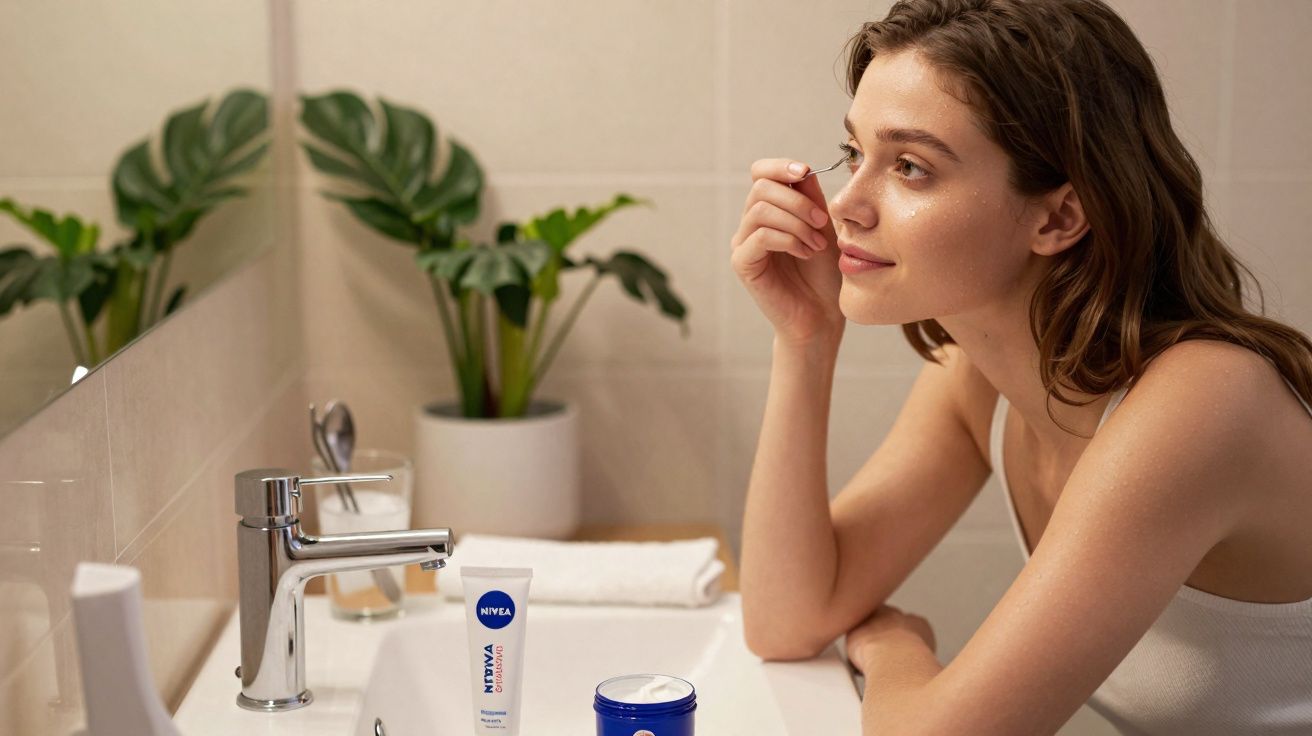
Mornings don’t always flatter your skin. After a salty supper, broken sleep, or a late-night scroll you didn’t mean to start, your face can look a bit puffy, a touch dull, and oddly flattened. Filters try to disguise it and serums swear they can fix it - yet, more often than not, a kitchen drawer and a familiar blue tin can make a difference faster.
I first clocked it in a tiny kitchen just before dawn. A friend, hair clipped up and eyes slightly swollen after a long week, fished past leftovers in the fridge for two teaspoons that looked like they’d been in service for years. She held the cold metal under her eyes, then popped open the iconic blue tin of Nivea Creme, melted a pea-sized amount between her palms until it turned sheer, and pressed it along her cheekbones and jaw. The effect was immediate: the under-eye shadows softened, her skin looked smoother and fresher, and she somehow appeared more awake. She caught her reflection and laughed - surprised at how much two minutes could change.
The odd power of a cold spoon and Nivea Creme (the blue tin)
It sounds almost comically straightforward. A cold spoon can take down puffiness quickly, and the gentle glide helps shift fluid away from where it tends to sit. Follow that with the plush, sealing comfort of Nivea Creme and skin often looks springier and more “rested”. It isn’t magic - it’s temperature, pressure and texture working together.
Later, on the Tube, I noticed the same theme on other faces: not exhausted, just slightly swollen from everyday life. A barista blinking hard between flat whites, a new dad pressing his fingers into his temples, a student holding a chilled drinks can to their cheek like an improvised compress. Most of us know the moment: the mirror feels brutally honest and your skin could do with a small, quiet reset. The spoon-and-cream ritual is exactly that - low-effort, low-drama.
Here’s what’s going on in plain terms:
- Cold prompts blood vessels to constrict, which reduces the look of swelling; when they relax again, you often get a healthier-looking flush.
- Light massage encourages lymphatic drainage, helping fluid move along instead of pooling under the eyes.
- A rich cream reduces water loss and smooths the surface, so light reflects more evenly and fine lines appear softer.
Put together, the results can feel like quick-fire synergy: de-puff first, then cushion and seal.
How to do the cold spoon + Nivea Creme routine in 120 seconds
Slide two teaspoons into the fridge while the kettle boils - or keep them there overnight so they’re always ready. Start with clean skin.
- Under-eye sweep (both sides): place the rounded backs of the spoons at the inner under-eye area, then glide outward along the orbital bone towards the temples.
- Do 6–8 slow, feather-light strokes per side.
- Face sweep: run the spoons gently down the sides of the nose, then across the cheeks towards the ears.
- Think light and smooth, not “deep tissue”.
Next, take a pea-sized dab of Nivea Creme and warm it between your palms until it becomes translucent and silky. Then:
- Press (don’t drag) into cheekbones, sides of the nose, and along the jaw.
- Finish with a soft sweep across the forehead.
Adjust it to your skin:
- If you’re oily, use half the amount, or tap it only where you want a little bounce (often the cheekbones). A hydrating mist underneath can help you use less.
- If you’re dry, apply it over a hydrating serum to lock in that water where you need it.
And yes - most people won’t do the “perfect” version every single day. That’s fine.
Small cautions that make the routine work better
This is easy to get right, but also easy to overdo.
- Don’t use spoons that are freezer-hard; fridge-cold is the sweet spot. Too cold can cause redness and discomfort.
- Wash the spoons after each use, as you would any beauty tool.
- Keep pressure gentle, particularly around the eyes.
- If your make-up tends to pill, don’t apply a thick layer under foundation. Use a thin veil and wait about a minute before going in with base products.
“Cold calms and compresses; emollients cushion and seal. Together they give skin a rested signal,” a facialist told me backstage after a show, dabbing dew from a model’s cheekbones with the quiet satisfaction of a good tip shared.
- Time needed: 2 minutes, maximum
- Tools: 2 teaspoons, fridge-cold
- Product: Nivea Creme, pea-sized amount
- Pressure: as light as a whisper
- Best moment: after cleansing, before make-up
What’s really happening when a tiny ritual changes your face
There’s a subtle mood shift hidden in the clink of metal and the snap of a lid. Part massage and part micro-reset, it gives your nervous system a small “all clear” while giving your features a kinder frame. For a moment you slow down, notice your breathing, and watch the puffiness ease as if someone has let a bit of air out of a balloon. Some routines feel oddly like home.
Skin is both boundary and billboard. It broadcasts hydration, salt, sleep, stress, screens, weather, hormones - even that glass of wine you promised “didn’t count”. The spoon quietens the morning noise; the cream softens the edges so your expression looks more like you. Not airbrushed - simply steadier. There’s a particular relief in tools that don’t need charging or a qualification to understand.
It also fits real life because it’s genuinely accessible. It costs very little, it lives where you live, and it’s done before the tea’s brewed. It won’t replace sunscreen or erase a decade (and it doesn’t need to). What it can offer is a quick, visible nudge towards comfort and circulation, a smoother feel under fingers and foundation, and the sense that you’ve claimed two calm minutes back from the day.
One extra note worth keeping in mind: if you’re prone to irritation, eczema flare-ups, or very reactive skin, treat the spoon as a cool touch, not a cold shock, and keep movements minimal. Likewise, if you’ve had recent injectables, laser treatments, or eye surgery, it’s best to follow your clinician’s advice on massage and pressure before trying any depuffing routine.
| Key point | Detail | Why it matters to you |
|---|---|---|
| Cold reduces puffiness | Fridge-cold spoons encourage vasoconstriction and support lymph flow | Faster de-puffing without gadgets |
| Nivea seals and softens | Occlusive, cushiony texture helps lock in hydration and smooth the look of fine lines | Make-up sits better, skin looks fresher |
| The routine suits real mornings | Two steps, two minutes, using two tools you already own | Low-cost, high-impact, easy to stick with |
FAQs about the cold spoon + Nivea Creme routine
Can I use the freezer instead of the fridge?
Yes, but keep it brief. A few minutes is enough - you want cool, not painfully icy. If the spoons cling to your skin, they’re too cold.
Will this replace my eye cream?
Not really. Think of it as a quick depuffing and smoothing step. If you use active ingredients (such as caffeine or peptides), keep them in your routine, then add a thin veil of cream where you want cushioning.
What if I have oily or acne-prone skin?
Try a mist or lightweight gel hydrator first, then tap on a rice-grain amount of cream only on high points. Avoid the T-zone if it clogs easily. The spoon massage can still help even without much product.
Is Nivea Creme the only option?
No. Any simple, rich occlusive moisturiser can work as the “sealing” step. The blue tin is a favourite because it’s classic, affordable and reliably gives that bouncy finish. Patch test if you’re sensitive to lanolin.
Can I do this at night?
Definitely. It’s especially nice after long screen days or a salt-heavy dinner. Keep the spoons clean, keep pressure light, and let the cream be your final step before bed.


Comments
No comments yet. Be the first to comment!
Leave a Comment