

You demolish a hefty slice of chocolate cake after lunch, scraping the last crumbs with your fork in that strangely satisfying way. Ten minutes later, the sweetness is still coating your tongue. Half an hour on, you’re scrolling on your phone… and your stomach is rumbling as if you haven’t eaten since breakfast.
Next thing you know, you’re back in the kitchen, opening the same cupboard you shut not long ago. How does “just a bit of sugar” so often turn into “I need something else”? And why can a dessert sometimes leave you feeling more hungry than you were before you started?
Nutritionists say this isn’t a moral failing, a lack of willpower, or your brain running the tired script of “I’m just greedy”. What’s going on is far more specific: changes in blood sugar, shifts in hormones and a strong pull from the brain’s reward system. Once you understand the pattern, it becomes hard to ignore.
Why sugar can leave you hungrier than a proper meal (blood sugar, insulin and ghrelin)
Dietitians often start with an unglamorous truth: your body doesn’t interpret “sugar” as a complete meal. It treats it as a rapid signal - a flare in the sky, not a steady campfire.
After something sweet, glucose can enter your bloodstream quickly. Your pancreas responds by releasing insulin, working to move that glucose out of the blood and into cells. For a short while, this can feel brilliant: a burst of energy, a lighter mood, a quick comfort-hit.
Then the curve often swings the other way.
When blood sugar drops, hunger signals ramp up - including ghrelin, a hormone that increases appetite. Your brain interprets the dip as urgency and keeps pushing the same instruction: eat - and eat now.
What breakfast studies show about sugar, hunger and cravings
Research led by dietitians looking at breakfast patterns illustrates this clearly. Put simply:
- One group eats a sweet, low-protein pastry breakfast.
- Another group has eggs with wholegrain toast.
In the first 30–60 minutes, the pastry group may actually report feeling more satisfied. The “sugar high” is real, and it’s rewarding in the moment.
But after the first hour, the experience often flips. By late morning, people who started with a pastry tend to feel significantly hungrier, more distracted, and more likely to grab another snack (often something from a vending machine). The eggs-and-toast group, by contrast, commonly drifts to lunchtime with far fewer hunger pangs. Even when total calories are similar, the body’s response can be completely different.
The appetite roller-coaster effect (and why a cookie rarely feels like enough)
Nutritionists often describe it like this: sugar without enough protein, fat or fibre is like sending your appetite on a roller coaster with faulty brakes. A fast rise in blood sugar is followed by a fast drop. That drop can trigger “rebound hunger”, where cravings feel louder than your genuine energy needs.
Your brain doesn’t calmly note, “Glucose has dipped slightly.” It reacts more like: “We’re running out - find something sweet, salty, filling.”
There’s another layer too. Sweet foods activate the brain’s reward system: dopamine increases, and the experience becomes not just about fuel, but about chasing a feeling. That’s a big part of why a biscuit (or cookie) so often doesn’t feel like enough - your system is primed to want more long before you objectively “need” it.
How to eat sugar without triggering the hunger spiral
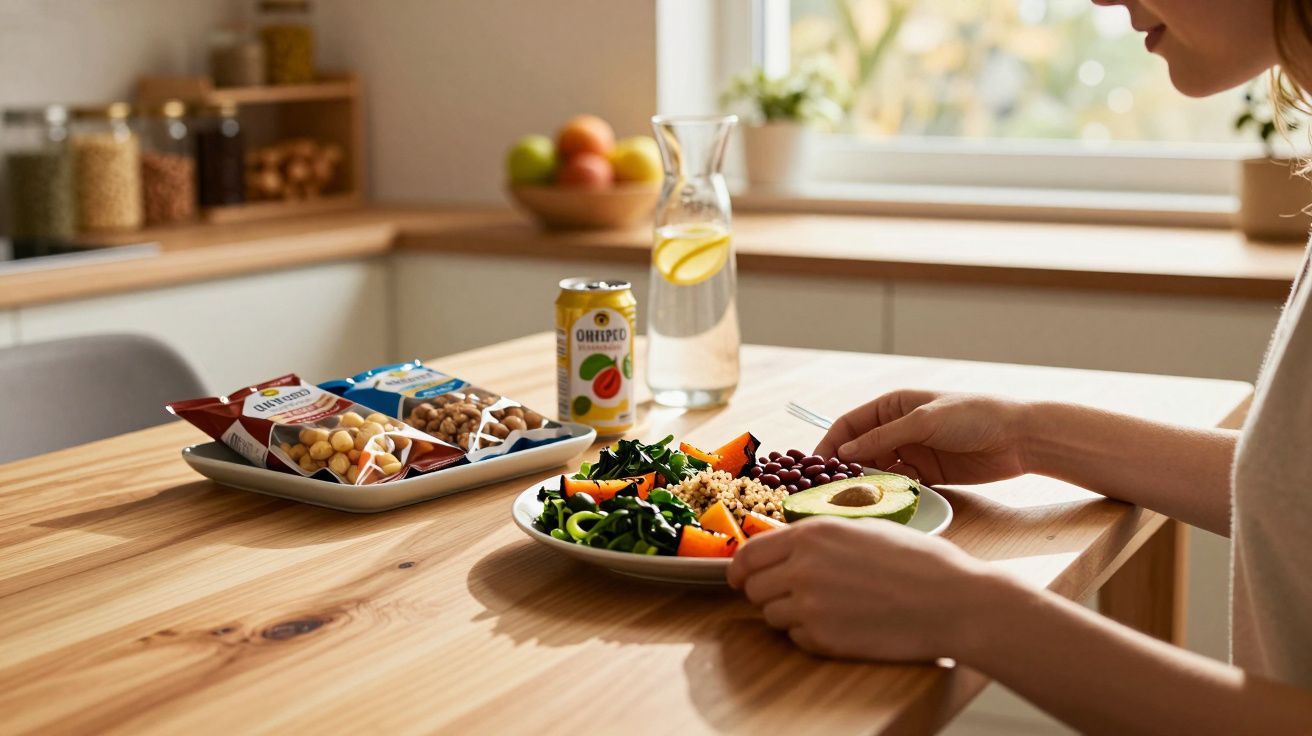
One of the most useful strategies nutritionists share is almost boringly straightforward: don’t let sugar travel alone. Combine sweet foods with protein, fibre and/or healthy fats so the rise in blood sugar is gentler.
Think of it as adding speed bumps to that glucose ride:
- A small handful of nuts with a couple of squares of chocolate
- Greek yoghurt with a drizzle of honey
- Berries on oat pancakes (rather than having white toast and jam on its own)
This isn’t about “cancelling” sugar. That’s not the aim. The aim is to slow absorption, stretch the energy out, and stop hunger hormones from ricocheting 60–90 minutes later.
The “order of eating” approach dietitians use
Many dietitians also use a simple sequencing trick with clients: start a meal with vegetables and/or protein, then have starchy and sweet foods afterwards.
In one small study, eating chicken and salad before white rice and juice produced a smaller blood sugar spike than having the juice first. It sounds almost too easy, yet plenty of people notice tangible differences: fewer afternoon crashes, and fewer “I need a muffin right now or I’ll lose it” moments.
Let’s be honest: hardly anyone manages this perfectly every day. Even so, trying it at just one or two meals can make it obvious how strongly pairing and order affect post-sugar hunger.
A key piece many people miss: sleep and stress can amplify sugar hunger
Even when meals are well structured, poor sleep and high stress can make cravings harder to manage. When you’re tired, your appetite regulation tends to wobble - hunger cues can feel stronger, and quick-energy foods become more appealing. Stress can also nudge people towards sugary foods for comfort, because sweet tastes reliably activate reward pathways.
In practice, this means that on a short-sleep, high-pressure day, the same sweet snack may hit harder: a sharper pull towards “something else”, and a stronger rebound hunger later. It’s not a character flaw - it’s a predictable biological response layered on top of blood sugar swings.
Rewriting your relationship with sweet hunger (without turning it into guilt)
Dietitians tend to repeat one message: don’t turn this into another ritual of food guilt. They often see the same cycle - strict sugar bans that last a fortnight, followed by bigger blow-outs when life gets stressful again.
What tends to work better long term is curiosity rather than punishment. Pay attention to how you feel 30, 60 and 90 minutes after different sweet choices. Is there a noticeable difference between:
- a couple of squares of dark chocolate after lunch, and
- a caramel latte mid-morning on an empty stomach?
Most people, once they start observing quietly, realise their body has been offering the same feedback for years.
“People assume they lack willpower, but often they’re just battling a blood sugar curve that’s set up to make them hungrier,” explains UK nutritionist Anna Rhodes. “Change the curve, and the cravings change too.”
Practical ways to reduce the crash (without quitting dessert)
On an everyday level, this can look like eating a proper lunch before the birthday cake appears at work. It can also mean building a few simple anchors into your day, such as:
- breakfast with at least 15–20 grams of protein
- an afternoon snack that includes fibre and fat
- being cautious with sweet drinks when you’re already very hungry
One quiet change many nutritionists like is reducing the “hidden sugar” you drink:
- half-sweetened coffee instead of fully sweetened
- flavoured sparkling water instead of a second can of fizzy drink
These shifts often avoid the mental backlash that comes with rigid rules, while making the sweet things you do choose feel more deliberate - less like an automatic reflex whenever your energy dips.
Quick checklist
- Pair sugar with protein or fibre to blunt the crash.
- Eat a proper meal before dessert-style snacks.
- Watch timing: sweets tend to hit harder when you’re already running on empty.
- Track your own patterns instead of copying someone else’s rules.
When you notice the pattern, you see it everywhere
Once you understand how sugar interacts with hunger hormones, it starts popping up in daily life: the 3 pm office biscuit that leads to raiding the fridge at 6 pm; the “light” breakfast of orange juice and a cereal bar that somehow ends in a pastry run by 10:45.
We often blame ourselves for these moments. In reality, much of it is physiology doing what physiology does - protecting you from what it interprets as a fast loss of available fuel.
You don’t need to swear off dessert to step out of the loop. Small, strategic changes usually do more than dramatic “sugar detox” challenges floating around on social media.
We’ve all had that moment of staring at an empty wrapper and thinking, “Did I even enjoy that, or did I just inhale it?” That’s the point: understanding sugar and hunger isn’t about perfection. It’s about paying attention. When you slow the physical roller coaster, the mental one often settles too - and it becomes easier to recognise when you want sweetness for comfort, a break, or a celebration, rather than because your blood sugar is crashing.
Summary table
| Key point | Detail | Why it matters to you |
|---|---|---|
| Sugar creates a spike and then a drop | Rapid glucose rise, an insulin surge, then a sharp dip that re-triggers hunger | Explains why you can still feel hungry after a sweet dessert |
| Meal context changes everything | Protein, fibre and fats soften the “roller coaster” effect | Helps you structure meals to avoid cravings and snacking |
| Small tweaks are often enough | Pair sugar, change food order, cut back on sugary drinks | Gives simple actions without extreme dieting |
FAQ
Why do I feel hungrier after dessert than after a savoury meal?
Dessert can raise blood sugar quickly and then drop it quickly. That drop can trigger hunger hormones and cravings, making you feel as if you need to eat again.Is it normal to crave more sugar right after eating something sweet?
Yes. Sugar activates the brain’s reward system and, especially when eaten on its own, can lead to rebound hunger that makes you reach for more.Does the type of sugar matter for hunger?
Context often matters more. Sugar in whole fruit comes with fibre, so it usually has a gentler effect than added sugar in drinks or pastries eaten on an empty stomach.Can I stop the sugar crash without quitting sugar completely?
Often, yes. Pair sweet foods with protein, fat or fibre, and avoid having them in isolation when you’re very hungry. This helps flatten the spike and reduce the crash.Why do sugary drinks make me snacky later?
Liquid sugar enters the bloodstream quickly and doesn’t create much physical fullness. That combination can lead to sharper blood sugar swings and more snacking afterwards.



Comments
No comments yet. Be the first to comment!
Leave a Comment