
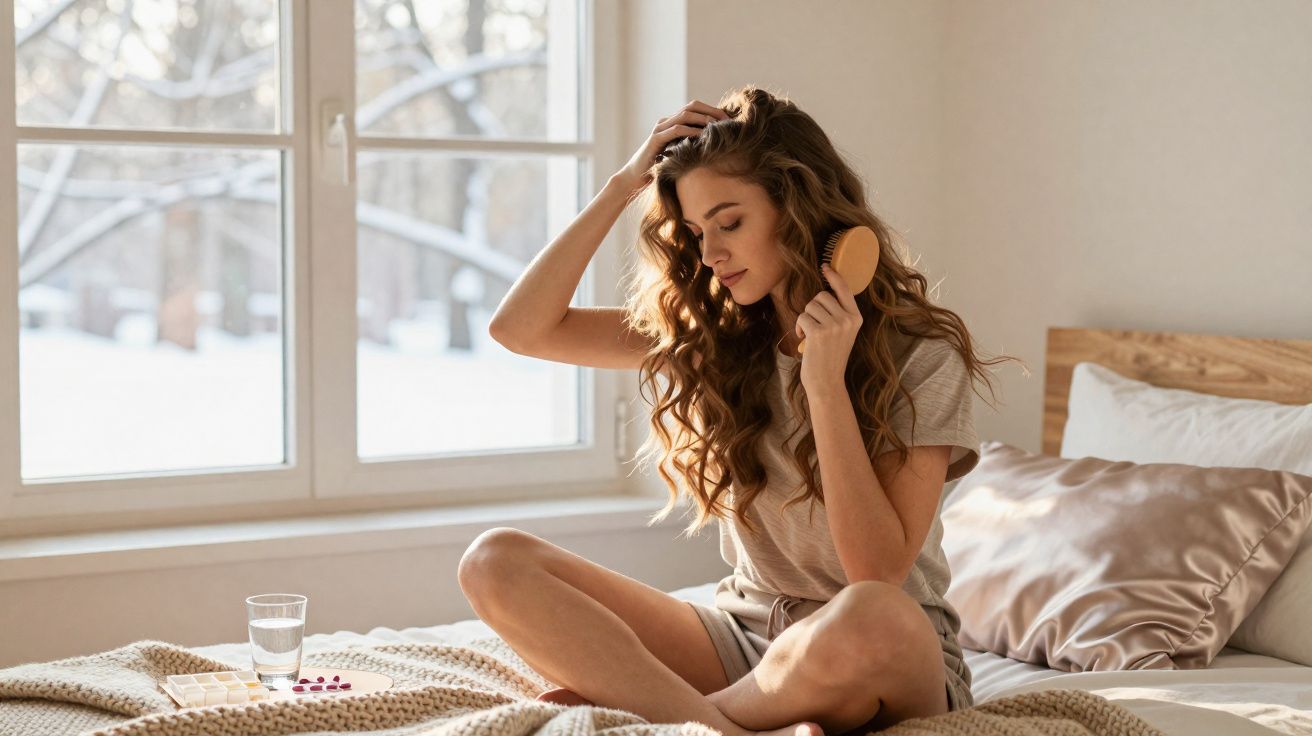
A fine flurry of snapped hairs lands on her black jumper. Beyond the window the city looks locked in ice: sharp light, slick pavements, breath turning to mist. In the bathroom, though, everything feels unforgiving-the fluorescent glare, the hard mirror, the sense that every strand is being inspected.
She threads her fingers through her hair once, then again, then “just one more time” to be sure. A few more hairs cling to her fingertips and her throat tightens. Same shampoo, same habits, yet her ponytail seems skinnier. The heated towel rail in the hall hums, the radiator clicks, and her scalp has that faint, dry sting.
She unlocks her phone and types the thought she’s been avoiding: “winter hair loss normal??” Autocomplete floods the screen instantly-as if thousands of people are asking the same question, quietly, in the same cold months. One small doubt changes the whole day.
Why winter hair loss makes your hair panic
Hair loss never feels neutral. You spot it on your pillowcase, in the plughole, on your scarf, and it never looks like “an acceptable amount”. Winter tends to pour petrol on that low-grade fear: parched outdoor air, overheated indoor rooms, and hats rubbing the same delicate patches day after day.
Your scalp usually complains first. It can feel taut, itchy, or look slightly flushed-often so subtly you only notice once you start paying attention. Then the hair fibre starts showing it: more breakage, flatter roots, ends that split and snag instead of moving smoothly. You don’t suddenly wake up bald, of course. It’s the slow, persistent sense that your hair is getting smaller week by week.
Look around on a frosty Monday commute. Beanies, messy buns, tight low ponytails tucked under padded hoods. That everyday friction-combined with temperature swings and less sunlight-creates a quiet recipe for seasonal shedding. Dermatologists frequently see more appointments from late autumn through late winter. Some research suggests we naturally shed a little more from September to November, and again after periods of intense stress.
Then there’s the winter lifestyle mix: hotter showers, less time outdoors, fewer vitamins from seasonal fruit and vegetables. Many people snack more, move less, and some even go to bed with damp hair because the bathroom is too cold to wait. Each choice seems minor on its own; together, they can nudge the hair cycle towards fragility. The body notices patterns, even when we don’t.
Hair grows through three main stages: growth, transition and rest. Each follicle runs on its own timetable, and roughly 10% are in the “resting” stage at any one time. When the balance shifts and more follicles move into the shedding phase, you feel it as loss. Winter stress, a dry scalp, low-level inflammation and nutritional dips can all push that cycle the wrong way.
That’s why January can make perfectly ordinary shedding feel dramatic. It’s not only what falls out-it’s the sense that what remains isn’t coming back as thick or as glossy. The aim isn’t an empty brush (that’s unrealistic), but a scalp and routine that keep the cycle steadier even as the temperature drops.
Habit 1: Feed your hair from the inside (even when you can’t be bothered)
Strong winter hair begins in the kitchen long before it reaches the bathroom shelf. The follicles in your scalp are tiny, active organs that rely on energy, protein, iron, zinc, vitamin D and B vitamins to stay in “growth” mode. When your body is under-fuelled, it protects the essentials-heart, brain, core functions. Hair gets treated like a non-essential extra.
That’s why crash diets or endless “January cleanses” often show up first on the head. Comfort food can still be on the menu, but a few dependable anchors help. Try to include a proper protein source with each meal: eggs, fish, lean meat, tofu, lentils. Add fats that support shine and flexibility-olive oil, nuts, seeds, avocado. Think warm, real meals, not only ultra-processed vending-machine snacks.
Imagine the familiar winter scene: you leave the office and it’s already dark; the rain is coming in sideways; your only plan is the sofa, Netflix and something quick. On nights like that, the easiest choice can be the most unhelpful long-term: frozen pizza, sugary pudding, and nothing fresh. Now tweak it slightly. Keep the pizza, but add a fast lentil salad, or a handful of walnuts and a clementine.
It sounds tiny-almost laughably small. Yet those nutrients, repeated daily through winter, change the quality of the building blocks your hair is made from. Research links iron deficiency, low vitamin D and inadequate protein intake to increased diffuse shedding, especially in women. Plenty of people only discover they were running low after months of unexplained loss.
Let’s be honest: no one consistently eats perfectly balanced plates with six different colours at every meal, particularly in February when everyone’s tired and the fridge looks bleak. The goal isn’t perfection-it’s momentum. If most winter days include some protein, some healthy fats and some plants, your follicles are far more likely to get what they need.
Treat your hair like a three‑month project. The strands leaving your head today began their cycle long before this morning’s breakfast. So every upgrade you make now-an omelette instead of plain toast, salmon instead of processed meats, a vitamin D supplement if you live somewhere with little winter sun-is a quiet deposit into how your hair will look when spring finally turns up.
Habit 2: Make your shower a scalp spa (without buying half the shop)
If winter hair loss had a megaphone, it would shout: start at the roots. Your scalp is skin, complete with a microbiome, immune activity and an oil balance of its own. When it dries out under central heating or reacts to harsh shampoos, follicles can become less stable. The upside is that a basic, gentle routine often does more than any flashy styling product.
First: turn the temperature down a notch. Boiling showers feel blissful when you’re frozen, but they strip protective oils, leave the scalp tight, and make the ends more prone to snapping. While shampooing, use your fingertips (not nails) to massage the scalp for 1–2 minutes, especially where thinning feels more noticeable. It improves circulation, helps lift build-up and gives follicles a small mechanical “wake-up”.
On bad hair days, most of us blame the length: too frizzy, too flat, too greasy. Yet a French dermatologist once told a patient something that permanently changed her routine: “You don’t have hair problems-you have scalp problems.” A quick examination showed micro-flaking, irritation behind the ears, and sensitivity along the hairline from tight ponytails and dry air.
He didn’t push a miracle serum. Instead, he advised a fragrance-free, anti-inflammatory shampoo twice weekly, lukewarm water, and one gentle exfoliating scalp treatment each month to clear dead skin. Within six weeks, the shedding eased, and the hair looked thicker simply because the roots were calmer and better anchored. Nothing viral-just consistent, boring care.
Many people skip scalp care entirely. They smear shampoo over the ends, rinse in a hurry, then load the lengths with heavy masks. The result: weighed-down hair and neglected follicles. A better logic is: support the scalp first, then lightly protect the ends. Keep conditioner or masks from mid-length to tips, particularly if your roots become oily.
For some, a pre-shampoo oil massage is a game-changer: a few drops of argan, jojoba or a dedicated scalp oil, massaged in for five minutes, then washed out with a mild shampoo. It isn’t magic-but across winter it often turns a dull, irritated scalp into softer, more resilient “ground” for growth. That’s exactly what thinning hair needs.
One extra factor many people miss in winter: hard water and indoor humidity. Limescale-heavy water can leave residue that makes hair feel rough and the scalp more reactive, while bone-dry heated air can worsen tightness and flaking. If this sounds familiar, consider a simple shower filter (where appropriate) and aim for a slightly more humid bedroom-sometimes even a small humidifier or drying laundry indoors (safely) can reduce static and dryness.
Habit 3: Protect winter hair loss triggers the way you protect your skin from the cold
When the temperature drops, we instinctively reach for gloves, a scarf and a warm coat. Hair rarely gets the same care. Yet icy wind, cold air and repeated rubbing against wool or synthetic fabrics can be as harsh to hair as winter air is to hands.
The guiding principle is simple: minimise mechanical damage. Every time hair scrapes along a rough collar, scarf or coat lining, the cuticle (its protective outer layer) lifts slightly. Over weeks, that creates split ends and breakage through the mid-lengths, which can be mistaken for “hair loss”. Sometimes what feels like shedding is actually snapping.
Hats are a mixed blessing. They keep you warm, but tight ones can tug the same zones (temples, crown) and weaken already-fragile strands. Going without isn’t the answer-especially if you feel the cold. Instead, choose softer fabrics such as cashmere or cotton blends rather than scratchy, pure wool, and avoid compressing the same parting every day.
A hairdresser shares this advice with nearly all her winter clients: “Rotate your hairstyle like you rotate your jumpers.” One day a low ponytail, the next a loose braid under your coat, then hair tucked into a scarf without an elastic. By changing where the tension sits, you stop stressing the same follicles week after week.
She also champions a nearly invisible hero: silk or satin. Not only as a pillowcase, but as a thin lining inside hats or around tight collars. A simple wrap or headband under a beanie can dramatically cut friction. Hair slides rather than catches-meaning fewer broken strands when you whip your hat off in a hurry at the café or the office.
Small protective steps add up. A lightweight leave-in conditioner or protective spray on the lengths before you go out works like a winter coat for the hair fibre. Static calms down, dryness improves, and brushing is less aggressive. You don’t need a full “glass hair” routine-just a thin barrier against wind, heating and electricity.
Also consider how you dry your hair in winter. Rubbing vigorously with a towel and then blasting with high heat is a perfect recipe for breakage. A gentler approach-squeezing with a microfibre towel, detangling carefully, and using a lower heat setting-helps preserve the fibre so normal shedding doesn’t look worse.
“Hair doesn’t cope well with extremes,” says Dr L., a trichologist who sees a rise in winter consultations every year. “Extreme heat, extreme cold, extreme tightness. The more you soften the environment around the fibre and the follicle, the steadier the hair cycle tends to be.”
Think of it as a winter survival kit for your hair:
- Choose a softer, looser hat, or line it with silk/satin
- Rotate hairstyles to avoid repeating the same tension points
- Smooth a light leave-in or a little oil over mid-lengths before going out
- Detangle gently from ends to roots when you get home
- Trim dry ends at the start of winter to reduce breakage
Habit 4: Respect the sleep–stress–sunlight triangle
Beyond food and products, your hair quietly mirrors your day-to-day life. Lack of sleep, ongoing stress and minimal natural light can keep the body in a low-level state of alert. If that runs on for months, hair often moves from “priority project” to “energy-saving mode”: slower growth, increased shedding.
Winter makes this harder. Short days, holiday pressure, deadlines, family tension, and that particular grey fatigue that settles in during February. Many people stay up later, scroll more, exercise less. The nervous system stays switched on when the body should be repairing itself-and hair growth is part of that repair work.
Research connects prolonged high stress with telogen effluvium, a type of hair loss where a larger number of follicles shift into resting and then shedding at the same time. The timing is delayed: hair often falls 3–6 months after the stressful period. That’s why a rough autumn can reappear as heavier shedding deep into winter.
The antidote doesn’t have to be dramatic. A brief walk outside at lunchtime-even 10 minutes-supports circadian rhythm and helps with vitamin D exposure. A small bedtime routine (a book instead of scrolling, a herbal tea, a few slow breaths) signals safety to the body: now we repair. Your hair is paying attention at the root, even if you aren’t.
Habit 5: Choose treatments like a journalist, not a dreamer
When winter shedding hits, the urge is to buy everything: serums, gummies, shampoos promising advert-level volume in 15 days. The market is full of bold claims and small-print caveats. It’s easy to spend money, lose time, and still dread the plughole.
This is where you need an investigative mindset. Who made the product? Is there credible evidence behind the main ingredient? Are they promising something biologically realistic-stronger fibre, less breakage-or selling “new growth in 10 days”, which simply isn’t how follicles work?
Some options do have stronger data behind them: topical minoxidil for androgenetic hair loss, certain dermatology-grade lotions, and iron or vitamin D supplements when blood tests confirm deficiency. Professional anti-hair-loss treatments can help extend the growth phase for some people, particularly when started early and paired with lifestyle changes.
By contrast, plenty of “detox shampoos”, random supplements and miracle sprays mostly lighten your wallet. A useful filter is this: does the promise respect biology’s pace? Hair grows about 1 centimetre per month. Any product talking in hours or days is selling fantasy, not follicles.
Another sign: genuine experts tend to be cautious in their wording. They’ll discuss “helping reduce shedding”, “supporting density”, or “creating a favourable environment”-not instant transformation. If you’re unsure, get a professional view: a dermatologist, a trichologist, or a hairdresser experienced with thinning hair.
A straightforward blood test can explain more about winter hair loss than ten influencer videos: ferritin (iron stores), vitamin D, B12 and thyroid function. Once clear deficiencies are corrected, the most effective “treatment” is often steady commitment to the first four habits.
What these 5 habits change-for your hair, and for you
These habits won’t prevent every strand from falling out. That would be like demanding autumn trees cling to every leaf. Hair has seasons, cycles, and quiet internal decisions. What can change is the overall direction: less panic, more cooperation with your body.
When you eat as if your follicles matter, when your shower becomes a brief scalp spa instead of a rushed chore, when hats and pillowcases protect rather than punish, the winter “hair drama” eases. You begin noticing different signals: calmer roots, lengths that survive brushing, a little shine catching the light on a crisp cold morning.
Something else shifts as well. Looking after your hair in winter often becomes a gentler way of looking after yourself. That extra five minutes of massage, the occasional early night, the decision not to buy the tenth useless serum-they all carry the same message: you’re not fighting your body anymore. On difficult days, that can feel like a small win.
On better days, it’s more than that. You check the mirror before heading out into the cold and your hair may not be “perfect”, but it feels like it’s yours again. Less fear when you clean the brush, less self-judgement when a few hairs appear in the sink. And that quieter confidence, tucked under your coat and your hat, often arrives long before your next haircut.
| Key point | Detail | What it does for the reader |
|---|---|---|
| Nourish the follicles | Protein, iron, vitamin D and healthy fats across the day | Helps limit diffuse shedding and supports winter regrowth |
| Protect scalp and fibre | Lukewarm showers, massage, gentle products, controlled hats and friction | Reduces breakage, irritation and the feeling that hair is “thinning” |
| Respect the body’s rhythm | Sleep, stress management, natural light, credible treatment choices | Stabilises the hair cycle and supports a calmer relationship with your hair |
FAQ
- Is winter hair loss really normal? Yes. Many people shed a little more hair from late autumn through late winter. Dry air, temperature changes and lifestyle shifts can amplify a natural cycle, but sudden or extreme loss should be assessed by a professional.
- How long before I notice results from new habits? Hair grows slowly, so allow around 6–12 weeks to see reduced shedding or improved density. The hair already on your head may feel better sooner if you hydrate and protect it.
- Should I stop wearing hats if I’m losing hair? No. Hats protect you from the cold, which matters for overall health. Avoid very tight, rough hats, rotate hairstyles, and choose softer fabrics or a silk lining to cut friction on fragile areas.
- Can supplements on their own stop hair falling out? Supplements only help if they correct a genuine deficiency. Taken at random, they rarely “stop” hair loss. A blood test and medical advice are the safest way to work out what you actually need.
- When should I see a dermatologist? If shedding is sudden and intense, if you notice visible patches of thinning, scalp pain, or if things don’t improve after 3–4 months of better habits, it’s sensible to get checked.





Comments
No comments yet. Be the first to comment!
Leave a Comment