
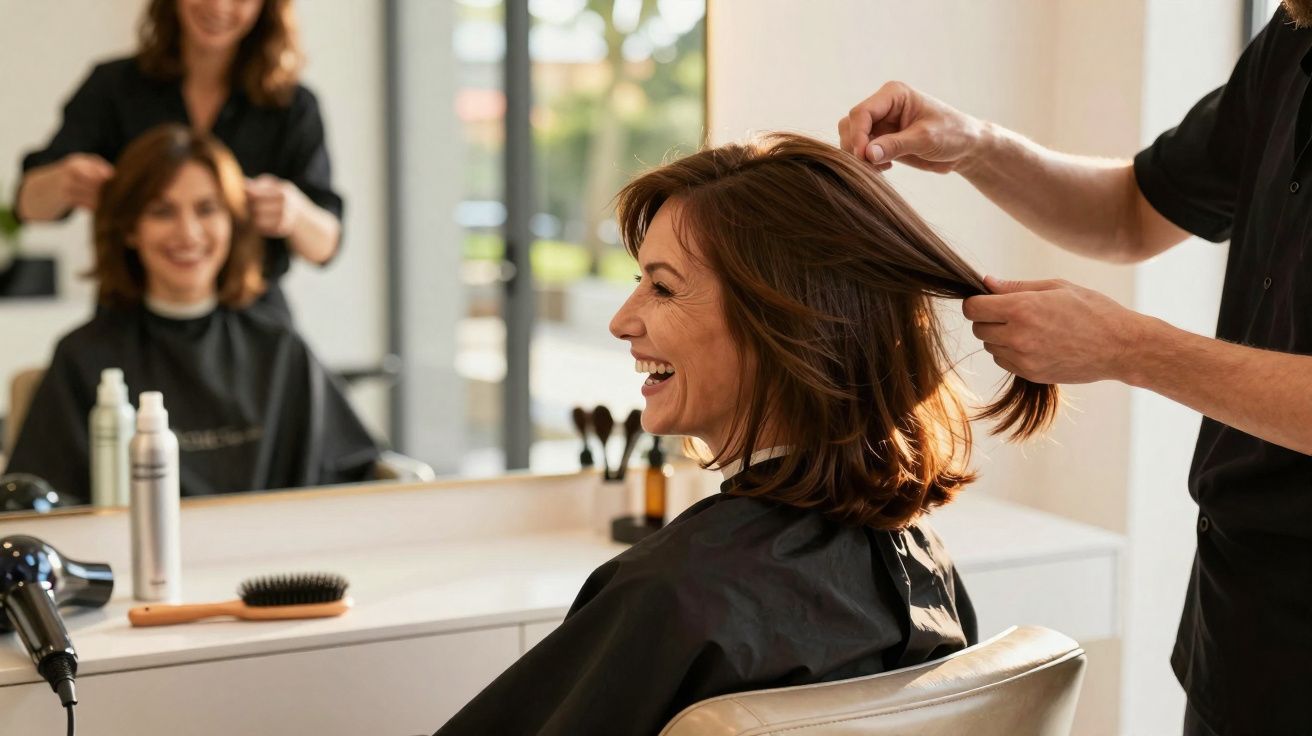
At 09:15 on a Tuesday, the salon is already buzzing when Marie steps inside, absent-mindedly tightening her ponytail. At 57, she looks polished and accomplished, but she’s clearly fed up with how her hair seems to fall flat the moment she sits down. Under the mirror lights, she catches a glimpse of scalp at her crown that, as she puts it, “definitely wasn’t visible last year”. She laughs about needing a hat permanently attached, but her expression doesn’t share the joke.
Lena, her stylist, fastens the cape and begins the way she always does: comb in hand, she lifts a section and pays attention - not just to the hair, but to what Marie is really saying.
Between the sighs and the polite chat, the same theme shows itself again.
Fine hair after 50 starts acting as though it’s operating by a completely different set of rules.
“My hair used to behave. Now it just collapses.”
Lena says she can recognise an “over-50 fine hair” situation from the other side of the room. The shape is usually the giveaway: hair sitting somewhere around shoulder level, ends that look wispy rather than solid, and roots that refuse to lift even when the lengths have been pumped full of mousse. The person in the chair tends to lead with the same complaint: “My hair’s changed - and none of the old tricks work.”
A mix of hormones, stress, years of colouring, and simple follicle fatigue tends to show on the head first. The strands aren’t only finer; they’re often more brittle and drier too, which means the methods that worked at 35 can suddenly make hair look heavier and more limp. That’s when the irritation grows faster than the hair ever will.
One of Lena’s regular clients - a 62-year-old solicitor - used to arrive armed with Instagram screenshots: thick blow-dries, buoyant layers, endless volume. And every time, she’d finish with the same question: “Why doesn’t mine look like that?” Eventually, Lena started taking her own before-and-after photos to show what was actually happening.
On paper, the solicitor was doing “volume” perfectly: volumising shampoo, thickening mousse, a round brush, and hot rollers at home. In real life, her hair had slumped by lunchtime. When Lena simplified everything - fewer and lighter products, a shorter cut that skimmed the jaw, and a different blow-drying direction - the next photo looked as though her density had quietly doubled. Her hair hadn’t transformed. The approach had.
After 50, the biology shifts: the growth phase of the hair cycle tends to shorten, some follicles miniaturise, new strands come through finer, and the scalp usually produces less natural oil. The result is a maddening contradiction - flat roots paired with dry ends - and it tempts many women into layering “volume” products and “hydrating” products at the same time.
The issue is that generic volume advice rarely accounts for age-related change. The huge blow-dry you copied from a 20-year-old on YouTube often won’t translate to finer, more delicate fibre. Stylists who work with real clients every day learn that the best results after 50 come less from battling your hair and more from removing whatever is suffocating it.
It’s also worth remembering that persistent or sudden thinning can be more than styling. Menopause-related shifts, thyroid imbalance, low iron, vitamin D deficiency, or certain medications can all play a part. If the change feels rapid or patchy, it’s sensible to speak with your GP alongside updating your cut and routine.
The cut and styling tricks that actually create lift for fine hair after 50
When Lena talks about volume after 50, she doesn’t start with a shopping list - she starts with the cut. With fine hair, she steers clear of heavy, blunt lengths that sit on the shoulders and kick out unpredictably. The length she most often returns to sits between the cheekbone and just above the collarbone, finished with soft internal layers that keep the perimeter looking full rather than frayed.
She also adjusts what she calls the weight line - the point where the eye reads density. For some clients, a slightly shorter nape with longer pieces around the face immediately creates the impression of more hair. It isn’t about dramatic chops or chasing whatever is trending. It’s about removing the length that literally drags the root down, then shaping what’s left so the hair can hold itself up.
The next battleground is the bathroom. Lena finds that clients with fine hair after 50 often wash either far too frequently or hardly at all - and both habits can reduce lift. When the scalp becomes oily, the first few centimetres stick to the head like clingfilm. When the scalp is coated in dry shampoo and product residue, the hair collapses for a different reason.
Her fix is usually straightforward: a gentle, lightweight shampoo, and conditioner applied only through mid-lengths and ends - never at the roots, and never in heavy handfuls. Then comes her one absolute rule: a heat protectant that offers a touch of hold, applied from root to tip, followed by a blow-dry that lifts the roots away from the scalp using fingers or a brush. It’s not glamorous, but repeated consistently it outperforms any so-called miracle spray. Hair changes more with routine than with hope.
One more factor that catches many people out in the UK is water quality. In hard-water areas, limescale and mineral build-up can leave fine hair dull, coated and harder to lift at the roots. If your hair feels “filmy” even after washing, a gentle clarifying wash now and then (followed by conditioner only on the ends) can make a noticeable difference to volume and texture.
The toughest part, Lena admits, is getting people to unlearn decades of habits. Some clients cling to heavy oils and thick serums because they feel “nourishing”, when in practice they smother fine strands. Others overuse straighteners to “tame frizz”, only to flatten what little natural lift they still have.
“After 50, I’m not trying to give you a younger person’s hair,” Lena says. “I’m trying to give you your hair at its best right now - lighter, lifted, and touchable, not glued into place.”
- Soft layers rather than thinning – Request subtle internal layering that preserves a full-looking perimeter, instead of razoring or over-texturising the ends.
- Style from the roots first – Concentrate mousse, spray, or root-lifter at the base, not through the whole length, so fragile hair isn’t dragged down.
- A washing rhythm that supports volume – Stay balanced: clean enough to keep lift, but not so frequent that already-delicate strands feel stripped.
- Kind heat with intentional direction – Blow-dry with airflow moving from root to tip while lifting hair up and away from the scalp.
- Less product, better choices – One effective volumiser plus one lightweight protector generally beats a shelf of heavy, half-used formulas.
Letting fine hair after 50 reflect you - not your age
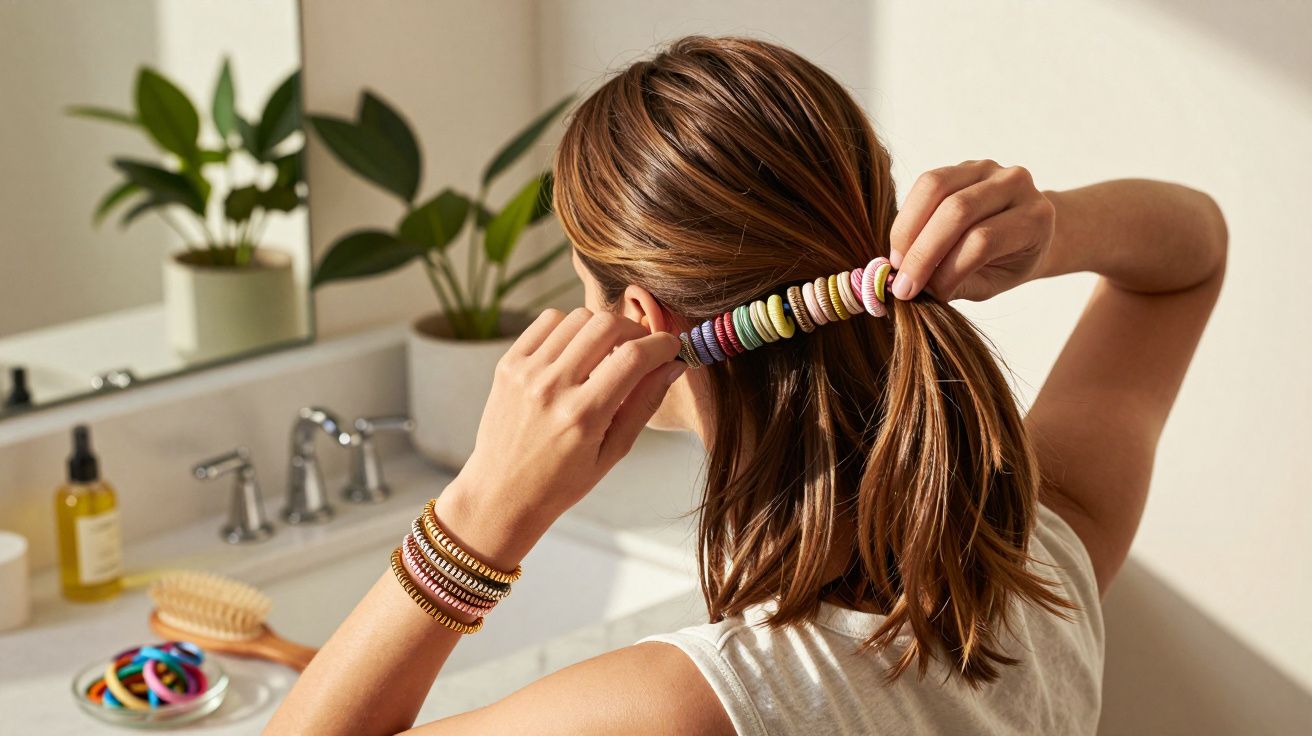
Fine hair after 50 can feel like it has turned on you. One morning you notice your ponytail is half its former size, and it’s hard not to take it personally. Yet the clients who seem most content aren’t the ones who fight the change the hardest - they’re the ones who treat their hair as a new material with new rules. They accept the shift, then approach it with curiosity instead of panic.
There’s a quiet confidence in that mindset. When Marie came back a month after her “lighter, shorter, smarter” cut, she didn’t arrive with screenshots. She arrived with selfies from a weekend away - hair slightly tousled, fringe sitting just right. “I didn’t think about it once,” she said. For Lena, that’s the real result.
| Key point | Detail | Value for the reader |
|---|---|---|
| Rework the cut | Shorter, lifted shapes with soft layers instead of heavy lengths sitting on the shoulders | A fuller look immediately, without adding extra time to your styling |
| Clean, light routine | Gentle shampoo, conditioner kept away from roots, minimal but targeted products | Volume that lasts longer, with less scalp show-through as the day goes on |
| Root-centred styling | Blow-dry with lift at the base, moderate heat, and directed airflow | More natural height and movement, with less damage to fine strands |
FAQ
Question 1: Is it better to go short with fine hair after 50?
Answer 1: Not by default. A shorter length can make hair appear thicker, but an extremely short crop may reveal more scalp if it isn’t shaped carefully. The goal is to remove the length that pulls hair down while keeping enough around the perimeter to frame the face and soften thinner areas.Question 2: How often should I wash my fine hair?
Answer 2: Many stylists suggest washing every 2–3 days for fine hair after 50, then adjusting based on how oily your scalp gets. Washing daily can over-strip fragile strands, but leaving it too long can flatten the roots with sebum and product build-up. Pay attention to how your hair behaves on day two - for many people, that’s the sweet spot.Question 3: Do volumising shampoos really work?
Answer 3: They can help, but they aren’t magic. The best volumising shampoo feels light, rinses cleanly, and doesn’t leave a waxy coating. When you pair it with a lightweight conditioner and the right blow-dry technique, you can get noticeably better lift. If you then pile on heavy creams, the benefit is largely cancelled out. And realistically, hardly anyone gets the routine perfect every single day.Question 4: Can colouring damage my already fine hair?
Answer 4: Yes. Strong bleach, frequent high-lift colour, and aggressive processing can further weaken fine strands. However, softer highlights, lowlights, or going slightly lighter overall can make hair look thicker by adding dimension. Ask your colourist about gentler options and leaving more time between intense chemical services.Question 5: Are supplements worth trying for fine hair after 50?
Answer 5: Supplements can support hair health if you’re deficient, but they won’t turn naturally fine hair into thick hair overnight. An honest starting point is a blood test through your doctor. If markers such as iron or vitamin D are low, targeted supplementation combined with a good cut and consistent routine tends to work far better than any “miracle pill” on its own.



Comments
No comments yet. Be the first to comment!
Leave a Comment