
It has that unmistakable “freshly cleaned” smell. It foams on contact. It feels reassuring. For decades, many of us have grown up watching parents and grandparents reach for hydrogen peroxide whenever there’s a grazed knee or a small cut in the kitchen. The logic seems obvious: if it bubbles, it must be doing something useful.
Picture an ordinary evening in a suburban kitchen. A mum bends over her son’s scraped elbow after he’s come off his bike, gripping the counter with worry. Almost without thinking, she twists the cap on the familiar brown bottle-just as her own mum once did. As the white foam spreads, the boy flinches and she whispers, “That’s it working-it’s killing the germs.”
What she can’t see is that it’s damaging more than germs.
Why the “clean” sting from hydrogen peroxide can do more harm than good
The first time I watched an experienced trauma nurse clean a new wound, what struck me most was how calm the process was. No fizzing. No dramatic stinging. Just cool running water, gentle gauze, and unhurried care that felt almost kind. She glanced at an unopened bottle of hydrogen peroxide nearby and gave the sort of smile that said she’d seen this story many times before.
In her line of work, hydrogen peroxide is not the star of the show-it’s something you might consider only when you’ve run out of better options.
Many of us were taught an unhelpful rule: if it hurts, it must be effective. Hydrogen peroxide does kill bacteria, but it also harms the delicate new cells your body needs to seal the wound and rebuild skin. That satisfying sizzle is partly a sign of your own tissue being irritated and broken down.
On a busy Friday night in A&E, a teenager arrives with a deep cut on his shin after a football match. His parents explain they “cleaned it thoroughly at home”-meaning they poured hydrogen peroxide over it several times until the bubbling slowed.
When the clinician lifts the improvised dressing, the wound edges look pale and frayed rather than healthy and pink. The surface cells that normally start knitting the skin together have been disrupted. Instead of more peroxide, the nurse irrigates the area with saline, washing away dried foam and bits of damaged tissue. The conversation quickly moves from “How do we clean it?” to “How long will this take to heal now?”
Wound-care research and everyday clinic experience mirror this pattern. People who repeatedly soak small cuts and grazes in hydrogen peroxide often end up with slower healing and more noticeable scarring. In diabetic foot services-where every extra day matters-hydrogen peroxide has largely vanished from routine care. Specialists focus on gentle cleansing and keeping the wound in the right condition, rather than chasing a dramatic bubbling reaction. The aim is to protect living cells on the wound surface, not scorch everything in sight.
Hydrogen peroxide works by releasing oxygen radicals that damage the cell membranes of microbes. The problem is that human cells are built from similarly fragile components. Your body does make tiny amounts of peroxide inside cells as part of signalling and defence-but at very low, tightly controlled levels. When you tip the chemist’s version directly into a wound, you overwhelm those natural controls. Oxidative stress doesn’t reliably tell the difference between a stray bacterium and a fibroblast trying to lay down fresh collagen.
A useful way to think about wound healing is as a building site. Platelets put up the first scaffolding. White blood cells clear debris. Then specialist repair cells move in to rebuild. Repeated hydrogen peroxide use is like sending in a demolition crew every evening just as the bricklayers start work. The body can still finish the job, but it often takes longer, looks rougher, and leaves a greater chance of lumpy or prominent scar tissue.
Faster wound healing without the fizz: alternatives to hydrogen peroxide
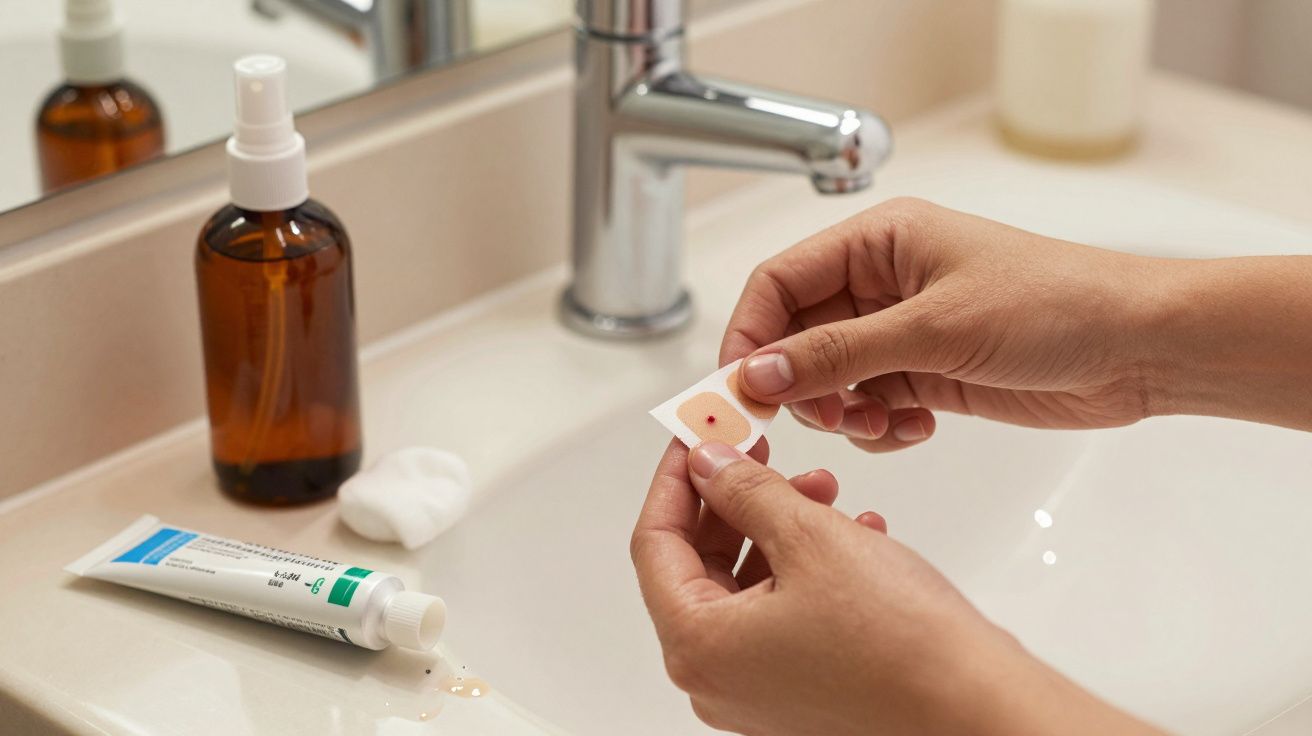
The most effective everyday “product” for cleaning a minor wound is far less exciting: clean, running tap water. For most small cuts, that’s enough. Let water run gently over the area for a couple of minutes. Avoid scrubbing the raw surface; instead, use clean fingers or a soft, clean cloth around the edges to lift away grit, small stones, or food residue.
After rinsing, pat the area dry with sterile gauze or a clean towel. If it’s more than a superficial scratch, apply a thin smear of plain petroleum jelly to keep the surface slightly moist and protected. That moist environment helps new skin cells travel across the wound more smoothly-more like gliding over a rink than clambering over dry, cracked ground. Cover it with a non-stick dressing if it’s somewhere that will be rubbed, knocked, or exposed to dirt, and change the dressing daily.
Real life, of course, is messy. On a frantic Monday morning you slice your finger while chopping tomatoes, the dog is barking, your phone is buzzing, and the “perfect routine” isn’t happening. On the worst days you manage a five-second rinse and stick on a plaster. Even that is generally far kinder to healing skin than a hit of hydrogen peroxide. For common minor cuts, evidence consistently favours simple cleansing plus a slightly moist wound surface over aggressive antiseptic rituals, with better healing time and better-looking results.
One extra practical point: many people assume a wound must be left to “dry out” to form a good scab. Modern wound care usually takes the opposite view for small everyday injuries-protecting the area and preventing it from drying and cracking can reduce pain, minimise splitting, and support smoother healing. The goal isn’t to make the wound wet; it’s to stop it becoming parched.
When hydrogen peroxide still has a place (rarely-and briefly)
Hydrogen peroxide isn’t a cartoon villain. There are specific situations where a professional may still use it. If blood has dried hard into hair, or there is heavy contamination with soil and debris that won’t shift, a single, short application can help loosen stubborn material. The key is that it’s occasional, not routine. Most wound-care guidance advises against repeated use on healing tissue, and against using it over large open areas.
Clinicians also worry about what isn’t obvious to the naked eye. Strong chemicals can strip away not only bacteria, but also protective skin layers and helpful immune activity at the surface. That can leave the area oddly “bare”, sometimes making it more vulnerable to infection in the days afterwards. This is one reason many hospitals now favour saline irrigation, mild cleansing solutions, and careful debridement over old-fashioned “burn everything off” approaches.
Another sensible consideration is safety beyond the wound itself. If a cut is deep, gaping, contaminated, or caused by an animal bite, the priority may be proper assessment, tetanus protection, and-when needed-closure (strips, glue, or stitches). No antiseptic can compensate for a wound that really needs medical attention.
“We used to believe, ‘If it doesn’t sting, it isn’t working,’” a wound-care nurse told me. “Now we understand that when it stings like that, it may be working against you.”
For small, everyday wounds, the updated basics are refreshingly straightforward:
- Rinse with cool, clean tap water or saline for a couple of minutes.
- Gently remove visible dirt; don’t scrub raw tissue.
- Apply a thin layer of plain petroleum jelly (avoid a thick blob).
- Cover with a breathable, non-stick dressing if needed; change it daily.
- Look out for increasing redness, swelling, pus, worsening pain, red streaks, or fever-then seek medical advice.
Rethinking the brown bottle in the bathroom cabinet
Once you view hydrogen peroxide through a wound-healing lens, the bottle at home can start to feel less like a compulsory first-aid step and more like a tool with narrow uses. Some people quietly move it to the back of the shelf. Others keep it for non-skin jobs-such as cleaning bathroom grout or freshening kitchen sponges-rather than pouring it into an open cut.
Letting go of the fizz can be unexpectedly emotional. Many of us have lived the family ritual of applying the product that stings because “that’s how we’ve always done it”. Changing that habit can feel like challenging a grandparent’s wisdom. But medicine moves on. Plenty of clinicians who once used hydrogen peroxide routinely now tell patients, gently and matter-of-factly, “We don’t really do that any more.” Practices evolve as evidence improves.
So the next time someone reaches for the foaming bottle after a fall on the pavement, there’s another option. You can still clean, still protect, and still comfort-just in a quieter way: running water instead of white foam, a soft pat dry instead of a harsh burn. It’s a small change that can mean quicker healing and less scarring, and it may spare the injured person an extra sharp memory of “treatment” on top of the fall itself.
There’s also a broader point here about what “clean” actually means. In a world of “99.9% germ-free” messaging, it’s easy to forget we aren’t kitchen worktops-we’re living tissue. The best wound clinics aim for balance: enough cleansing to reduce infection risk, and enough gentleness to let the body’s repair process do its job. For many minor injuries, that balance is available from your own tap.
| Key point | Detail | Why it matters to you |
|---|---|---|
| Hydrogen peroxide damages new tissue | It can kill bacteria, but it also harms the cells responsible for closing and rebuilding the wound | Explains why some cuts heal slowly or leave more visible scars than expected |
| Simple cleaning is better for small wounds | Running water, gentle drying, and a thin layer of petroleum jelly often support quicker healing | A low-cost routine you can use immediately at home |
| Use hydrogen peroxide rarely, not routinely | Best reserved for stubborn dried blood or heavy debris, and used only once and briefly | Helps you keep it for specific situations without relying on it for every injury |
FAQ: hydrogen peroxide and wound care
Is hydrogen peroxide ever safe to use on wounds?
Sometimes, as a one-off and very brief application on a heavily soiled wound, a healthcare professional may use it to loosen dried blood or debris. For everyday cuts and grazes, it’s usually better to skip it and use water or saline.What should I use instead of hydrogen peroxide?
For most minor wounds, clean running tap water is sufficient. Rinse gently, pat dry, apply a thin layer of petroleum jelly, and cover with a clean dressing if needed.Does the bubbling mean hydrogen peroxide is killing germs?
The foam mainly comes from a reaction with enzymes (such as catalase) in blood and tissue-not bacteria alone. It shows the chemical is reacting, but it also indicates healthy cells are being exposed to oxidative damage.Can hydrogen peroxide make a wound worse?
Repeated use can injure new tissue, delay healing, irritate the wound edges and surrounding skin, and may increase scarring.When should I see a doctor or nurse about a cut or wound?
Seek medical care if the wound is deep or gaping, caused by something dirty or rusty, won’t stop bleeding, shows signs of infection, is an animal or human bite, or if you haven’t had a tetanus booster within the last 5–10 years.



Comments
No comments yet. Be the first to comment!
Leave a Comment