
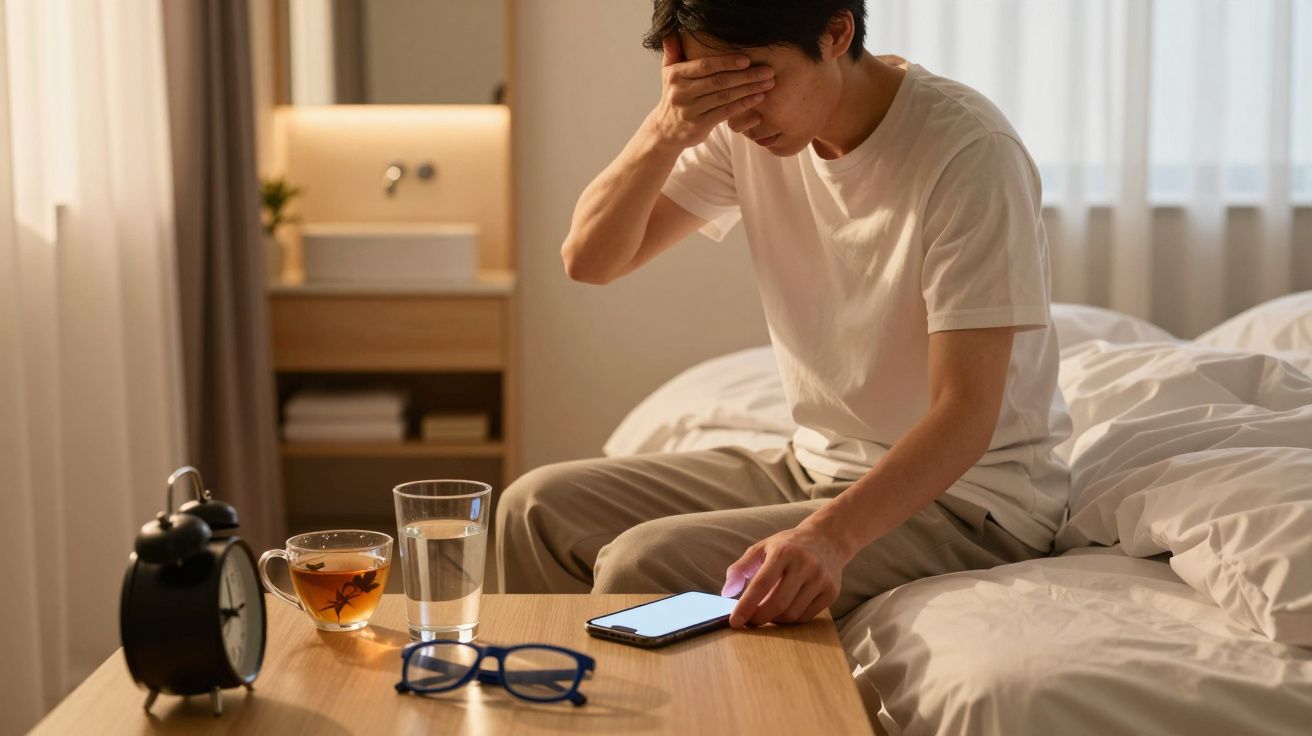
Fresh evidence suggests there may be a less obvious reason you keep waking up at night: the number of hours you spend glued to screens through the day and into the evening.
Screen time and nocturia: what a Chinese study found about night-time trips to the loo
A major study led by Wenzhou Medical University in China has posed an intriguing possibility: could long stretches of TV viewing or phone use be associated with night-time urination, medically known as nocturia?
To explore this, the researchers examined information from more than 13,000 adults in the US National Health and Nutrition Examination Survey (NHANES) covering 2011 to 2016. Their findings appeared in Neurourology and Urodynamics.
Participants who watched TV or videos for over five hours per day showed a 48% higher risk of waking at least twice a night to pass urine.
Notably, this elevated risk was seen across different groups, regardless of age, sex, or overall health. The relationship also remained after accounting for established contributors including diabetes, fluid intake, and salt consumption.
This research does not demonstrate that screens directly cause nocturia. Even so, the strength and consistency of the association suggests our digital routines may influence more than sore eyes and poor sleep-they may also affect how the body regulates urine overnight.
What exactly is nocturia?
Nocturia is typically defined as needing to get up to urinate two or more times during the night. For many adults, waking once can be within the range of normal-particularly after a large evening drink. However, when waking happens twice or more, and it becomes a regular pattern, it is generally treated as a symptom worth investigating.
Although nocturia becomes more common with age, it is not limited to older people. Plenty of younger adults describe themselves as “bad sleepers” without realising that night-time bladder signals may be a key part of the problem.
Typical causes of nocturia that have nothing to do with screens
There are many well-recognised reasons someone might develop nocturia, including:
- Hormonal changes that alter how much urine you produce overnight
- An enlarged prostate (in men)
- Overactive bladder or pelvic floor weakness
- Urinary tract infections
- Heart or kidney conditions that lead to fluid build-up
- Diabetes or poorly controlled blood sugar
- Heavy evening drinking, especially alcohol or caffeine
This new research suggests long screen time may deserve a place on that already lengthy list of suspects.
The kind of content that keeps people scrolling (and sitting)
Screen time tends to come with its own “gravity”: people often plan to watch a little, then get pulled into one more clip, one more episode, one more headline. Examples of the sort of attention-grabbing items people can end up stuck on include:
- A report claiming a polar vortex anomaly is approaching, with forecasters warning that its unusual speed and structure could smash decades of winter climate records-sparking arguments over whether historic disruption is coming or fear is being whipped up
- News that heavy snow has been officially confirmed to intensify into a high-impact storm overnight, with meteorologists expecting widespread flight disruption
- An item about an ex-US Navy base being revived near China
- A story in which someone hid an AirTag in trainers before donating them to the Red Cross, only to later locate them being sold at a market
- A warning about phone fraud, describing a new technique that makes scam calls even easier
- A tip involving pouring a natural extract into a washing machine, with claims the fragrance lingers so strongly that neighbours ask what scent it is
- A viral “botanical fact” saying cauliflower, broccoli and cabbage are the same plant, with claims this reveals how food companies manipulate shoppers
- A claim that underfloor heating is falling out of favour, with many switching to an alternative said to be cheaper and more effective
Whether or not those items are accurate, they illustrate how easily screen use can stretch late into the evening.
How screens might interfere with bladder signals
Researchers cannot yet point to a single proven mechanism, but several credible pathways could explain how heavy screen use might contribute to nocturia.
Blue light, melatonin and a disrupted body clock
Screens give off blue light, which can postpone the release of melatonin-the hormone that helps tell your body it is time to sleep.
If melatonin is delayed, your internal body clock can drift, and the rhythms that govern urine production can drift with it.
Ordinarily, the body reduces urine production during the night to allow several hours of uninterrupted sleep. When the circadian rhythm is disturbed by late-night screen use, that night-time reduction may be weaker, making wake-ups more likely.
Hours of sitting still and fluid shifting after you lie down
Extended periods slouched on a sofa or sitting at a desk may also contribute. When you remain seated for many hours, fluid can accumulate in the legs and surrounding tissues.
Once you get into bed and lie flat, that fluid tends to move back into circulation, reaching the kidneys and increasing urine production. The result can be an extra trip-or several-down the corridor overnight.
The habits that often tag along with screen time
Screen use rarely happens in isolation. Long sessions of streaming, gaming or scrolling frequently go hand in hand with snacks and drinks, particularly later in the evening.
Fizzy drinks, energy drinks, beer and tea are common companions to screen time, and many act as diuretics, meaning they encourage the body to make more urine. In that scenario, your Netflix routine and your bladder may be linked as much by what is in your glass as by the screen itself.
Who may be most affected when daily screen time rises?
In the Chinese-led analysis, the link between extensive daily viewing and nocturia appeared across most demographic groups. Even so, certain people may have less “buffer” before symptoms show up.
| Group | Why screen time may have a bigger impact |
|---|---|
| Older adults | Bladder capacity often decreases with age, and hormonal changes can alter night-time urine production. |
| People with diabetes | They are more likely to produce larger volumes of urine; disrupted sleep can worsen blood sugar control and create a feedback loop. |
| Men with prostate problems | Even a small rise in urine volume or urgency may push them into nocturia territory. |
| Women after pregnancy or menopause | Pelvic floor weakness and hormonal shifts can raise the risk of leaks and night-time urgency. |
For these groups in particular, trimming one or two hours of screen time-especially in the evening-may be enough to reduce night-time symptoms.
Practical steps to cut down night-time bathroom trips
No single habit explains every case of nocturia. Still, a few sensible adjustments can help many people sleep longer and more comfortably.
Rework your evening screen routine
For both bladder control and sleep quality, the last two to three hours before bed often matter most.
Helpful changes include:
- Set a “digital sunset” and switch off TVs, phones and tablets at least one hour before bed
- Use night mode or blue-light filters in the evening if you do need a screen
- Choose shorter episodes rather than starting a long film late at night
- Keep devices out of the bedroom to reduce the temptation to scroll if you wake
Manage fluids and movement-not only pixels
Reducing screen time is usually more effective when paired with other behaviours:
- Avoid large drinks in the two to three hours before bed, particularly alcohol, tea, coffee and fizzy drinks
- If you get swollen ankles, raise your legs for 20–30 minutes in the early evening to shift fluid before bedtime
- Add brief walks or stretches during long viewing or gaming sessions
- Consider pelvic floor exercises, especially if you experience leaks or sudden urgency
A practical addition many clinicians recommend is a short “bladder diary” for a few days-tracking drinks, timing, and night-time wake-ups. It can reveal patterns (for example, late salty snacks or evening tea) and makes GP appointments far more productive.
Anyone waking often to urinate should also speak with a GP, particularly if there is pain, burning, blood in the urine, or intense thirst. Nocturia can sometimes be an early sign of underlying health issues that should not be ignored. (Also worth mentioning: some medicines, including certain diuretics, can increase night-time urination-your GP or pharmacist can advise on timing and alternatives where appropriate.)
Why it matters for sleep, mood and long-term health
Waking to use the toilet may seem minor, but repeated disruption can carry a cumulative cost. Fragmented sleep reduces time spent in deeper sleep stages that support memory, emotional regulation and metabolic health.
People who wake several times a night frequently report poor focus, irritability and daytime sleepiness. Over the long term, chronic sleep disruption has been associated with increased risks of depression, heart disease and weight gain.
When screens, sleep and bladder function collide, the outcome is not only a groggy morning-it can influence long-term health risk.
The findings also prompt questions about children and teenagers, who now spend many hours a day on phones, tablets and games consoles. While nocturia is less common in younger ages, heavy evening screen use is already known to disturb sleep and circadian rhythms, potentially establishing habits and physiology that persist into adulthood.
Key terms and real-life scenarios
Nocturia vs overactive bladder
Nocturia specifically describes how often you wake at night to pass urine. Overactive bladder is a broader condition involving sudden, difficult-to-delay urges to urinate, often with increased frequency during the day as well.
You can experience nocturia without overactive bladder if the main issue is producing too much urine overnight. Equally, you can have overactive bladder with little night-time disruption. This distinction helps clinicians choose the most appropriate tests and treatments.
A typical evening-reimagined
Imagine a person in their 40s who spends the evening on the sofa from 8 pm to midnight, flicking through their phone between episodes. They have a couple of beers, eat salty snacks, and barely move. They drop off around 1 am, then wake at 3 am and 5 am to use the toilet.
Now adjust just a few variables. Screens go off at 10:30 pm. The last drink is at 9 pm. They take a brief walk after dinner and put their feet up while reading before bed. Lights out at midnight, and they sleep through until 6:30 am, perhaps with only one quick bathroom visit.
These changes will not resolve every bladder problem, but the emerging science suggests they can materially improve night-time patterns for many people. Screens are not inherently the enemy-yet how we use them late into the night may be nudging us towards the loo more often than we think.





Comments
No comments yet. Be the first to comment!
Leave a Comment