
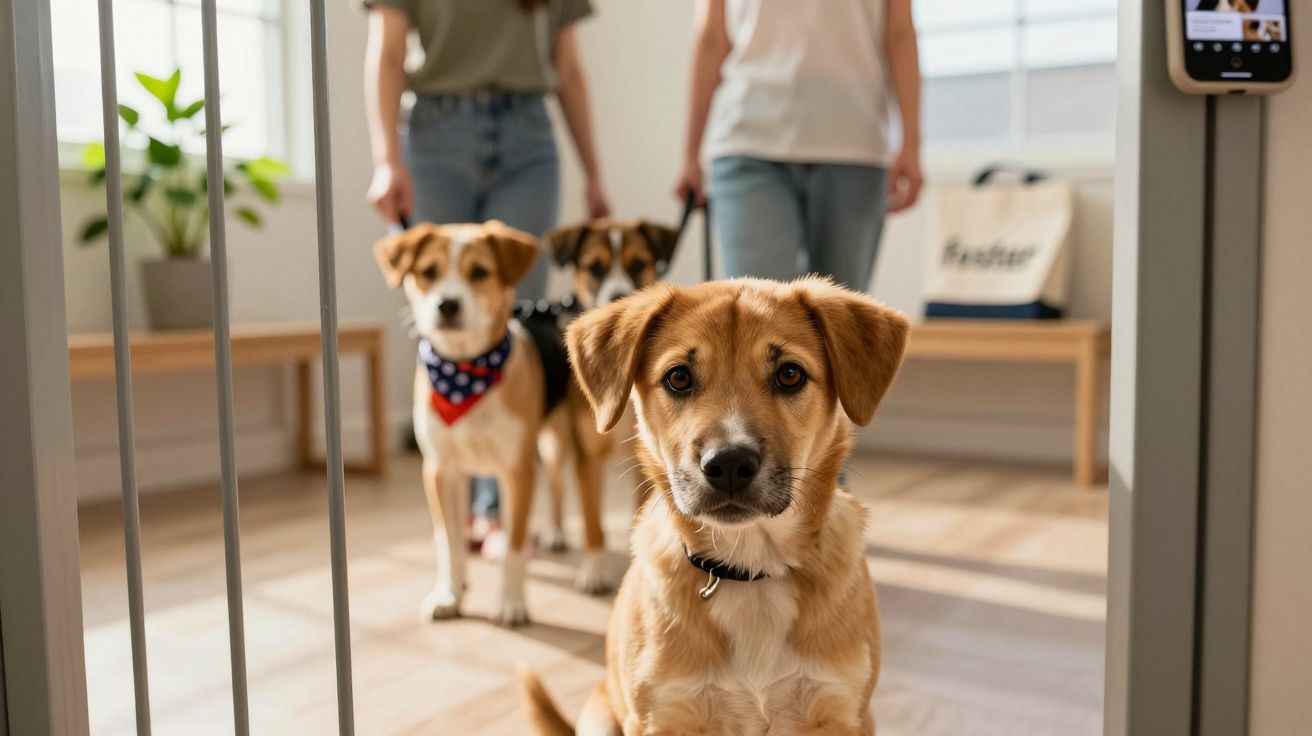
The three-month-old puppy arrived with the same wagging tail and bright, expectant gaze as the rest of his litter. But as the days went by-and enquiries stacked up for his brothers and sisters-he was still there. Volunteers found themselves circling one uncomfortable thought: was his unusual nose the reason people kept passing him by?
A litter comes in, and one puppy looks different
Wabi‑Sabi first came into BARC, Houston’s municipal animal shelter, with his entire litter. The team sees every imaginable combination of sizes, coats and faces, yet one volunteer, Bri, clocked something straight away: this puppy’s nose looked as though it had been softly divided into two.
Staff later put a name to it-a bifid nose, also known as a split nose. It gave him a memorable look, as if he were always scenting two trails at once. Importantly, there were no signs of discomfort, infection or breathing problems, and his health check suggested the rest of him was doing perfectly well.
A bifid nose is a congenital developmental quirk that can appear dramatic, yet for many dogs it doesn’t reduce breathing, sense of smell or day-to-day quality of life.
At first, the shelter called him Ace and assumed his distinctive face would make him more appealing rather than less. In the social-media era, animals that look “different” can draw plenty of attention. Yet in the real world-especially for families walking through noisy, overwhelming kennel blocks-difference isn’t always seen as something to embrace.
The week that changed everything
About a week later, Bri returned to BARC and immediately noticed the puppy section felt quieter. Adoption cards had been turned to “reserved”. Kennels that had held the litter were now empty, ready for the next intake.
Only Ace was still behind the glass.
Bri’s stomach dropped. Every sibling had gone home, while Ace-tail tapping the floor, eyes still hopeful-remained. She couldn’t stop the question from resurfacing: were people turning away because of his nose?
Staff can’t know what every potential adopter is thinking, but when one healthy puppy is repeatedly ignored, it raises difficult questions about preference for “perfect-looking” animals.
Other reads that appeared alongside this story:
Rescue organisations say this pattern is familiar. Pets with visible differences-cloudy eyes, missing limbs, scarring, or unusual facial features-often wait longer, even though many behave just like any other pet once they’ve left the kennel environment. Some people worry about future veterinary bills; others feel uneasy about judgement, or don’t know how to answer questions from children, neighbours or strangers.
From Ace to Wabi‑Sabi: foster care and a fresh start
To give the puppy a better chance, BARC contacted a local rescue partner, Caitie’s Foster Fam, for additional support. The group specialises in moving animals into foster care, where they can decompress from shelter stress and show their real character away from barking rows and metal bars.
They agreed to take him. Soon, the puppy left the shelter for a calmer home-soft beds, toys, and people who’d already decided he was worth their time.
His foster carers also chose a new name: Wabi‑Sabi. Drawn from Japanese aesthetics and Zen philosophy, “wabi‑sabi” is about valuing imperfection, impermanence and the small marks of time and chance that make something distinctive.
Calling him Wabi‑Sabi reframed the story: what some might label a “flaw” is also the very thing that makes him memorable.
In foster care, Wabi‑Sabi quickly showed that his personality wasn’t “split” at all. He played, curled up on laps, and settled into everyday dog routines-mealtimes, walks, naps, and the gentle art of asking for treats without being pushy.
Wabi‑Sabi the puppy with a bifid nose (split nose): what it actually means
A bifid nose happens when the tissues that form the muzzle and nostrils don’t fully fuse before birth. The appearance can vary widely-from a faint groove to a clearly separated nose, like Wabi‑Sabi’s.
Common questions about a split nose in dogs
- Does it hurt? Often, no. Many dogs with a bifid nose breathe and smell normally and show no sign of pain.
- Is it a disability? Usually not. Some dogs may need extra checks for nasal or palate issues, but many live completely typical lives.
- Is surgery needed? Only if there are related structural problems causing breathing difficulty or repeated infections.
- Is it rare? It’s uncommon, but recognised. Some breeds-such as the Turkish Catalburun-are known for naturally split noses.
For anyone considering adoption, the practical issue isn’t whether the nose looks unusual, but whether the dog can breathe comfortably, eat normally, play, sleep and thrive. In Wabi‑Sabi’s case, vets and rescuers have reported good overall health, with his bifid nose largely a cosmetic difference.
One helpful step for adopters is to ask what, if anything, the rescue has already checked: breathing at rest and after play, signs of chronic nasal discharge, and (where relevant) whether the roof of the mouth appears typical. Having clear answers can replace vague worry with informed confidence.
How appearance influences adoption decisions
Rescue teams frequently see appearance-based bias. Dogs with black coats, older animals, larger dogs, and pets with visible scarring can sit in shelters far longer than small, fluffy puppies with what people might call “Instagram-ready” faces.
A simplified comparison, echoed by many US rescues, looks like this:
| Type of dog | Typical time in a shelter |
|---|---|
| Healthy small puppy with no obvious quirks | Hours to a few days |
| Adult dog with a scar or missing limb | Several weeks |
| Senior dog with cloudy eyes or a greying muzzle | Months or long-term foster placement |
| Dog with an unusual facial feature (such as a split nose) | Often longer than littermates |
Most people don’t intend to reject an animal for cosmetic reasons. Still, when presented with many choices in a loud, high-pressure environment, adopters often reach instinctively for what feels “normal”-especially if they’re worried about potential costs or how others might react.
Why foster homes and social media matter
Organisations such as Caitie’s Foster Fam try to offset first-impression bias by sharing photos and videos of dogs like Wabi‑Sabi in calm, home-like settings. A puppy who seems subdued in a kennel can look entirely different stretched out on a sofa at home.
Watching an “imperfect” puppy do completely ordinary things-snoring, nicking socks, chasing a ball-helps people move beyond the initial glance.
Foster care also gives Wabi‑Sabi a crucial head start. He can practise toilet training, learn to walk on a lead, and build gentle social skills with people and other animals. By the time a prospective adopter meets him, they aren’t just seeing a nose-they’re meeting a young dog who’s already learning how to live comfortably in a household.
What families should consider before adopting an “imperfect” pet
If a dog like Wabi‑Sabi catches your eye, it can help to run through a few practical points:
- Can your budget handle routine veterinary care and the occasional extra check-up for a unique condition?
- Are you happy to answer curious questions from friends, children or people you meet in the park?
- Do you prioritise temperament and lifestyle fit over appearance?
- Are you prepared for a long-term commitment, regardless of how your dog looks as they age?
Families who say “yes” often describe a particular pride in giving a home to an animal others hesitated over. For children especially, living with a pet who looks a bit different can become a daily lesson in empathy and acceptance-kindness made practical.
It can also help to plan how you’ll talk about visible differences in simple, reassuring language: “His nose grew a bit differently before he was born, but he’s healthy and it doesn’t stop him enjoying life.” That sort of script can make conversations with neighbours-or questions from children-feel much easier.
Beyond Wabi‑Sabi: what this story suggests about rescue culture
Wabi‑Sabi’s experience sits where rescue work meets human psychology and aesthetics. The same culture that “likes” uniqueness online can be much less forgiving in real adoption spaces, where decisions are quick and the stakes feel high.
Rescue teams often encourage potential adopters to give the animals they initially overlook a few extra minutes. Sit down, offer a treat, speak gently. A nose that looked odd from a distance can become the feature you spot fondly from across the room.
For anyone thinking about adopting, a simple exercise can shift perspective: picture the dog as a silhouette. Strip away coat colour, scars, eye shape-and yes, even the nose. Would you still want to share your sofa, your walks and your daily routine with that animal based on their temperament and energy alone? If the answer is yes, the details of their face tend to fade as a far richer bond takes over.


Comments
No comments yet. Be the first to comment!
Leave a Comment