
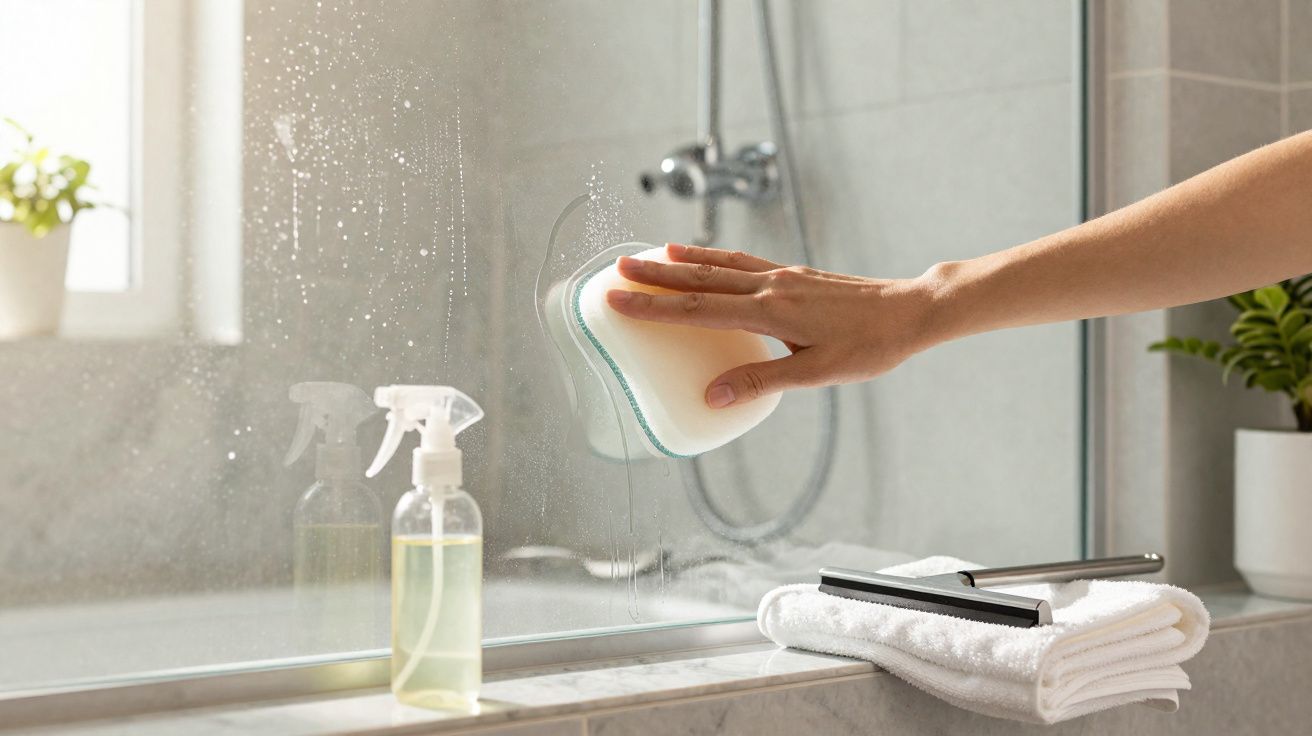
A small, overlooked tool sits behind that low-key bit of “magic”.
Stay in a decent hotel for one night and the bathroom can feel almost stage-managed: spotless glass, no stale odour, no hazy bloom on the screen. Then you get home, the shower screen mists over, streaks appear within days, and cleaning turns into a grim weekend chore. The difference is rarely down to harsher products. It is usually a better routine paired with a surprisingly simple material.
Why hotel showers stay clear while ours give up
A shower is closer to a mini chemistry experiment than a spa. Hard water, soap, shampoo, conditioner, body oils and steam all meet warm glass and tiles. Together they create a thin layer that starts off glossy, turns cloudy, and then dries into a stubborn grey film that seems to laugh at most spray cleaners.
In most homes, that layer is left to sit. People dash out, shut the door, and leave the squeegee untouched. Moisture hangs around, limescale sets, and a light biofilm of microbes mixed with soap scum begins to grow. In compact bathrooms with poor ventilation, the musty smell can show up sooner than you would think.
"Hotel teams do not wait for dirt to look dramatic. They interrupt the film before it hardens, so cleaning never becomes a battle."
Hotel housekeepers tend to follow a straightforward plan: manage airflow, work to a schedule, and use tools that lift residue at a microscopic level. Where many of us reach for a stronger chemical, hotels often depend on an unassuming workhorse better known from the stationery aisle than the cleaning aisle: the melamine sponge, frequently sold as a “magic eraser”.
The material behind the “magic”: melamine foam
Melamine foam looks like nothing special - just a plain white block. Under magnification, though, it has a compact, rigid, open-cell structure. That structure makes it act like extremely fine sandpaper. It removes build-up through mechanical action, without feeling like a harsh scouring pad.
On shower glass, this gentle micro-abrasion is effective against:
- limescale rings caused by hard water
- soap scum and conditioner build-up
- greasy fingerprints and natural skin oils
- fine dirt that ordinary cloths simply smear around
When you use light pressure and plenty of water, the foam works on the boundary of the film rather than attacking the glass itself. That is why hotel screens look freshly installed, not as if they have been scrubbed to within an inch of their life. The sponge handles the fiddly detail so staff can work quickly and avoid resorting to aggressive chemicals.
"Melamine foam cleans by physical micro-scraping, not by harsh solvents. That shift from chemistry to texture changes the whole routine."
How the hotel trick works at home
Step-by-step routine that fits into daily life
The approach is almost too simple, and that is precisely the point. Instead of saving it up for a major clean, you weave it into what you already do after showering:
- Rinse first: Once you have finished showering, quickly rinse the glass with warm water to loosen suds and carry away any grit.
- Prepare the sponge: Soak the melamine sponge, then wring it out so it is only damp. It should not be dripping wet.
- Work in long strokes: Move the sponge in straight, top-to-bottom passes. Try not to do fast circular scrubbing.
- Detail the edges: Use the sponge corners around metal frames, silicone seals and tight corners.
- Rinse again: Rinse the panel with clean water to remove what you have lifted.
- Dry the surface: Finish with a squeegee or a microfibre cloth so droplets do not dry into spots.
- Cool finish (optional): In very hard water areas, a quick blast of cold water can help reduce fresh limescale marks.
If you do this two or three times a week, the film never gets a chance to “mature”, so each session stays quick and light. Avoid the exhausting deep-clean; lean on repetition instead.
Where to be careful
Melamine foam may feel soft in the hand, but it behaves like a micro-abrasive. That means you should always test first. Surfaces that can be vulnerable include:
- high-gloss acrylic baths and shower trays
- decorative plastic trims
- delicate coated shower glass (often labelled “easy-clean”)
- natural stone such as marble or limestone
- mirrors where the backing can be fragile around the edges
On any of these, use minimal pressure on a small hidden section and stop immediately if you notice dulling. Keep the sponge wet. Using it dry increases friction and can leave visible dull patches, particularly on glossy plastics.
"Check the surface before you commit. A 10-second test patch is cheaper than a replacement panel."
What cleaning pros actually use
Back-of-house, hotel housekeeping prioritises consistency over clever new products. Their cleaning caddies are usually simple. A typical kit for keeping glass looking clear often includes:
| Tool | Main role |
|---|---|
| Melamine sponge | Mechanical removal of soap scum and limescale film |
| Microfibre cloth | Drying edges and buffing metalwork and taps |
| Squeegee | Rapidly pulling rinse water off glass panels |
| Mild all-purpose cleaner | General cleaning for tiles, floors and handles |
| Descaler (sparingly) | Occasional targeted use on heavy limescale around fittings |
That combination is also kinder on indoor air. Strong bathroom products can give off irritating fumes, particularly in small rooms full of steam. Relying more on foam-and-cloth mechanical cleaning cuts down the need for harsh chemicals and can make breathing easier for people with asthma or allergies.
Turning hotel tricks into home habits
Micro-rituals that keep the screen clear
Many bathroom cleaning plans fail because they depend on weekend motivation. Housekeepers succeed by making the job tiny and attaching it to habits that already exist. The same principle works in a flat or a family home.
Three easy “habit anchors” are:
- keep the sponge visible: Leave it on the bath edge or a small shelf, rather than hidden in a cupboard.
- pair it with an action: Use it in the final minute while the glass is still warm and wet.
- leave the door open: After showering, wedge the bathroom door ajar so moisture escapes faster.
Small steps like these shorten drying time, slow mould in grout lines, and stop the glass “aging” into that permanent-looking haze that feels impossible to shift.
What hard water does to your shower
In many parts of the UK and US, hard water is responsible for much of the problem. Minerals such as calcium and magnesium get trapped in the film and crystallise as water evaporates. What you see is the familiar chalky pattern of specks and vertical runs - the same sort of build-up you notice on taps and kettle elements.
Where the water is extremely hard, limescale can reach a stage where melamine foam alone is not enough. In that case, the occasional descaling session can help: apply a mild citric-acid solution to glass and ceramic tiles, leave it for a few minutes, then rinse thoroughly. Keep acids away from marble, limestone and some metal finishes, which can etch or tarnish.
"Think of limescale like dental plaque for your bathroom. Daily “brushing” with gentle tools beats rare, aggressive treatments."
Beyond the glass: wider gains from a clearer shower
A clear shower screen changes more than how tidy the bathroom looks. Clean glass bounces light back into the space, making small bathrooms feel less cramped and gloomy. Brighter corners can also help discourage mould, because dark areas tend to stay damp for longer.
There is a safety benefit too. Residue and film can make trays and floors slick. Frequent mechanical cleaning improves grip, especially near the drain where shampoo and conditioner gather. Homes with young children or older relatives may appreciate that subtle, unglamorous safety improvement.
Energy use is part of the story as well. Using fewer heavy sprays means fewer plastic bottles, fewer chemicals flushed away, and less transport of water-filled products. A multipack of melamine sponges is lightweight and can replace several separate cleaners over time.
If you rent, the same hotel trick can help prevent stubborn deposits. Bathrooms are often closely inspected at check-out. Glass that has been etched by old limescale films can look “dirty” even after scrubbing. Starting early with a gentle, regular routine keeps surfaces closer to how they were when you moved in - important when every mark is photographed.
This technique also carries into other areas of the home. With a quick test patch first, the firm-but-soft foam can lift marks from light switches, door frames, fridge handles and scuffs on painted walls. Used carefully, one small block can reduce the slow build-up of wear that makes a home look more tired than it truly is.






Comments
No comments yet. Be the first to comment!
Leave a Comment