
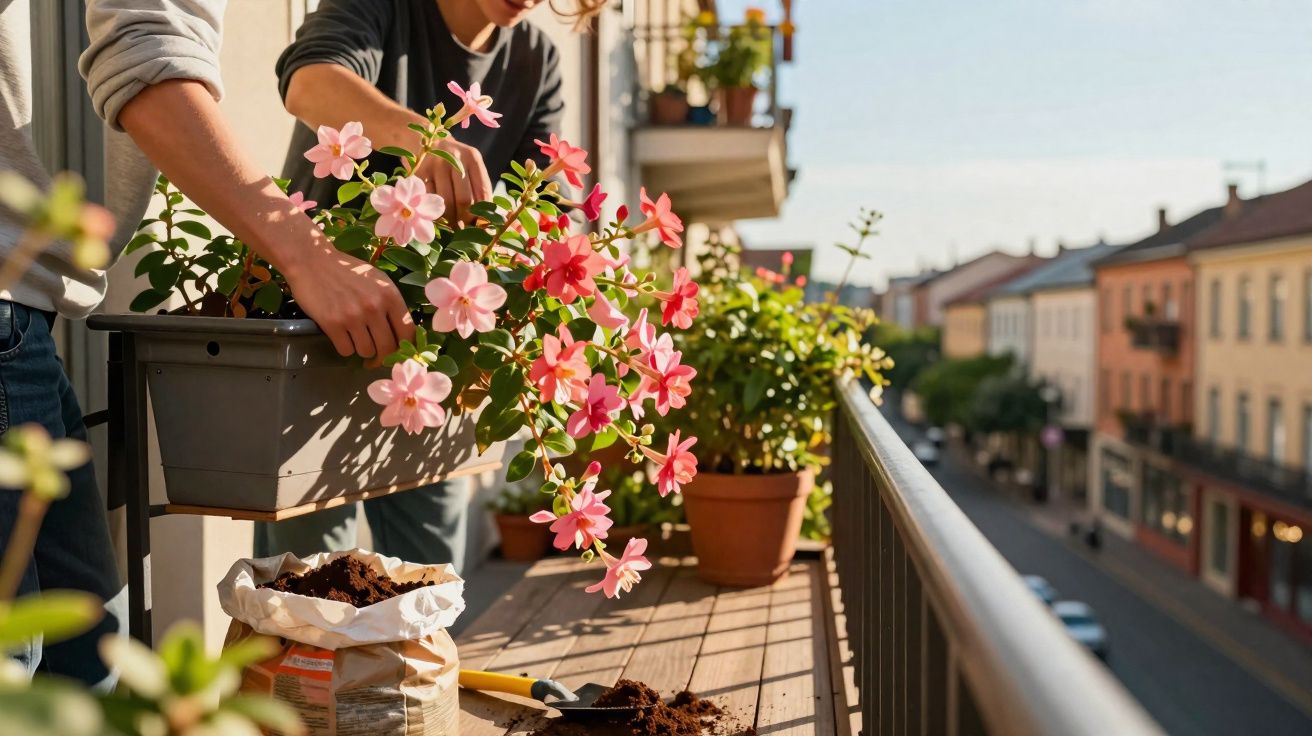
Many people long for window boxes that are still overflowing with colour well into autumn. Yet, more often than not, geraniums end up in the trolley again. There is, however, a delicate trailing alternative that can turn balconies and terraces into true curtains of flowers-without much effort, as long as you follow a few clear ground rules.
The forgotten summer queen: what the name Diascia really means
Diascia may sound like an exotic rarity, but in reality it is a surprisingly straightforward plant for pots and window boxes. It originates in southern Africa and, botanically, belongs to the figwort family. In shops it is often sold simply under its genus name.
Plant breeders have now produced numerous varieties. Most plants stay around 25–40 cm tall, but spread 30–60 cm wide. That is exactly why it works so well in window boxes and hanging baskets: the shoots drape loosely over the edge, forming a gentle waterfall of flowers.
Typical are the many small five-lobed blooms. The colour range runs from soft apricot and salmon pink through vivid raspberry pink to violet, orange or pure white. In mixed plantings, this adds movement and structure to the overall look without feeling overpowering.
"If you want a flower that blooms all summer long while trailing elegantly, you’ll end up with Diascia sooner or later."
Why Diascia takes over window boxes in summer
In Central European conditions, most gardeners grow Diascia as an annual summer flower. In milder areas it can survive winter and become perennial, but that is never guaranteed. The upside is that it starts each season fresh, even and full of vigour.
Its biggest strength is the near-continuous flowering. With the right spot, it produces new blooms from the later days of spring right through into autumn. Bare patches are uncommon-as long as care and positioning are right.
Diascia looks particularly good in:
- window boxes on sunny sills or balcony rails
- hanging baskets, where the stems can fall freely
- large containers as a front plant in front of taller companions
- rock gardens or sunny bed edges
If you want a really bold, high-colour display in summer, pair it with other sun lovers such as calibrachoa (million bells), Bidens, lobelia or compact ornamental grasses. Diascia fills gaps, softens hard edges and gives combinations a flowing, gentle shape.
The right moment: when Diascia can go into the window box
The most common mistake is getting the timing wrong. This plant does not tolerate cold. Only plant it out once there is genuinely no risk of night frost.
| Region | Planting window |
|---|---|
| mild areas / wine-growing regions | from mid-April |
| moderate areas | late April to early May |
| cooler / higher areas | from mid-May (wait until the risk of late frosts has passed) |
If you prefer to sow your own, start in March or April indoors or in a greenhouse at around 15 °C. Use a fine, loose seed compost and press the seeds in lightly rather than burying them deeply. Once the seedlings are sturdy, pot them on individually into small pots. From May onwards, they can move outside.
Position: sun, yes-just not scorching heat (Diascia site)
Diascia thrives in bright light, but does best with balanced conditions. Ideal are window boxes that get sun in the morning and partial shade in the afternoon. Morning sun plus slightly shaded midday heat usually delivers the longest and healthiest flowering period.
A fully south-facing position can work, provided high temperatures are not combined with oppressive humidity. In those conditions the plant quickly reaches its limits, looks tired and slows its flower production. A light shade net, an awning, or taller neighbouring plants can make a real difference.
For compost, choose light and free-draining rather than heavy and waterlogged. A quality compost for balcony plants works well, mixed with a little compost or a slow-release fertiliser and-depending on the product-some sand or clay granules for drainage. The pH can be slightly acidic to neutral; most branded composts are suitable.
How to water and feed for months of flowers
Diascia likes evenly moist compost, but never sitting in water. It sounds simple, yet it is the key factor between success and disappointment.
- Window boxes: water thoroughly, then allow the surface to dry slightly
- Hanging baskets: in hot weather often daily, sometimes even twice a day
- Garden beds: water deeply only during prolonged dry spells
Watering in the late afternoon or evening is best. Less moisture evaporates, and the plant can recover overnight. Keep the leaves as dry as possible to reduce the risk of fungal problems-so water the compost directly rather than showering the whole plant.
With fertiliser, restraint pays off. Too many nutrients produce lots of leafy growth but weaken flowering. A practical approach that works well:
- When planting, mix in a slow-release fertiliser for balcony plants, or use pre-fertilised compost.
- From June, top up with a liquid flowering-plant feed about once a month.
- If plants are growing very vigorously, reduce the amount of feed.
"Too much fertiliser makes Diascia long and leggy, with fewer flowers spaced further apart-exactly the opposite of the dense carpet of blooms you want."
How many plants you need per window box
To turn a handful of pots into a genuinely dense curtain of flowers, the number of plants per container matters. Use this as a rough guide:
- 30 cm box or pot: about 3 plants
- 50–60 cm box: about 6 plants
- 80 cm box: about 8 plants
If you are mixing with other summer flowers, reduce the number accordingly and place Diascia towards the front or at the sides so the shoots can trail freely.
Scissors, not frustration: the pruning trick for a second flush
Summer care is generally manageable, but one task is crucial: trimming back. Remove spent flower stems regularly. This pushes the plant to invest energy into new buds rather than seed production.
If a hot spell causes a lull, the plant starts to look untidy, or flowering becomes sparse, a decisive cutback helps. Shorten the shoots by roughly one third. Within a few weeks, Diascia usually reshoots strongly and starts blooming again.
To keep plants compact, you can simply pinch out the tips of young shoots with your fingers. This encourages branching and results in a bushier, denser habit that quickly fills window boxes.
Propagation: how to keep your favourite variety
If you discover a colour you particularly like, you can propagate Diascia from cuttings. Choose non-flowering, still-soft shoots around 10 cm long.
Proceed as follows:
- Cut a shoot with clean scissors.
- Strip leaves from the lower third so nothing rots.
- Insert into dedicated cutting compost or a loose propagation mix.
- Keep lightly moist, but never waterlog.
- Overwinter autumn cuttings frost-free at around 10–15 °C.
In spring, the young plants can then be moved into window boxes or beds. If you do not have somewhere suitable for overwintering, take cuttings in spring instead-rooting is often especially quick as temperatures rise.
Risks, combinations and practical tips for beginners
The main threats to Diascia are waterlogging, intense heat paired with high humidity, and excess nutrients. Yellowing leaves, rotting roots or a sudden drop in flowering almost always point to one of these issues. Switching to better-drained compost, watering less and moving the plant to a slightly cooler spot often gets it back on track.
For harmonious planting schemes, choose companions with similar needs: sun, airy compost and modest feeding. Popular mixes include blue lobelia, white Euphorbia, small petunias or fine ornamental grasses. If you want to attract bees and butterflies, opt for partners with single (unfilled) flowers that insects can still access.
Diascia is particularly appealing for balcony beginners: it forgives small watering mistakes, flowers almost continuously when treated well, and is easy to learn from. Planting one or two boxes entirely with this species quickly teaches you how it behaves-knowledge you can apply to mixed displays the following year.
With a good start in spring and a little attention during the hottest weeks, this lesser-known trailing flower can turn even plain plastic window boxes into dense, colourful cascades of bloom. Anyone who has enjoyed a successful balcony summer with Diascia usually does not want to be without it again.






Comments
No comments yet. Be the first to comment!
Leave a Comment