
After several years of back-to-back record results, Porsche has not been immune to the uncertainty currently gripping the automotive industry. In 2025, the Stuttgart-based manufacturer reported a 10% fall in global deliveries, down to a total of 279,449 vehicles.
According to Matthias Becker, a member of the Executive Board responsible for sales and marketing, there are two main reasons behind the decline. First, the limited availability in Europe of the 718 and the Macan with internal combustion engines. Second, a slowdown in demand in the Chinese market. Even so, Becker stresses that sales figures “are in line with Porsche’s expectations”.
In 2025, 34.4% of Porsche vehicles delivered worldwide were electrified, representing an increase of 7.4 percentage points compared with the previous year. Within this “share”, 22.2% were fully electric models and 12.1% were fitted with plug-in hybrid systems.
Falls in (almost) every market
The impact of the factors highlighted by Becker was felt across most of Porsche’s key markets. The only exception was North America, where sales held steady compared with 2024, with 86,229 units delivered.
In overseas and emerging markets, the brand recorded the smallest negative change, slipping by just 1% to a total of 54,974 units.
Across Europe (excluding Germany), Porsche’s second-largest market, deliveries of new models dropped by around 13% to 66,340 units. In Germany, the decline was even sharper, at 16%, to a total of 29,968 cars. In both cases, the company points to the suspension of sales of the 718 and the internal combustion Macan as the main cause.
The steepest fall, however, came in China, where deliveries dropped 26% to 41,938 units. Porsche attributes this performance to tough market conditions, particularly in the luxury segment, and to strong local competition, especially in electric vehicles.
Porsche Macan leads sales
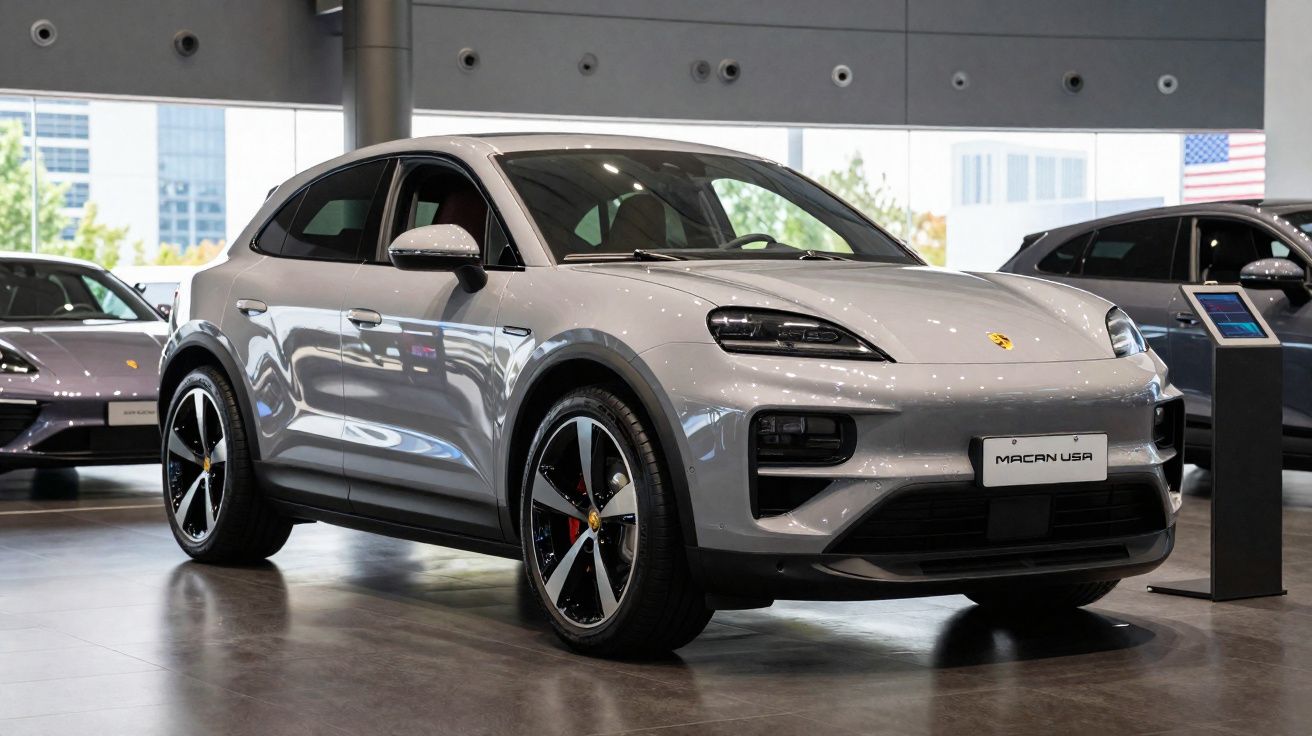
Despite a more challenging backdrop, the Porsche Macan once again topped the brand’s sales chart, rising by 2% to 84,328 units delivered. More than half of these-45,367 units-were already the new, fully electric generation of the model. The company’s most iconic car, the Porsche 911, also posted a modest increase (+1%), with 51,583 units sold.
By contrast, every other model recorded lower sales figures: Panamera (-6%; 27,701 units), 718 Boxster and Cayman (-21%; 18,612 units), Taycan (-22%; 16,339 units) and Cayenne (-21%; 80,886 units).
Porsche explained the decline in Taycan sales by pointing to slowing demand for electric vehicles. As for the drop in the 718 Boxster and Cayman, it stems from the end of production, which concluded in October last year.
“In 2026, our focus is to align demand and supply with the ‘value over volume’ strategy, planning volumes realistically, taking into account the end of the 718 and internal combustion Macan models,” Becker said.
New leadership and cuts under consideration
Since 1 January, Porsche’s leadership has passed from Oliver Blume, Chief Executive of the Volkswagen Group, to Michael Leiters, who now takes on the task of restoring the brand’s performance.
Among the priorities is a cost-reduction programme currently being negotiated with the union. Measures under review include ending length-of-service bonuses and benefits, reducing headcount, outsourcing some activities, cutting pension contributions, taking on fewer interns, tightening rules around remote working, and removing additional breaks on production lines (source: Automotive News Europe).
According to Ibrahim Aslan, the head of the workers’ union, as many as one in four jobs could be at risk. Porsche had already announced plans to cut up to 1,900 jobs by 2029 and not to renew around 2,000 temporary worker contracts in Germany.






Comments
No comments yet. Be the first to comment!
Leave a Comment