
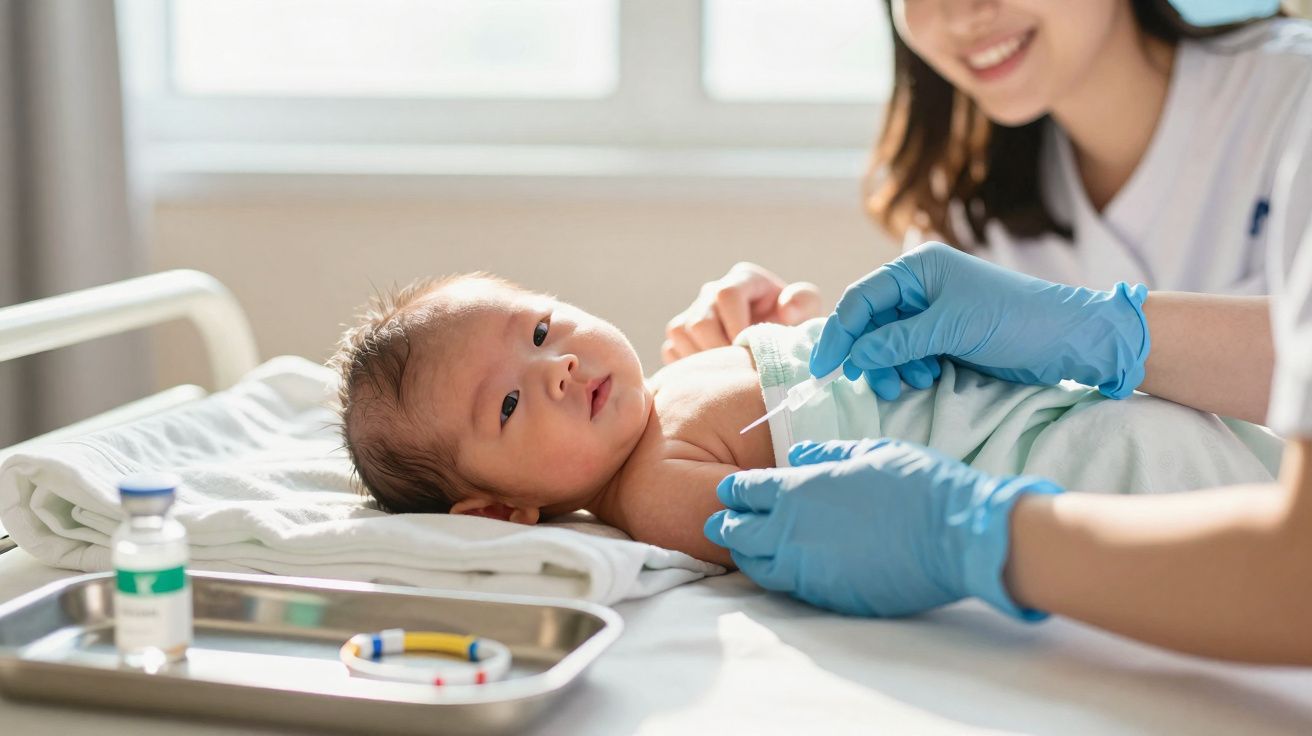
In labour wards, it has been standard practice for decades, yet it is suddenly attracting criticism: giving vitamin K shortly after birth. What looks like a minor routine step for midwives and paediatricians can, in practice, determine whether a baby lives, dies, or survives with severe disability. New analyses show just how sharply the risk of brain haemorrhage rises when parents refuse the injection.
Why newborns begin life with very little vitamin K
Babies are born with extremely low vitamin‑K stores. This is not an illness; it is the normal starting point. It becomes a problem because vitamin K plays a central role in blood clotting.
Vitamin K enables the body to activate several clotting factors, including those involved in producing prothrombin. These factors make sure that, when bleeding occurs, the blood clots and forms a stable plug. If vitamin K is lacking, that process is disrupted-bleeding may be difficult to stop or may not stop at all.
There is another issue: during pregnancy, the placenta transfers only very small amounts of vitamin K to the baby. Breast milk also typically contains too little in the first weeks of life to close the gap. That creates a window in which newborns are particularly vulnerable.
"Without timely vitamin‑K administration, there is a real risk in the first weeks of life of spontaneous, sometimes fatal brain haemorrhages."
The injection given soon after birth is intended to fill that gap. Within a few hours, levels rise to a protective range. Since the approach was introduced in the 1960s, countries that use it widely have seen vitamin‑K‑deficiency bleeding fall dramatically-from about 1 case in 200 newborns to fewer than 1 in 10,000.
81‑fold higher bleeding risk without vitamin K
A systematic analysis of 25 studies spanning almost two decades illustrates how large the difference is. Researchers led by physician Kate Semidey compared thousands of cases involving babies who did and did not receive treatment.
The finding sounds almost unbelievable, but it is statistically well supported: newborns who do not receive a vitamin‑K injection suffer severe bleeding up to 81 times more often than infants who do receive the shot. A large share of these bleeds occur in the brain.
The outcomes are frequently permanent. Among affected babies, around 40 percent are left with lasting neurological harm, including:
- paralysis affecting one side of the body or individual limbs
- severe motor developmental disorders
- delayed cognitive development
- long‑term learning and concentration difficulties
About 14 percent of children with a corresponding brain haemorrhage do not survive the first days, even with intensive care treatment. Paediatric neurologists describe these as avoidable tragedies, because most of these cases would, in practice, have been unlikely to occur if vitamin K had been given on time.
Hidden danger: bleeding with no warning signs
What makes the risk especially unsettling is that many babies initially seem completely well. In the first weeks, blood vessels in the brain are still fragile and can rupture suddenly. Early signs often appear only once the bleed is already advanced-for example:
- unusually floppy, very quiet babies
- persistent vomiting
- seizures
- pale or greyish skin colour
- a tense or bulging fontanelle
At that point, there is often only a narrow window for emergency surgery or intensive care measures, and the outcome remains uncertain.
More parents are refusing-driven mainly by distrust and myths
Despite the clarity of the data, more parents in some areas are turning down the vitamin‑K injection. Figures from US states such as Minnesota show a marked rise in refusals over just a few years. In some birth centres in other countries, refusal rates of over 30 percent are now being reported. New Zealand is also reporting a growing number of preventable brain haemorrhages.
Many of these parents are part of a broader group that is sceptical not only of vitamin K but of several standard measures around birth. Studies show that those who reject vitamin K are also far more likely to refuse other early‑life vaccinations, screenings, or routine checks.
"Skipping vitamin K is often part of a wider distrust of medicine and hospital routines-with concrete risks for the child."
A key driver is online misinformation. Forums and social media repeatedly circulate claims that the injection contains dangerous additives or could trigger later illness. Professional bodies and toxicological assessments point in a different direction: approved products are considered well studied, and serious side effects are extremely rare.
Another common claim is that breast milk alone fully covers the need. That does not match the evidence. Particularly in the early weeks, breast milk’s vitamin‑K content is usually too low to protect newborns reliably. This natural shortfall is precisely why preventive administration was introduced in the first place.
Why professionals argue so strongly for the injection
Neurological professional societies and paediatricians are increasingly calling for vitamin K to be discussed clearly during pregnancy. In counselling conversations, expectant parents should have time to understand:
- what role vitamin K plays in a newborn’s body
- what types of bleeding can occur
- how large the statistical difference is between receiving vitamin K and refusing it
- what alternatives exist and where their limitations lie
The reasoning is simple: when parents receive information weeks before delivery, they can decide without time pressure. In the delivery room there is often little space for that, particularly when emotions are running high.
For the healthcare system, there is also a second dimension. Every preventable brain haemorrhage brings not only personal suffering, but also long‑term therapy, rehabilitation, and substantial costs. The injection itself takes only a few seconds and costs only a fraction by comparison.
Oral vitamin K: a sensible option or a risky compromise?
Some countries offer programmes in which babies receive vitamin K not by injection, but as oral drops over several weeks. This can be an option when parents firmly refuse the injection. However, it is regarded as more vulnerable:
- effectiveness depends heavily on parents giving every dose consistently
- missed doses significantly weaken protection
- studies suggest protection may be slightly lower than with the single injection
For that reason, many experts see oral schedules as a second‑best approach rather than an equivalent substitute. They can reduce risk, but they typically do not reach the safety level achieved by an injection given immediately after birth.
What parents can do in practical terms
If you are expecting a baby and are unsure how to approach the vitamin‑K decision, a few guiding questions can help:
- What risks are proven if I refuse-and how often do they occur?
- What side effects of the injection are reported in large, independent studies?
- How do paediatricians and paediatric neurologists in my area assess the evidence?
- Are there reasons in my child’s medical history that matter here?
Discussing these points with midwives, obstetric clinicians, and paediatricians usually brings clarity. Reliable professionals will also make room for detailed questions-for example, about solvents used, different products, or alternative ways of giving vitamin K.
One point often lost in heated debate: vitamin K is not a substitute for a healthy lifestyle, careful maternity care, or later preventive check‑ups. The injection reduces one specific, clearly defined risk-severe bleeding due to vitamin‑K deficiency. Other risks are unaffected, but can also be tackled in targeted ways.
At the same time, protective measures add up. A baby who receives vitamin K, is well breastfed, attends regular child health checks, and grows up in a smoke‑free environment begins life with markedly better odds. The vitamin‑K injection is only one component-but one with a demonstrably huge impact on the risk of brain haemorrhage in the first weeks of life.






Comments
No comments yet. Be the first to comment!
Leave a Comment