
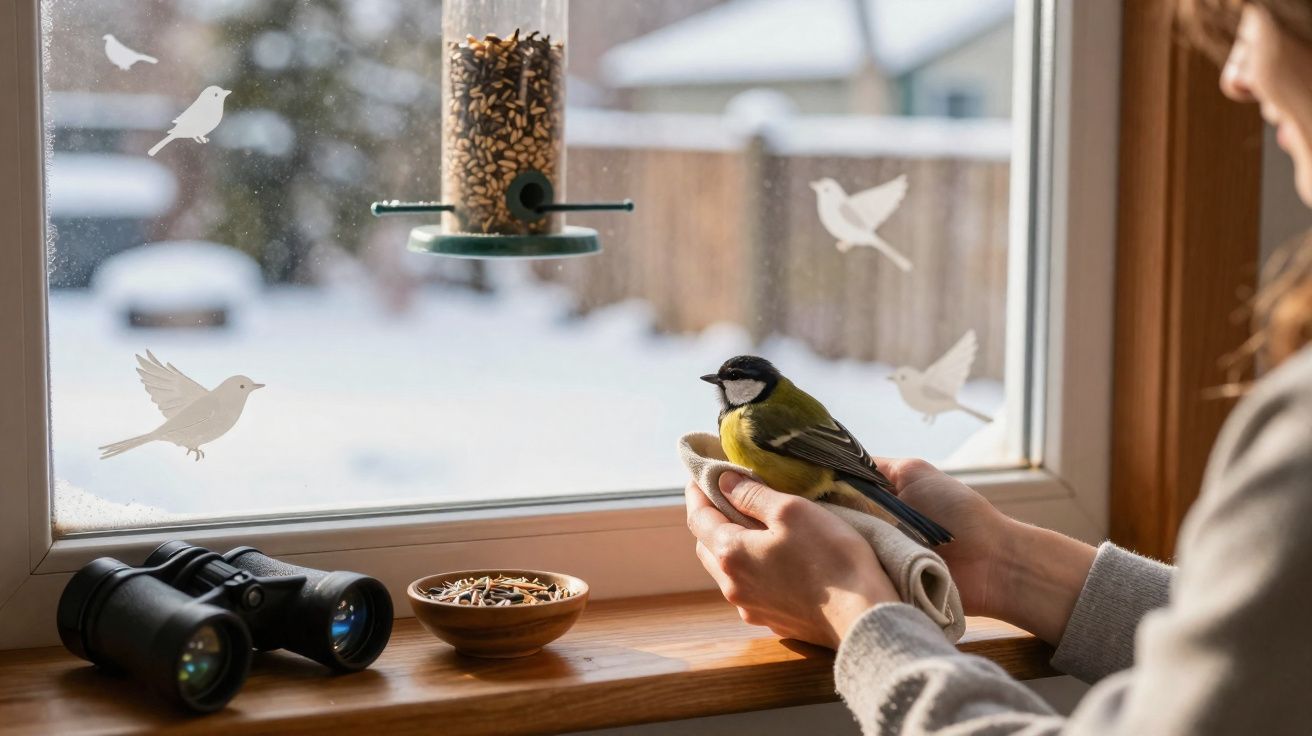
The scene feels almost normal: a robin or a chickadee repeatedly throwing itself at your patio door. The noise irritates you, perhaps worries you slightly, and then you carry on with your day. For the bird, however, those constant knocks and frantic attempts are tied to survival. If you understand what is really happening at the glass, you can safeguard local wildlife, restore peace at home, and even rethink how you look after your garden in winter.
Why birds suddenly “attack” your window
It is easy to assume a bird has lost the plot or is trying to get inside when it thuds into a pane. In reality, the explanation is far simpler and far less dramatic. At certain times of day-particularly in winter-modern glass can behave like a near-perfect mirror. The bird does not register a solid obstacle; it sees open sky, branches, or even what looks like another bird that does not actually exist.
In low winter sun, the effect gets worse when the room behind the window is darker than outside. The reflection appears to carry the landscape onwards. A tired bird, already battling freezing weather and limited food, launches towards what it believes is a safe perch or an escape route. Each failed strike wastes energy it cannot spare if it is to make it through the night.
To a small bird in January, a spotless window can be more dangerous than a prowling cat. The glass hides in plain sight.
If it happens again and again, it is not only a nuisance sound. The risk escalates to concussion, fractured wings, internal bleeding, and a slow death out of sight-under a hedge or behind a plant pot.
Territory fight or distress call: reading the season
What birds do at windows depends heavily on the time of year. In spring, some species genuinely do lash out at what they think is a competitor: they spot their own reflection, flare up, and strike repeatedly to defend nesting territory. That is not usually the same pattern you see in the middle of winter.
What winter tapping usually means
Between December and February, survival matters more than rivalry. When a bird keeps hitting glass in the colder months, it is often a combination of the following:
- Reflections: The pane shows a false extension of trees or sky, so the bird flies straight into it.
- Heat and shelter: Warmth leaking from poorly insulated windows can draw birds that are desperate for a less hostile spot.
- Indoor greenery: Houseplants close to the glass may appear to offer cover or food, creating a strong lure.
- Stress and fatigue: Hunger and long nights reduce caution, making birds more likely to repeat risky attempts.
Looked at this way, it is less an “attack” and more a signal of distress. The bird is trying to reach something it believes will help-warmth, shelter, or a route to safety. If you ignore it, the animal keeps burning precious calories against an invisible barrier on a day when every one counts.
Repeated tapping on the window in January often says one thing: “This landscape is a trap, and I’m running out of options.”
How to “make the glass visible” without living in the dark
You do not need to shut yourself in behind blinds all day or turn your home into a boarded-up bunker. The aim is simply to help birds recognise that the glass is solid and not a clear flight path. That means disrupting the smooth, mirror-like surface that misleads them.
Simple visual tricks that work fast
A single large hawk silhouette stuck in the centre of a window seldom fixes the issue. Birds simply aim for the empty space around it. What works is density and repetition, not one intimidating shape.
- Use liquid chalk markers to draw vertical lines, dots, or simple patterns over the pane, spaced at roughly 10 cm (4 in) intervals.
- If you want something less obvious, pick UV window pens. Many birds see UV light far better than people do, so faint marks become clear warnings to them.
- Add lots of small decorative stickers in a grid or staggered pattern, especially along the lower portion of big doors or picture windows.
- During the brightest part of the day, close sheer curtains or blinds if you have windows facing one another, as this can create a “tunnel” effect.
You do not need to be artistic. A handful of uneven lines, quick loops, or children’s doodles are enough to break the dangerous mirror effect. Some bird specialists even admit to leaving a light film of dust on the outside of winter glass, because it dulls reflections just enough to cut down collisions.
You are not decorating for style. You are giving birds a visual code that says: “This is solid. Do not try to fly through.”
Moving the buffet: why feeder placement changes everything
Behind plenty of window strikes is a basic truth: the bird is hungry. Short winter days restrict foraging time, and frost or snow can bury seeds and insects. If your garden does not provide safe, reliable feeding spots, birds take bigger risks-including fast, hazardous flights close to the house.
Putting up feeders can shift that quickly, but where you position them is crucial. In the wrong place, feeders can actually make collisions more likely rather than less.
Two safe distances that reduce impacts
| Strategy | Distance from window | Main effect |
|---|---|---|
| Close-up feeding | Attached to the glass or within 50 cm | Birds cannot build enough speed to badly injure themselves if startled. |
| Safety zone | More than 3 m away | Birds can move freely without slamming into reflections on the house. |
Many householders choose a “middle” distance-about 1–2 metres from the window-which unfortunately sets up ideal conditions for high-speed impacts. It is safer to go very close or clearly far.
Around any feeder, thick shrubs or evergreen bushes also help. They provide instant cover when a hawk turns up and reduce panicked escape flights that otherwise head straight towards your living-room window.
What to feed winter birds knocking at your glass
After you redirect birds away from the window, you then need to offer the right kind of fuel. In winter, small birds rely on calorie-dense food, not decorative seed mixes that look good on a shelf but deliver little energy.
- Black oil sunflower seeds: High in fat, easy to open, and taken by many different species.
- Vegetable suet or fat balls: Excellent energy, but avoid plastic mesh bags that can trap feet or bills.
- Unsalted peanuts (in a proper feeder): A very concentrated energy source, but they must be kept free of mould.
- Crushed oats, millet or seed mixes without coloured additives: Handy for birds that feed on the ground beneath shrubs.
When birds can clearly see the glass and can depend on food elsewhere, the winter window tapping often stops within a few days. Your living room stops looking like the only option, and the bird settles into a safer routine around the garden.
What to do when a bird already hit your window
Even with the right precautions, collisions can still happen. How you respond may decide whether a stunned bird survives.
- Move in calmly and see whether the bird is breathing and making small movements.
- If predators or traffic are nearby, place the bird gently into a small, ventilated box kept dark and quiet.
- Do not try to force food or water, as this can lead to choking.
- After 20–30 minutes, take the box outside and open it. If the bird flies off strongly, it has likely recovered from the immediate shock.
- If, after an hour, it still cannot stand or seems unable to see properly, contact a licensed wildlife rehabilitator.
A few minutes in a dark, calm box can help a concussed bird recover from the shock instead of dying slowly in a corner of the yard.
Why this small gesture matters far beyond your garden
Research from Europe and North America suggests that hundreds of millions of birds die every year after colliding with buildings. Glass skyscrapers attract attention, but ordinary homes and low-rise blocks make up a huge share of the overall toll. Each safer back-garden window reduces that largely unseen loss.
Garden birds also support gardeners more than many people realise. Outside the harshest weeks, insects that damage roses, vegetables and fruit trees form a substantial part of their diet. A robin helped through January may well patrol your beds in April, removing caterpillars before they chew through fresh leaves.
A few everyday choices can extend this protection. Switching off unnecessary lights at night reduces disorientation during migration periods. Avoiding vast, continuous glass panels in extensions or renovations lowers collision risk for years to come. Even spending a week observing how birds move around your property can show where reflections and blind spots are creating problems.
Reacting when a bird taps on your window does more than end an irritating noise. It encourages you to read your surroundings as a small, vulnerable animal would: noticing where heat escapes, where reflections deceive, and where shelter and food sit just out of reach. With a few changes, your home can shift from an invisible danger to a quiet refuge woven into local wildlife’s daily life.




Comments
No comments yet. Be the first to comment!
Leave a Comment