
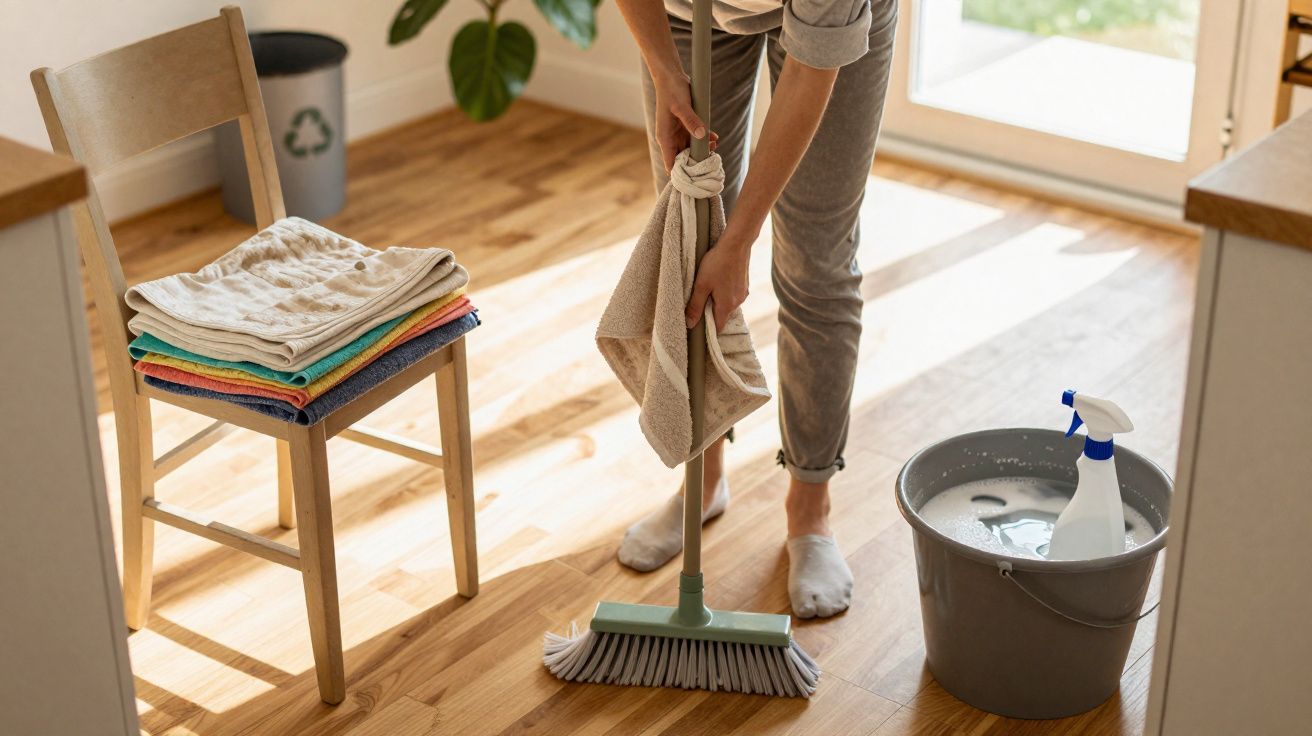
There’s a surprisingly practical cleaning trick hidden in them.
Anyone who mops with disposable wipes knows the pattern: the pack gets lighter, the bin bag gets heavier, and the receipt gets longer. At the same time, old bath towels often sit unused in the cupboard. This is exactly where a simple idea helps-cutting waste, easing the household budget, and still leaving floors properly clean.
Old bath towels as floor mop covers: why they’re far too good for the bin
A bath towel that has gone rough can look like a write-off. The fibres feel coarse, the colour looks faded, and it’s no longer pleasant against your skin. But what’s uncomfortable for bathing can be unexpectedly useful for cleaning. That same fabric can be turned into a reusable cover for flat floor mops, easily standing in for disposable wipes.
If you use a Swiffer-style floor mop, it’s very tempting to grab ready-made wet or dry cloths. They’re convenient, but they’re pricey and create a lot of waste. Every clean costs money and generates packaging plus dirty wipes that end up in the general rubbish.
“A single large bath towel can provide several reusable mop covers-and replace hundreds of disposable wipes a year.”
Sustainability bodies have been stressing the same point for years: the most effective way to cut waste is not to create it in the first place. Reusing old textiles does exactly that. The towel shifts from being a neglected leftover to becoming a genuinely useful tool for the home.
Why terry cloth cleans so well: a closer look at the fibre
The secret is in the terry cloth itself. Bath towels are usually made from cotton with small loops-the familiar looped “piles”. In day-to-day cleaning, that structure behaves like countless tiny hooks.
- The loops catch dust, hair, and crumbs.
- Cotton absorbs liquid very effectively.
- The surface is tough enough to survive many wash cycles.
While many disposable floor wipes rely on synthetic fibres, cotton pulls water and dirt deeper into the fabric. In practice, an old towel performs much like the professional mop heads and fringe mops used by cleaning companies.
“The loops in terry cloth act like a dense net: they hold onto dust rather than simply pushing it around.”
That combination of absorbency and mechanical pick-up makes old bath towels ideal for:
- dry dusting on tiles and laminate
- damp mopping in the kitchen and hallway
- tackling light marks without using much water
What a household really pays for disposable wipes
If you mop twice a week and use two wipes each time, you quickly end up at over 200 floor wipes a year. Many brands cost around 30 to 40 cents per wipe. It adds up.
| Use | Quantity per year | Estimated cost |
|---|---|---|
| Floor wipes (disposable) | approx. 208 pieces | approx. 60–80 € |
| Bath towel as mop cover | 1 large towel | 0 € (already owned) |
A large bath towel measuring about 70 × 140 cm can be cut into several covers or lots of smaller cloths. The pieces cope with dozens of washes at 60 °C. Ongoing costs are essentially nil, aside from a bit of detergent and water that you’re already using for other laundry.
Step by step: turning a towel into a mop cover-no sewing required
You don’t need a sewing machine or special skills for this. All you need is a standard flat floor mop-such as the familiar type with clamp slots or rubber grips designed for disposable wipes.
Preparing the materials
- 1 old cotton bath towel
- 1 flat floor mop
- scissors
- pen or tailor’s chalk
- tape measure or ruler
Lay the towel flat on the floor or a table. Place the mop head in the middle of the fabric. Trace around it roughly, then allow an extra 5 to 7 cm all the way around. This margin is what lets you secure the cover firmly.
Next, cut out the rectangle neatly. If you want multiple covers, measure carefully with the tape measure and mark all rectangles before you start cutting.
Notches for a better grip
At each of the four corners of the cut rectangle, make a small straight snip of about 2 cm. These notches make it easier to tuck the fairly thick terry cloth into the mop’s holders.
Place the mop head onto the cut piece. Fold the long sides of the fabric over the mop plate. Then press the overhanging edges into the rubber grips or clamp slots-exactly where the disposable wipes would normally be fixed.
“The short corner snips help the fabric sit around the plate without tension while still staying tight.”
After cleaning, you can pull the cover off in one move and drop it straight into the laundry basket. No fiddling, and no extra strain on the fasteners.
Mopping in everyday life: dry, damp, or properly wet?
How you use the cover depends on your flooring and how dirty it is. Terry cloth behaves differently when used dry versus slightly damp.
Dry cleaning for dust and pet hair
Used dry, the towel works much like a static disposable cloth. Dust, hair, and fine dirt catch in the loops. For households with pets or children, a quick dry pass can make a noticeable difference.
A practical routine for busy areas such as the hallway or kitchen:
- First pass with a dry cover to pick up hair and crumbs.
- Second pass with a lightly damp cover to deal with marks and dull film.
Damp cleaning on tiles, laminate, and wood flooring
For tiles, vinyl, and laminate, you can dampen the cover a bit more. The key is to wring it out well so no water film is left behind. On more delicate wooden flooring, only a very light dampening is needed. The floor should be dry again within a few minutes.
If you prefer using a bucket, you can keep doing so-either your usual bucket or one with a wringer insert. Treat the towel piece like a standard floor cloth, except it stays securely attached to the mop.
Care, hygiene, and a simple DIY cleaner
After use, the cover goes into the wash. Ideally, wash it with other household textiles such as tea towels or bedding at 60 °C. It’s best to skip fabric conditioner, as it can leave a coating on the fibres and reduce absorbency.
If you like a fresh scent while cleaning, you can prepare a small stash of pre-moistened cloths. Here’s how:
- Get a screw-top jar or airtight container.
- Add a mix of: one third white vinegar, two thirds low-limescale water.
- Optionally add a few drops of lemon essential oil.
- Place several cut towel covers into the liquid.
Before mopping, wring the cloth out well, attach it to the mop, and then wash it with the rest of your laundry after use. This gives you reusable “wet wipes” without extra plastic packaging.
“With a jar of prepared mop covers, a quick freshen-up clean is always ready-without any throwaway products.”
What if the towel is very thick or very thin?
Not every old towel is made the same. Some are extremely thick, while others are almost see-through. That changes both handling and results.
- Very thick towels: Cut a little more generously and make the corner snips about 1 cm deeper, so the fabric clamps in more easily.
- Very thin towels: Consider using two layers: stack two pieces and clamp them together. Absorbency improves and the cover is less likely to slip.
If you have a mix of towel types, it’s worth testing what suits your floors best. On smooth tiles, thicker fabric often works particularly well; on sensitive real wood, thinner towels can give a gentler finish.
Ecological and practical side benefits
Repurposing old towels helps in several ways. Fewer disposable wipes means less transport, less packaging, and less general waste that ends up being incinerated or sent to landfill. You also free up space in the cleaning cupboard, because bulky refill packs are no longer necessary.
There’s another advantage: you can control household dust and cleaning chemicals more precisely. When you mix your own cleaner, you know exactly what ends up on the floor. Families with small children or pets often value this, because hands and paws spend so much time in direct contact with the floor.
There’s a psychological shift too. Once you’ve seen how well an old bath towel works, you start looking differently at other items you might normally throw out. Worn tea towels, old cotton T-shirts, or thin cotton sheets can suddenly become dusters, polishing cloths, or helpers for cleaning windows.
In everyday life, this creates a kind of “textile cycle” at home: newer towels eventually move to the cleaning shelf before they truly need to be discarded. Over time, that not only reduces waste, but can also make it easier to justify buying slightly better-quality textiles-because you know they’ll get a useful second life as cleaning aids.




Comments
No comments yet. Be the first to comment!
Leave a Comment