
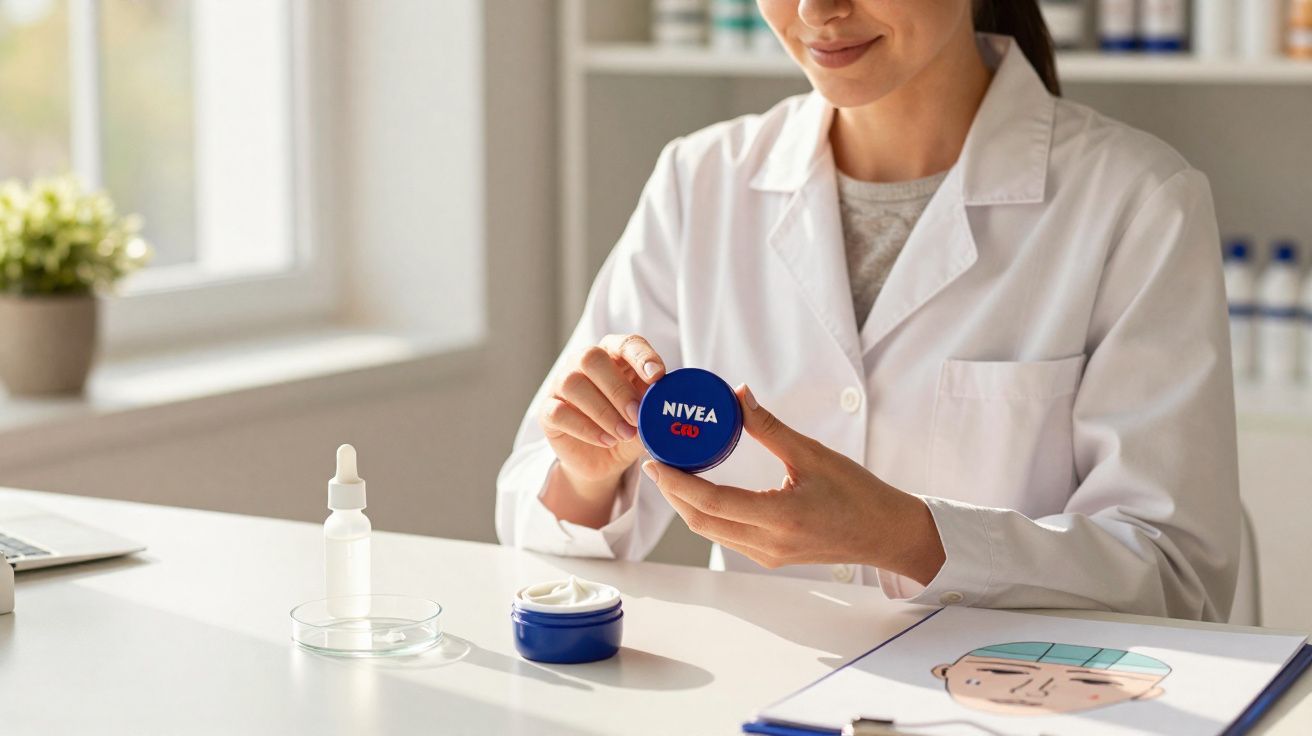
A dermatologist has now taken a closer look at the formula.
The famous blue tin, the unmistakable fragrance, the promise of being “for the whole family”: classic Nivea Creme is one of the best-known skincare products out there. It gets more interesting once you put nostalgia to one side and ask a more clinical question: what does a consultant dermatologist make of the real-world performance-and the ingredients-behind this cult cream?
Why the blue Nivea Creme is a phenomenon
Nivea Creme first appeared in 1911. Ever since, it has lived in bathrooms, handbags and workplace lockers-around the globe. Even with hundreds of new skincare fads coming and going, the metal tin remains a perennial best-seller.
- on the market for over 110 years
- a multi-use product for face, body and hands
- very low price compared with high-end creams
- easy to pick up almost anywhere, from chemists to supermarkets
In France alone, around 3.6 million tubs were sold in 2023-an average of 414 tins every hour. Comparable figures have been seen for years across the DACH region, reflecting a level of trust in the brand that is hard to match.
“The blue Nivea Creme is emotionally loaded-many people associate it with childhood memories. It becomes fascinating when you assess its effect on the skin itself.”
The dermatologist’s view: what is actually in the formula?
When dermatologists analyse the blue cream from a formulation standpoint, they focus on the core building blocks. At heart, the product is designed to do a classic job: keep moisture in the skin and support the barrier.
Key ingredients: glycerine and the lipid components
Two ingredient groups stand out in particular:
- Glycerine: helps attract and hold water in the upper layers of the skin, acting as a humectant.
- Oil phase: a blend of oils, waxes and partly shea-butter-like components that forms a protective film.
That pairing explains why the cream has been used for decades when skin feels dry or rough. The dermatologist rates this overall direction positively: it is a dependable basic moisturiser that can make skin feel softer and more supple.
“From a dermatological perspective, Nivea Creme provides robust, classic occlusive care: it locks in moisture and eases the sensation of dryness.”
Who is the blue cream actually suitable for?
According to the specialist’s assessment, the formula suits normal to dry skin particularly well. The texture is rich, slightly waxy, and very noticeable on the skin-exactly what many people want when dealing with winter dryness, cracked hands or rough elbows.
From a dermatology standpoint, it is less ideal for:
- very oily skin that is prone to blemishes
- people who prefer ultra-light, gel-like textures
- facial skin that is acne-prone, especially if highly occlusive products tend to trigger issues
The strengths: hydration and protection-so long as expectations stay realistic
The dermatologist’s verdict is that the blue cream performs well for straightforward hydration. Clinical data and day-to-day experience indicate that with consistent use, skin often feels less tight and appears smoother.
| Property | Dermatologist’s assessment |
|---|---|
| Moisture | good, especially for dry skin |
| Skin barrier | supportive due to an occlusive film |
| Tolerability | generally decent, including for sensitive skin |
| Anti-ageing | no targeted effect |
| Specific skin concerns | not sufficient; additional products are needed |
For chapped hands, rough knees, shins that “flake” in winter, or mild feelings of tightness, the product can be very effective. Its relatively simple, rich formulation helps seal in moisture and steady the skin barrier.
The limitations: why the dermatologist recommends a combined routine
Despite a clear appreciation for the classic, the expert remains unequivocal: blue Nivea Creme on its own does not solve complex skin conditions. It moisturises and protects-but it does not treat.
“The dermatologist sees the blue Nivea Creme as a basic building block. Anyone who wants more than hydration needs complementary active ingredients.”
What the cream cannot do
The analysis highlights where the cult cream reaches its limits:
- No targeted anti-ageing effect like retinol, peptides or high-dose antioxidants.
- Not a substitute for medical skincare for rosacea, atopic dermatitis or acne.
- No UV protection-sunscreen still needs to be a separate product.
The dermatologist stresses that anyone aiming to fade pigmentation or tackle deeper wrinkles will need different formulas with active ingredients. Here, Nivea Creme can only play a supporting role as a moisturising add-on.
What a sensible combined routine looks like
Things get more compelling when the blue cream is used strategically. From a dermatology perspective, a layering approach can make sense:
- in the morning, a serum with antioxidants or hydrating ingredients such as hyaluronic acid
- followed by a light day moisturiser and consistent sunscreen
- in the evening, after a gentle cleanser, an active serum (e.g. niacinamide)
- to finish, apply the blue cream either to dry patches or more broadly as a “protective seal”, especially on drier areas
Used this way, the cult cream acts as an occlusive final step that helps keep previously applied products on the skin for longer. In winter, that can make a noticeable difference.
Multi-use in everyday life: where the dermatologist gives the go-ahead
One clear advantage, in the doctor’s view, is versatility. The formula can work across several use cases-provided you pay attention to skin type and current condition.
- Hands: apply generously as an overnight mask with cotton gloves-ideal for cracked skin.
- Body: useful for dry shins, elbows and heels.
- Face: better as a temporary cold-weather barrier cream or for very dry skin, rather than an everyday choice for oily combination skin.
- Around lips and nose: helpful during a cold, when repeated wiping has left the area irritated.
“In everyday life, Nivea Creme works like a ‘Swiss Army knife’ of skincare-versatile, but not a specialist tool.”
Sensitive skin, fragrance and nostalgia: a tricky trio
A question many readers want answered: can people with sensitive skin use the blue cream? The dermatologist’s response is nuanced.
In practice, many people with sensitive skin tolerate the classic well, and the fatty film can even feel soothing when the barrier is compromised. On the other hand, the cream does contain fragrance, which can be problematic for highly reactive skin or for anyone with fragrance allergies.
If you tend to react quickly with redness or stinging, a patch test is sensible: apply a small amount to an inconspicuous area and wait 24–48 hours. If no irritation appears, careful use-especially on the body-is usually reasonable.
What many people mix up: hydration is not the same as “skin health”
The dermatologist’s review also underlines how wide the gap can be between marketing claims and medical framing. Skin that feels soft and comfortable is not automatically healthy; it can still be affected by chronic inflammation, barrier disruption or UV-related cellular damage.
Nivea Creme is excellent at masking dryness, but it does not address deeper causes. If you are prone to redness, burning, eczema or recurring inflammation, it is worth getting the underlying reason checked by a clinician-and treating the blue tin as supporting care rather than a stand-alone fix.
Practical scenarios: when the blue cream is genuinely useful
Consider two common situations:
- Winter with dry, centrally heated air: skin on the shins and hands becomes flaky and rough. Here, the cream can act like a protective coat that seals in lost moisture. Applying a hydrating serum beforehand can amplify the effect.
- Work that involves frequent handwashing: healthcare staff, hairdressers or hospitality workers often end up with cracked hands. A thick evening application, worn under cotton gloves, can meaningfully support recovery.
In both cases, you are using it as a functional product rather than a “beauty trend”-and it delivers what it promises: richness, protection and less tightness.
If, however, your goal is to specifically reduce wrinkles, lighten dark spots or improve acne scarring, you will need a different plan. In that case, active serums, medical-grade skincare and sunscreen should take priority-and the blue tin becomes an optional extra, not the main event.






Comments
No comments yet. Be the first to comment!
Leave a Comment