
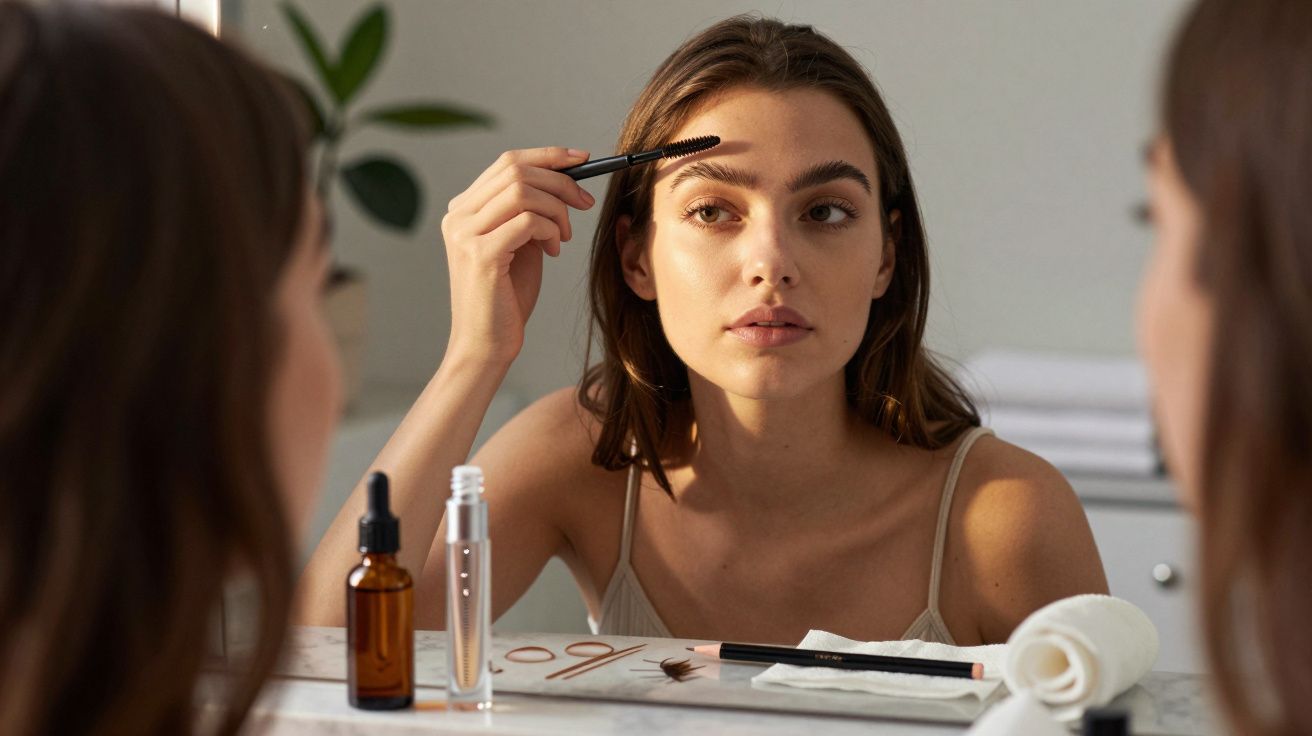
Many of us remember the ultra-thin eyebrows of the 2000s with a slight shudder. That look is back on social media-yet the irony is that plenty of people now want the opposite: natural, fuller brows that frame the eyes without looking like permanent make-up. The good news is that, if you build a few targeted steps into your routine, you can visibly strengthen your eyebrows at home-no studio appointment required.
Trend or not: which eyebrow density actually suits you?
Eyebrow trends move in cycles. After years of bushy, brushed-up brows dominating Instagram, feeds have been filling again (since late 2025) with extremely slim lines and heavily lightened arches. It can look striking, but it instantly changes facial proportions.
That’s exactly why a quick reality check helps: which brow shape enhances your features rather than hiding them? Not everyone needs wide “power brows”, and not everyone suits a barely-there line. What matters most is:
- How large are your eyes?
- How defined are your forehead and cheekbones?
- How much time do you realistically want to spend each day on care and make-up?
If you’re broadly happy with your natural shape but want more fullness, avoid drastic interventions. The most important progress happens at home, in everyday habits.
The route to fuller brows doesn’t begin with the perfect pencil-it starts with patience, and with choosing to put the tweezers down for a while.
A longer break from tweezers: why your eyebrows need time off
If you’ve been plucking every tiny new hair for years, you’ll know the downside: eventually, some hairs stop coming back. Hair follicles can weaken over time, and certain areas may remain sparse for the long term. This is where the first essential step comes in-a genuine plucking pause.
Leave them alone for 4–8 weeks (unpleasant, but effective)
Set aside at least 4 weeks-ideally 8-where you don’t touch your brows. Yes, the line will look messier in that period. Yes, hairs will appear where you’d rather they didn’t. But your hair roots need that time to recover.
If particular hairs really bother you, only remove those that sit clearly outside your natural brow shape-well above or below the true line. The key is to stop the daily “just one more” pluck. Over the years, that habit is what turns brows into thinner and thinner lines.
If you feel unsure about the shape during this transition, use a clear or lightly tinted brow gel. It pulls hairs together and makes brows look tidier immediately, without interfering with regrowth.
Daily eyebrow brushing: a mini-massage for more fullness
Step two is almost ridiculously simple-and surprisingly effective: regular brushing. A clean spoolie (brow brush) is all you need. Brushing doesn’t only neaten the hairs; it also encourages blood flow to the area.
How to brush properly
- Cleanse your face thoroughly in the evening so there’s no make-up residue caught in your brows.
- Place the brush at the start of the brow near the bridge of the nose and comb hairs upwards first.
- Then angle the brush slightly outwards, following your natural brow line.
- Use gentle pressure-the motion should feel comfortable, not scratchy.
This routine can make brows look denser straight away because the hairs sit in a consistent direction. It also helps you see where true gaps are. Many people discover that the “disaster zones” are much smaller than they assumed.
Brow serums and oils: supporting the hair root
If you want to do more than simply “let them grow”, you can refine your care routine. There are now many brow serums with peptides and conditioning ingredients designed to support the hair root and growth phase. Certain plant oils can also help.
Which products are genuinely useful
Broadly, these options fall into three categories:
| Product type | Main focus | Best for |
|---|---|---|
| Peptide serums | Strengthening the hair root; supporting the growth phase | Very fine, fragile brows |
| Conditioning creams/gels | Hydration; protection from friction and make-up | Normal to slightly thin brows |
| Plant oils (e.g. castor oil) | Intensive conditioning; protective layer; softer feel | Dry, coarse brow hairs |
Apply your chosen product in the evening to clean brows. Usually, a small drop is enough. Work it in gently with a fingertip or clean spoolie, then massage for 1–2 minutes. The massage can enhance the effect by boosting circulation in the skin.
Expect it to take several weeks before you notice a visible difference. Brow hairs have their own growth rhythm and don’t thicken overnight.
Two extra points that make a difference (and are often missed)
Keep application hygienic: don’t dip the same brush into a tube after it’s touched your skin, and wash spoolies regularly with warm water and a mild cleanser. Also, if you’re trying a new serum or oil, patch-test it first (for example, near the jawline) to avoid irritation around the eyes.
Make-up trick: hide gaps with fine, hair-like strokes
Care creates the foundation; make-up delivers the instant payoff. The most natural-looking method is the “hair-by-hair” technique. Instead of colouring the brow as a block, you draw tiny strokes that mimic real hairs.
Step-by-step: naturally filled eyebrows
You’ll need a very fine brow pencil or a precision brow pen that can create thin lines. A lightly tinted gel is optional.
- Brush your brows into place so you can clearly see the natural shape.
- Start along the lower edge and draw short strokes angled slightly upwards, following the direction of growth.
- Focus on gaps rather than filling the entire brow solidly.
- Soften any harsh edges by lightly brushing through with the spoolie.
- Set everything with a clear or tinted gel to keep hairs in place.
With this approach you can test different shapes visually-without plucking or dyeing. If you’re curious about very slim or heavily lightened eyebrows, you can “try on” the look temporarily and simply remove it at night.
Patience, lifestyle, hormones: why not every eyebrow responds the same way
How much your eyebrows can thicken isn’t determined by care and make-up alone. Genetics, hormonal changes, stress, and nutrition all play a part. If you’re experiencing significant hair loss on the scalp or body as well, it’s sensible to seek medical advice-thyroid issues or nutrient deficiencies can sometimes be involved.
In general, brows benefit from the same basics as scalp hair: adequate protein, trace minerals such as zinc and iron, and a balanced routine. Prolonged stress can shorten hair growth phases-and that applies to the fine hairs above the eyes too.
Practical everyday tips for consistently better eyebrows
Small adjustments help protect your progress long term:
- When removing make-up, don’t scrub over the brows; press a soaked cotton pad on for a few seconds, then wipe away gently.
- If your brows are very sparse, avoid strongly alcohol-based products around the brow area, as they can dry out the skin.
- Keep your hands off your face during workouts and cleansing-frequent rubbing can loosen hairs over time.
- Shape with tweezers only every few weeks, and keep it moderate instead of removing “just one” hair every day.
Once you’ve had a proper regrowth phase, you can also consider a one-off professional tidy-up to refine the outline-then maintain it minimally at home. Combined with a rest period, targeted care, daily brushing and a smart make-up technique, even over-plucked eyebrows can often improve noticeably. The change won’t happen overnight, but the slower pace has a benefit: you can decide, step by step, what eyebrow density you truly like-without blindly chasing every trend.


Comments
No comments yet. Be the first to comment!
Leave a Comment